Why airports take days to “reset” after a multi-day storm
Photo credit: Karim Balaa/Unsplash.com
When a blizzard finally clears and the sky turns blue again, you expect the departures board to snap back to normal. Instead, you often face days of rolling cancellations, missing crews, and long lines that seem disconnected from the weather outside. The real story is that a multi-day storm does not just pause the system, it scrambles the entire network of planes, people, and airport infrastructure that keeps modern air travel running.
To understand why you can still be stranded long after the last snowflake falls, you have to look beyond the runway. Airlines, airports, and air traffic controllers spend days unwinding a tangle of displaced aircraft, exhausted crews, and backlogged passengers, all while trying to keep you safe and avoid compounding the chaos.
Storms hit a tightly wound system with no slack
Air travel in the United States runs on a just-in-time model that leaves very little margin for error. Airlines schedule aircraft and crews to be productive almost every minute of the day, which keeps fares lower but means there is almost no spare capacity when a multi-day storm shuts down a major hub. When thousands of flights are canceled in a short window, the disruption ripples across the entire network, not just the city where the snow is falling.
Operational leaders like Jan and Hafner have described how they and their colleagues spend the run-up to a major winter event moving planes out of harm’s way and preemptively canceling flights to avoid even worse gridlock later, a strategy that contributed to 49,000 cancellations in January during one severe season. That kind of volume shows how a storm does not just delay departures, it forces airlines to tear up their finely tuned schedules and rebuild them almost from scratch once the weather improves.
Safety protocols slow everything down by design
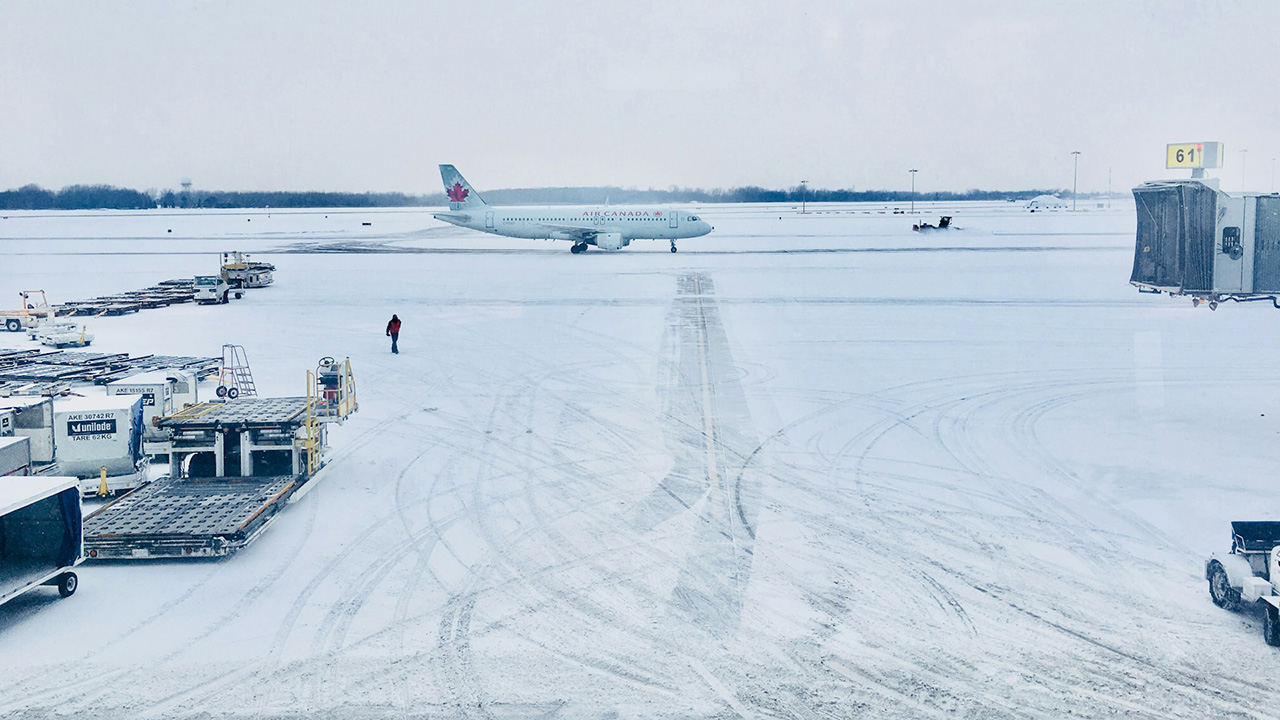
Even when you are desperate to get moving, the first priority for any airport or airline is to keep you and the crews safe. During an active storm, dispatchers and operations centers may order aircraft to divert, hold, or remain at the gate rather than risk landing or taking off in unsafe conditions. That conservative posture continues into the recovery period, as teams inspect runways, taxiways, and equipment for ice, snow, and damage before allowing full-speed operations to resume.
Airports also have to protect the aircraft themselves. In some cases, dispatchers will coordinate Evacuating Aircraft to other hubs or sending them into hangars, depending on the size of the storm and the available facilities. That keeps planes from being damaged by high winds or heavy snow, but it also means that when the storm passes, many jets are in the wrong place, and ground crews must carefully move them back into position while still answering passenger questions in real time.
Runways, gates, and deicing crews are finite resources
Once the snow stops, you might assume the airport can simply flip a switch and run at full capacity. In reality, every runway has to be plowed, treated, and inspected, and that work competes with the need to clear taxiways, ramps, and gate areas. If even one runway or a cluster of gates remains closed, the airport’s capacity drops, which forces airlines to keep canceling or delaying flights even under clear skies.
Deicing is another bottleneck that lingers after a storm. Each aircraft must be sprayed and checked before departure, and the number of deicing trucks and crews is limited, so lines of planes can build up quickly. Local guidance like the What to expect as airport operations recover from Severe weather advisories in Houston emphasizes that even after the worst has passed, you should plan ahead and set realistic expectations, because the physical process of getting aircraft safely off the ground takes time.
Aircraft and crews end up scattered across the map
The most visible sign of a storm is the snow outside your terminal window, but the deeper problem is what it does to the choreography of planes and people. When a hub shuts down for days, aircraft that were supposed to pass through it are stranded at outstations, and the crews scheduled to fly them are often stuck somewhere else entirely. You may see a plane parked at your gate and wonder why you are not boarding, but if the assigned pilots or flight attendants are out of position, that aircraft cannot legally depart.
Frontline employees and passengers alike have pointed out that Weather was the initial trigger, but Crews and aircraft are out of place in a network structure that depends on everything being where it is supposed to be. Once that structure breaks, airlines must run complex recovery schedules to reposition planes and crews, often prioritizing certain routes or hubs over others. That is why your flight might be canceled even on a sunny day, while a different route on the same airline operates normally.
Crew duty limits and rest rules add invisible delays
Even when crews are physically at the airport, they cannot simply work unlimited hours to dig out from a storm. Federal duty and rest rules cap how long pilots and flight attendants can be on duty and how much rest they must receive between shifts. During a multi-day disruption, many crews hit those limits after long days of diversions, ground holds, and extended duty periods, which forces airlines to cancel or delay flights until rested replacements are available.
Veteran captains who have written about storm recovery describe the process as a kind of controlled chaos that must still respect every safety rule. One captain explained that when a large weather system affects multiple hubs, not just one regional area, the recovery becomes a nationwide puzzle that has to be solved while staying within strict crew regulations, a reality captured in a Need a news break? Check PLAY hub with puzzles, games and more! Whipple, Spokane exchange about how even experienced crews can be caught up in cascading cancellations. For you as a traveler, that means a flight can be scrubbed at the last minute simply because the crew would exceed its legal duty time if it operated.
Network design and airline strategy shape recovery speed
Not all airlines recover from storms at the same pace, and that is rarely an accident. Carriers that run tight hub-and-spoke networks can be more vulnerable when a single hub is hammered for days, while those with more point-to-point flying may have more flexibility to reroute aircraft and crews. Internal dispatch decisions, such as how much reserve capacity to keep on hand, also determine whether an airline can bounce back quickly or remains mired in cancellations long after competitors have stabilized.
Recent dispatch notes from a major disruption in New York highlighted how one carrier struggled to recover even after rivals had largely returned to normal. In that case, a commentator named Derek argued that the airline could have avoided some of the prolonged pain if it had used a portion of its freed-up capacity as additional reserve, suggesting that a lack of that sort of self discipline contributed to why flights kept canceling, a critique captured in leaked notes that began, Derek, I suspect you’re right. For you, the takeaway is that the airline you choose can significantly influence how long you are stuck after a storm, even if everyone faced the same initial weather.
Storms expose which airlines built real resilience
When a major winter system slams the Northeast, the scoreboard of cancellations can be brutal and very public. In one recent storm, JetBlue, listed as JetBlue (NASDAQ:JBLU), was the hardest hit, canceling 225 flights, followed by Delta with 186. American and United also scrubbed significant numbers of departures as the system moved through. Those figures are not just trivia, they reveal how different carriers balance aggressive scheduling with the need for backup capacity.
What matters for you is not only how many flights an airline cancels during the storm, but how quickly it snaps back just as quickly once the weather improves. If a carrier has thin staffing, limited spare aircraft, or brittle IT systems, it may continue canceling flights for days while competitors are already operating near normal levels. Watching which airlines consistently show the highest cancellation counts in storms can help you choose options that are more likely to get you moving again sooner next time.
Passenger backlogs and rebooking create a second wave of strain
Even after the first day with mostly on-time departures, the people displaced by earlier cancellations are still in the system. Every canceled flight represents a planeload of travelers who now need seats on later departures, and there are only so many seats available. That backlog can take days to clear, especially on popular routes where flights were already close to full before the storm hit.
Airport advisories stress that Severe weather can disrupt air travel in ways that extend well beyond the storm itself, and that you should maintain realistic expectations and plan ahead for rebooking and longer lines at customer service desks. When thousands of people are trying to change itineraries at once, call centers, apps, and gate agents all become overloaded, which is why you may see long queues and limited options even when the weather outside looks perfect, a pattern echoed in the airport guidance on what to expect during recovery.
From “Weather’s fine now” to realistic expectations
By the time the sun comes out, frustration is often boiling over. Travelers flood social media and complaint boards with variations of the same theme: the sky is clear, so why are flights still a mess. One recent analysis of a large winter disruption captured that sentiment in the phrase Weather’s Fine Now — So Why Am I Still Stuck? Reddit, reflecting how many passengers felt blindsided by continued cancellations even as conditions visibly improved.
For you as a traveler, the most useful shift is to think of a multi-day storm not as a single event, but as the start of a multi-day reset. Weather is often only the initial trigger; the real delays come from the time it takes to reposition aircraft, rebuild crew schedules, clear backlogs, and safely ramp up airport operations. If you assume that recovery will take at least as long as the storm itself, build in flexibility, and pay attention to how different airlines handle past disruptions, you will be better prepared the next time the forecast turns ugly.