The one winter driving habit that causes the most ditch-outs
Photo credit: Jairo Gonzalez/Unsplash.com
Every winter, the same pattern plays out on rural highways and city ramps: the snow starts, the pavement turns slick, and within hours tow trucks are yanking vehicles out of ditches. The common thread in many of those crashes is not the weather itself but a single bad habit behind the wheel. The drivers who stay out of the ditch are usually not the ones with the biggest trucks or the newest all‑wheel‑drive systems, but the ones who adjust their speed and inputs to match what the road can actually handle.
The most dangerous winter driving behavior is treating a frozen road like a dry one, especially by carrying too much speed into corners, ramps, and lane changes and then trying to fix it with sudden steering or braking. Once you understand how that one mistake leads directly to ditch-outs, you can start to rebuild your winter habits around smoother, slower, more deliberate control.
Why “too fast for conditions” is the real ditch-maker
On paper, the posted speed limit looks like a target. In winter, it is often a trap. The habit that sends more vehicles into the ditch than any other is driving too fast for conditions, then reacting late when the car starts to slide. You might not feel out of control at first, especially in a modern SUV with stability control, but the moment you ask the tires to turn or stop on ice, the illusion disappears and the ditch suddenly becomes the path of least resistance.
Safety specialists describe winter crashes as a chain that usually starts with speed, not snow. Analyses of Most Common Causes of Winter Car Accidents highlight driver errors during winter weather, especially failing to slow down on surfaces affected by Weather, Related Hazards Leading to Accidents like Ice and Black Ice. Other breakdowns of Common Mistakes to Avoid When Driving in Snow and Ice put Driving Too Fast for Conditions at the top of the list, noting that One of the most frequent precursors to a skid is simply entering a curve or intersection at a speed the tires cannot support.
How speed, traction, and physics gang up on you
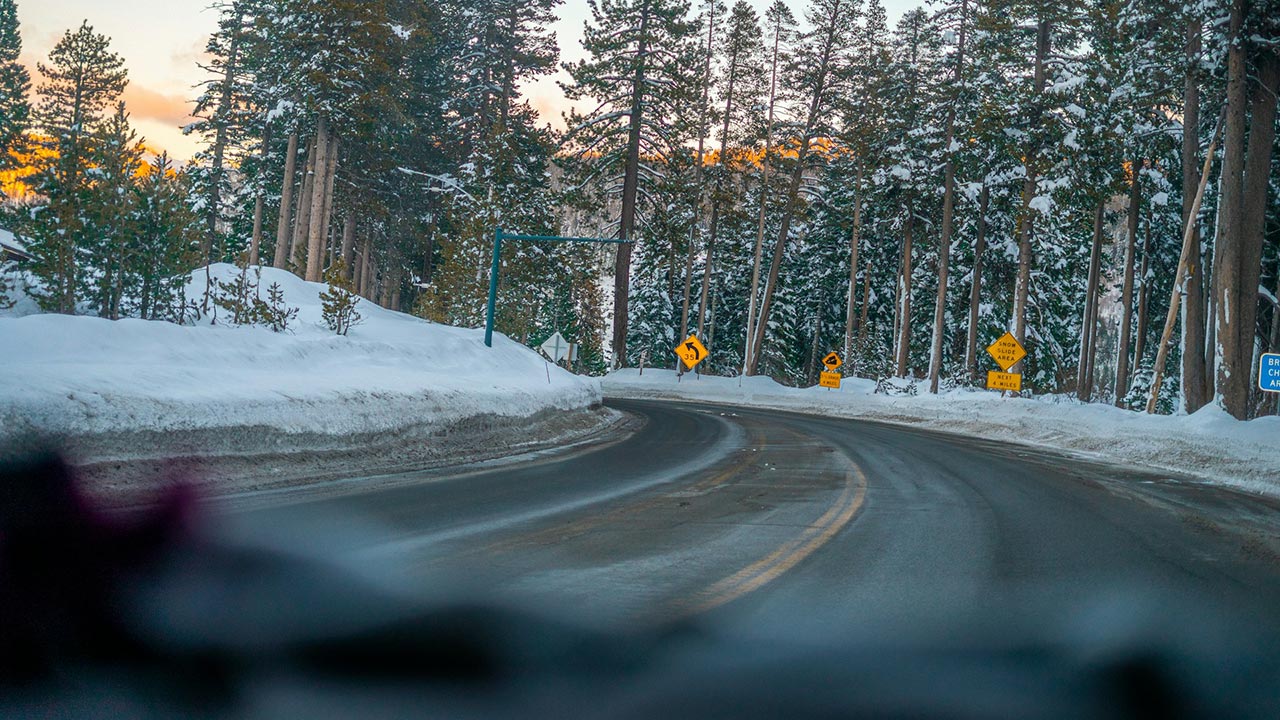
Once the road is covered in packed snow or a thin glaze of ice, your tires are working with a fraction of the grip they have in summer. That means every demand you place on them, from turning into a side street to easing off the highway, has to be scaled down. When you carry dry‑pavement speed into a slick corner, you are asking the tires to do more than the surface allows, so the car keeps going straight while the road bends away, often straight toward the shoulder or median.
Winter crash data repeatedly show that drivers underestimate how much longer it takes to stop and how gently they must steer once temperatures drop. Guides to Common Winter Driving Mistakes That Lead to Accidents, And How to Avoid Them explain that even a modest cut in speed can dramatically reduce stopping distance on slick pavement. When you ignore that and cling to your usual pace, you are effectively betting that you will not encounter a surprise stop, a sharper-than-expected curve, or a patch of black ice, a gamble that fails every winter.
Panic braking: the split-second move that finishes the slide
Speed sets up the problem, but panic braking often seals your fate. The instinct when you feel the car drift toward the shoulder is to stomp the pedal and hope the anti-lock system saves you. On ice, that sudden weight transfer can unload the rear tires, snap the vehicle sideways, and turn a minor drift into a full spin that ends in the ditch. Even if you stay pointed forward, locked-up or chattering wheels have almost no lateral grip, so you slide wherever momentum takes you.
Instructors who teach winter control drills warn that Don, Slam the Brakes, Ever Panic when the road is slick, because Slamming the pedal is one of the fastest ways to end up in a ditch during winter weather. That advice is echoed in broader winter driving safety tips, which stress that smooth, progressive pressure gives the tires a chance to keep rotating and maintain some steering authority. Tire engineers go further, noting that placing too much pressure on the pedal at once can overwhelm the contact patch, which is why guidance on Accelerating and braking in snow and ice urges you to Accelerate smoothly and Apply gentle pressure while planning for slowing rather than sudden stops.
Sudden steering and overcorrection: from shoulder drift to spin
Even if you avoid hammering the brakes, a sharp steering correction at winter speeds can be just as destructive. When your right wheels drop into soft snow at the edge of the lane, the safest move is usually a small, gradual correction. The habit that sends vehicles spinning is yanking the wheel back toward the center, then yanking it again when the rear steps out. Each abrupt input stacks more lateral force on already marginal grip, until the car pivots and slides sideways into the ditch or oncoming lane.
Coaches who work with off-road and powersports drivers emphasize that Avoiding sudden movements is critical when driving in winter conditions, because sudden steering, braking, or acceleration can instantly break stability. That same logic applies to your daily commute, which is why winter safety guidance for ATVs and UTVs urges you to steer and brake gently to maintain stability in low-traction environments, advice captured in detailed Avoiding Sudden inputs. When you combine highway speed with that kind of abrupt wheel movement, you are essentially asking the car to perform a maneuver that even a race tire on dry asphalt would struggle to complete.
Tailgating, ramps, and the illusion of control
Most ditch-outs do not start in the middle of a straight, empty road. They begin when you crowd the bumper ahead of you, dive into an off-ramp at your usual pace, or assume that a plowed lane has summer-level grip. Tailgating in winter is especially risky because it leaves no margin to brake gently. When the vehicle in front taps the brakes for a deer, a drifting semi, or a red light, you are forced into the very panic stop that winter instructors tell you to avoid.
Breakdowns of top winter errors list Mistake number one as Tailgating, Following Too Closely, noting that When the roads are icy, stopping distance increases dramatically and Unfor giving gaps can turn a minor slowdown into a pileup. The same analysis flags Mistake number two as Driving Too Fast for Conditions, because that habit magnifies every other risk, from hidden black ice to tightening curves, and can quickly lead to a skid or loss of control. Even experienced Drivers are reminded in compilations of the top 10 most unsafe winter driving habits that they must check their tires more often in winter and keep tread depth healthy, as outlined in a detailed TOP 10 MOST UNSAFE WINTER DRIVING HABITS guide, because following too closely on worn rubber is a direct route to the ditch.
What ditch recoveries reveal about the original mistake
Ask any tow operator or driving coach who spends winter weekends pulling cars out of snowbanks, and you will hear the same pattern. The driver usually says the slide came out of nowhere, but the scene tells a different story: a curve taken too fast, long straight skid marks into the shoulder, or a spin that started where the plowed lane narrowed. Those clues point back to the same root habit, treating a winter road like a dry one until the moment everything goes wrong.
Instructional breakdowns of what you need to know to avoid the ditch during snowy weather explain that losing control of your car is most likely to happen in the winter, and that the slide often begins several seconds before the driver notices. In one widely shared video from Mar, an instructor walks through how a small speed reduction and earlier braking would have kept a car on the pavement, illustrating how subtle the early warning signs can be before the vehicle drops into the snow. That kind of analysis, captured in resources like what you need to know to avoid the ditch, reinforces that the ditch is usually the final chapter of a story that started with overconfidence, not a freak patch of ice.
The online consensus: slow down and smooth out
Professional crash data and grassroots driving advice converge on the same point: your best winter safety tool is your right foot. Enthusiasts and commuters who trade stories about close calls consistently highlight the danger of keeping summer speeds when the temperature drops. They describe how a small lift of the throttle before a bend, or an extra car length of following distance, turned what could have been a spin into a non-event.
That message is distilled in community discussions of 5 Mistakes Not to Make Behind the Wheel in Winter, where drivers single out NOT ADJUSTING your speed to conditions as the most common and most preventable error. One popular thread titled Mistakes Not to Make Behind the Wheel in Winter urges you to stop Driving the same speed in rutted snow that you would in rain, and to build habits like earlier braking and gentler lane changes. That grassroots consensus mirrors the formal guidance from safety organizations, which repeatedly stress that you cannot out-tech or out-muscle physics, but you can choose to slow down and smooth out your inputs.
Tires, visibility, and the hidden multipliers of risk
Speed and sudden inputs are the main characters in most ditch stories, but equipment and visibility quietly shape how forgiving your mistakes will be. Bald or all-season tires that have aged out of their grip window turn a small misjudgment into a full slide, while poor wipers or dim headlights delay the moment you spot trouble ahead. If you are already in the habit of driving at the edge of what the road can handle, those deficits leave you no room to recover.
Experts who catalog the 8 Worst Mistakes People Make While Driving in the Winter warn that Driving with tires that lack sufficient tread depth dramatically increases the odds of losing control of your vehicle, because Road traction is key for staying out of the ditch and tires that lack sufficient tread depth simply cannot bite into snow or channel slush. They recommend checking tread wear bars and considering dedicated winter tires on vehicles like a 2018 Subaru Outback or a 2020 Honda CR-V if you regularly face snow. Broader rundowns of Winter’s Most Frequent Driving Errors add practical reminders that big boots can make it hard to feel the pedals and that you should keep Flares and other emergency gear in the car, advice summarized in a safety overview that begins with the simple phrase Here is a look at five of the top mistakes drivers make in winter driving conditions.
Building a new winter habit: “Slow Down, Way Down”
If the old habit is treating winter like an inconvenience instead of a different driving season, the replacement is straightforward: cut your speed, extend your margins, and commit to gentle control. That starts before you even leave the driveway, by budgeting extra time so you are not tempted to rush. On the road, it means lifting earlier for red lights, easing into ramps, and resisting the urge to match the fastest vehicle in your lane just because you can.
Practical checklists of 8 Winter Driving Safety Tips urge you to Slow Down, Way Down, noting that Slowing down gives you more time to react and more distance to stop, especially when you ease into your stops instead of stabbing the pedal. Those same guides remind you not to Slam the Brakes and to avoid sudden steering, because smoothness is your best defense against surprise slick spots. Broader explainers on 8 Winter Driving Safety Tips reinforce that message with simple rules of thumb, like doubling your following distance and treating every bridge or overpass as a potential ice patch. When you internalize those habits, you are no longer relying on luck to stay out of the ditch, you are stacking the odds in your favor every mile you drive.