What stranded travelers are saying about the Channel Tunnel disruption today
Photo credit: Pharaoh_EZYPT/Pixabay.com
Thousands of you set out today expecting a routine hop under the Channel, only to find yourself stalled in car queues, stuck on darkened trains, or refreshing delay alerts that never quite keep pace with events. As a power failure crippled traffic through the Channel Tunnel, the disruption turned a crucial holiday corridor into a test of patience, planning, and basic communication. What you are saying from platforms, terminals, and service stations on both sides of the water reveals not just frustration, but a clear sense of what needs to change before the next breakdown.
The day the tunnel stopped moving
You woke up to a transport system that, for a few tense hours, simply stopped. A technical failure on the high-voltage supply feeding the Channel Tunnel brought Eurostar and vehicle shuttles to a halt, cutting the rail artery that usually links London, Paris, Brussels, Amsterdam and the rest of mainland Europe in a matter of hours. For many travelers, the shock was not just that trains were cancelled, but that a route marketed as resilient and high speed could be rendered unusable in an instant by a single power glitch.
By mid afternoon, operators were talking about a gradual resumption of services, with some trains expected to restart around 3 p.m., yet the backlog of passengers and vehicles meant that any movement felt painfully slow on the ground. Official updates spoke of Live service updates and Delays between London St Pancras International and Lille, Europe, Due to a problem in the Tunnel, but for you, that translated into missed connections, abandoned hotel bookings, and hours of uncertainty in crowded stations.
Stranded on trains between two countries
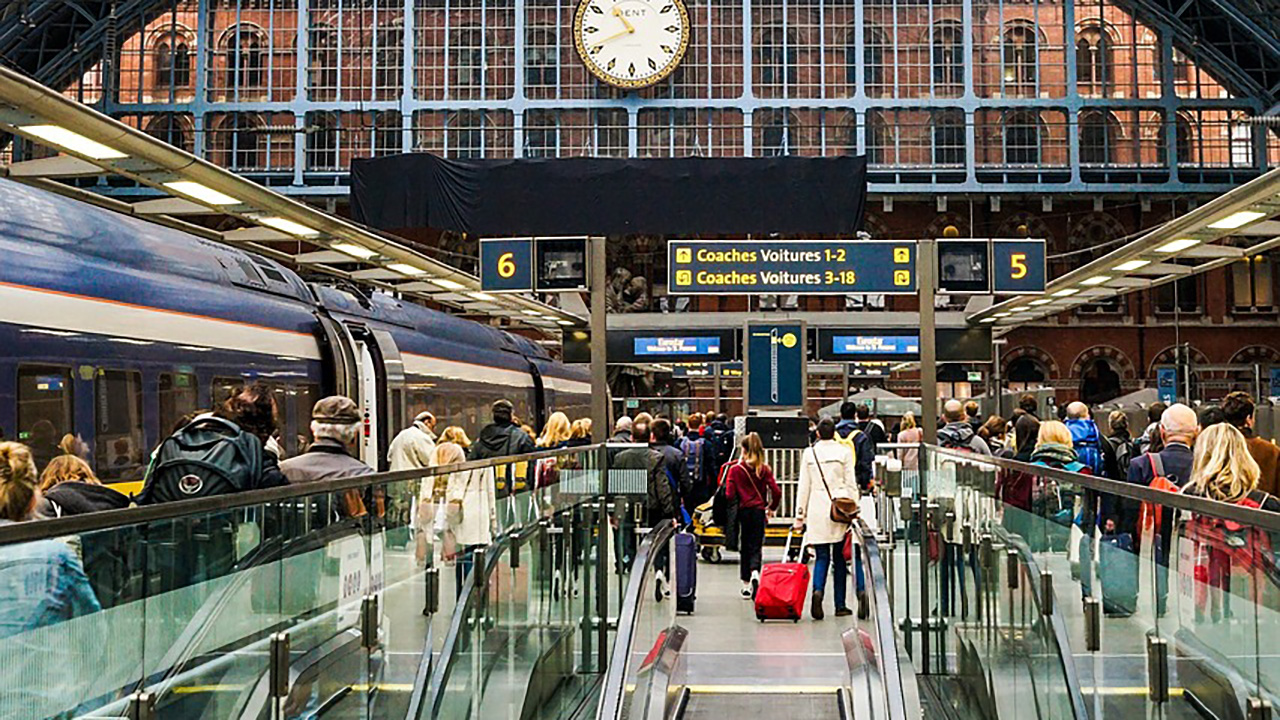
If you were already on a train when the power failed, the experience was more than an abstract delay notice. Passengers described sitting motionless in the darkness of the tunnel or just outside it, watching battery levels on phones drop as the minutes stretched into hours. Air conditioning and lighting held up, but the sense of being suspended between two countries, with no clear timeline for rescue or reversal, left many of you feeling trapped and powerless.
Some of you took to social media to document the standstill, posting images of packed carriages and children sprawled on luggage in the aisles. One account summed up the mood with a blunt message on X that began, “Passengers onboard Eurostar services reported being stuck on trains between the two countries. One wrote on X: “Just w…”, capturing both the disbelief and the fatigue of watching the clock tick with no movement. For many, the worst part was not the physical discomfort, but the lack of precise, timely information about what would happen next.
Families watching ‘trips of a lifetime’ unravel
Among the most anxious voices today were those of long-haul visitors who had built entire holidays around a smooth Channel crossing. If you had flown in from abroad, the tunnel was not just a commute, it was the hinge that held together a carefully plotted itinerary of cities, museums, and reunions. When trains were cancelled outright, that hinge snapped. One family from Mexico described how their long planned European journey, which they had saved for and mapped out in detail, was suddenly in doubt after their Eurostar service was pulled from the departure board.
For travelers like that family from Mexico whose Eurostar train was cancelled, the disruption was not just a lost afternoon, it was the collapse of hotel bookings, museum slots, and onward flights that could not easily be rebooked at peak season prices. You heard similar stories from couples trying to reach weddings, students heading back to term, and grandparents timing their journey to meet newborn relatives. The common thread in what you are saying is that the tunnel is marketed as a dependable bridge between lives on either side, so when it fails, the emotional cost is as real as the financial one.
Seven hour queues and the car traveler’s ordeal
If you were driving rather than taking the train, the disruption played out in a different but equally punishing way. Instead of being stuck in a carriage, you found yourself in a sea of brake lights, inching forward toward Folkestone or Calais with little sense of when you might finally board a shuttle. Reports of seven hour waits filtered through the lines, and many of you described service areas running low on food, with families rationing snacks and trying to keep children entertained in cramped back seats.
The scale of the standstill was a stark reminder of how heavily cross Channel road traffic leans on a single piece of infrastructure. The 50-kilometer, 32-mile Channel Tunnel that has revolutionized U.K. and Europe rail travel also underpins the vehicle shuttle system, so when power to the trains falters, car queues back up rapidly on both sides. Drivers stuck in those lines spoke of feeling forgotten, with limited loudspeaker announcements and little clarity on whether to wait it out or seek ferries and hotels instead.
Inside the power failure and the fight to restore service
From your vantage point on platforms and in queues, the cause of the chaos can feel abstract, but the technical story matters because it shapes how quickly you can expect normality to return. The disruption has been traced to a failure in the power supply that feeds trains inside the tunnel, a reminder that even heavily engineered systems depend on a relatively small number of critical components. When that supply faltered, operators had to halt traffic to avoid stranding more trains underground, which is why you saw departures vanish from boards even in cities far from the coast.
Behind the scenes, Engineers were still struggling on Tuesday to restore the power supply to trains, working to isolate the fault and bring sections of the system back online without risking further outages. You heard announcements promising that services would be “gradually resumed” and that safety checks were under way before each train could enter the tunnel. For passengers, that translated into a drip feed of partial departures, with some trains running and others cancelled at short notice, making it hard to know whether to stay in line or abandon the journey.
What you are saying about communication and updates
Across stations and terminals, one complaint has echoed more loudly than any other: you feel that communication has not kept pace with the disruption. Many of you reported that loudspeaker announcements were sporadic or inaudible, leaving crowds to cluster around departure boards or staff members who often had little more information than you did. The official websites and apps, while updated periodically, sometimes lagged behind events on the ground, so a train listed as “on time” online might already be showing as cancelled at the station.
Eurostar’s own traffic alerts about suspended services between Paris, London, Brussels and Amsterdam with a gradual resumption expected tried to set expectations, but for you, the language of “gradual” and “expected” felt too vague when you needed concrete departure times. Travelers have been clear that they do not expect miracles in the face of a major technical failure, but they do expect honest, frequent updates, even if the message is simply that there is no new information yet. The gap between what you experienced and what you were told is likely to be a central point of scrutiny once the immediate crisis passes.
Balancing anger and empathy on crowded platforms
In the crush of disrupted travel, emotions ran high, yet many of you described a tension between anger at the situation and empathy for the staff trying to manage it. Ticket hall queues were filled with raised voices and frayed tempers, but there were also scenes of passengers sharing snacks, watching each other’s bags, and swapping information about alternative routes. You could see frontline workers absorbing the brunt of frustration for decisions made far above their pay grade, and some travelers made a point of thanking them for small acts of flexibility, like rebooking on later trains or helping families find quieter corners to wait.
One stranded passenger, One, Sophie Gontowicz, trying to head back to Paris after three days holidaying in the British capital with her family, captured that balance by saying there was “no point in getting annoyed” even as she faced hours of delay. Her attitude mirrors what many of you expressed: irritation at the infrastructure failure and at patchy communication, but also a recognition that the staff on the concourse did not cause the power glitch and were often improvising solutions in real time. That mix of solidarity and exasperation is shaping how today’s disruption will be remembered.
Your rights, refunds and what to push for
As the hours ticked by, more of you shifted from asking “when will we move” to “what am I entitled to now that we have not moved at all.” Under European and U.K. rail rules, you generally have rights to refunds, rerouting, and in some cases compensation when services are cancelled or severely delayed, regardless of whether the cause is a technical fault. The key is to document your original booking, the actual delay, and any additional costs you incurred, such as emergency hotel stays or replacement tickets on other routes.
Guidance circulating among Travellers being urged to check whether they are entitled to a refund and compensation as Eurostar suspends its services stresses that you should not simply accept a voucher if you would prefer cash, and that you can often choose between rebooking at the earliest opportunity or taking a full refund if the journey no longer makes sense. Many of you have said you plan to file claims not only for the ticket price but also for the knock on impact on your travel plans, arguing that a system as critical as the Channel Tunnel should carry a higher standard of accountability when it fails.
Looking ahead to the ‘gradual return’ of normality
By early evening, operators were talking about a phased return to normal service, with some trains beginning to run and predictions that timetables could be largely restored overnight if no further faults emerged. For you, that promise of a “gradual return” is welcome but not entirely reassuring, especially if you are still stuck far from home or facing a night on a station floor. The backlog of passengers and vehicles will not vanish the moment the first train rolls through the tunnel, and many of you are already bracing for knock on delays into tomorrow.
Official messages have suggested that Eurostar is likely to be back to normal overnight after the Channel power glitch sparked travel chaos, yet your comments from the ground underline that “normal” will feel different after a day like this. Many of you are calling for clearer contingency plans, more robust backup power systems, and a more transparent explanation of what went wrong. As trains begin to move again, the stories you are telling from today’s disruption will shape the pressure on operators and regulators to ensure that the next time the lights flicker, the entire cross Channel lifeline does not grind to a halt.