Woman Refused to Keep Paying Half the Rent After Her Roommate’s Boyfriend Basically Moved In Without Ever Being Added to the Lease
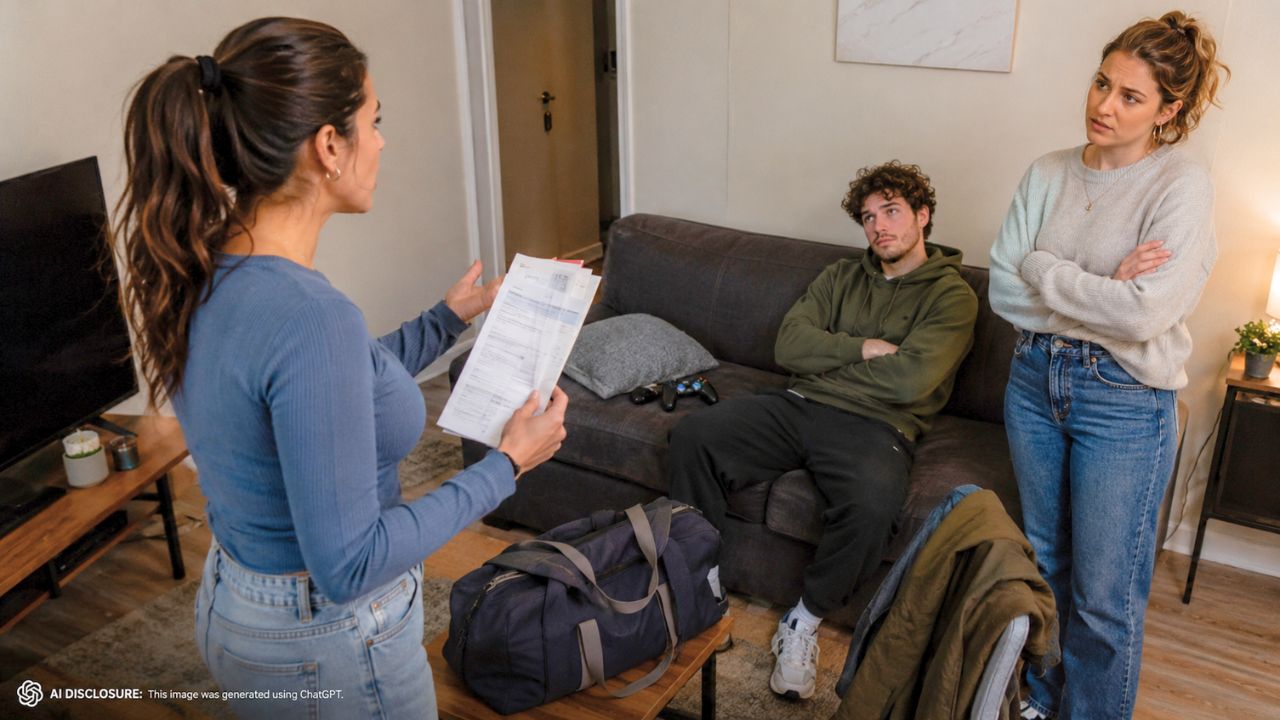
Photo credit: AI-generated image created using ChatGPT. Illustrative only.
After nearly three years of a mostly smooth roommate setup, one renter says the balance in their home snapped the moment a boyfriend started showing up like he lived there. The roommate relationship had been quiet and predictable—shared spaces kept clean, occasional dinners, TV at night—until the new relationship turned the house into what felt like a three-person arrangement without any agreement.
In the original post, the woman describes watching a visitor gradually become a constant presence, complete with the kind of access that usually comes with paying rent. When she finally tried to adjust what she paid, her roommate exploded—and threatened legal action.
Three years of routine, then four months of “he’s always here”
The living situation started as practical, not particularly close. The woman moved in after being introduced through a friend-of-a-friend connection, and the two roommates coexisted well enough for almost three years.
That changed about four months ago, when her roommate began dating someone new. He has his own place, but the poster says she began seeing him “practically every day.” What might have looked like a normal relationship at first started to feel like something more permanent.
From her perspective, it wasn’t just frequent visits. It was the way the household rhythms shifted—another person in the kitchen, another person using utilities, another person around even when the person who invited him wasn’t home.
The moment that made it feel like a move-in, not a visit
The detail that pushed it over the line for her was access. She says there were times she came home from work and found the boyfriend had let himself in even though her roommate wasn’t home.
That kind of entry changes the feeling of a shared house fast. It’s not just awkward; it can feel unsafe or at least out of control, especially when a person who isn’t on the lease appears to have a working routine there.
On top of that, she says she doesn’t like him. She describes him as condescending, claiming he uses a specific “kindergarten teacher voice” on her that makes her feel talked down to. The dynamic wasn’t just crowded—it was uncomfortable.
Pots, pans, and rising bills: small stuff that adds up
Even without a dramatic blowup, daily annoyances started stacking. She says she caught him using her pots and pans to make food. He washed them afterward, but she emphasizes she never gave him permission to use her things in the first place.
Then came the money signals. She noticed the utility bills were going up and felt certain the increase was connected to having an extra person in the house all the time.
In many roommate arrangements, utilities are the first place “one more person” shows up. More showers, more laundry, more cooking, more devices charging, more heat or air conditioning use—small increases that become obvious over a couple of billing cycles.
She paid one-third instead of half, and the rent fight hit immediately
The pair’s rent routine was straightforward: the poster pays her share in cash, and the roommate sends the payment to the landlord through Zelle. But this month, she changed what she paid.
Instead of giving half, she only gave 33%—her way of signaling that if the household is functioning like three adults live there, the cost should be split three ways. She told her roommate to get the other third from her boyfriend because, in her view, he lives there now.
Her roommate “flipped” out. The roommate argued that because the boyfriend stays in her room, his contribution—if any—should count toward her portion, not the poster’s. In other words: the roommate sees the poster as still responsible for half the rent no matter who is sleeping in the other bedroom.
The poster didn’t buy it. To her, rent isn’t a private deal based on which room someone sleeps in; it’s payment for the whole shared home and its day-to-day burdens. The presence of a third adult affects kitchen access, living room comfort, safety, utilities, noise, and the general feeling of being able to relax.
The threat to sue turned a roommate dispute into something sharper
After the argument, the roommate escalated in a way that made the stakes feel real. She threatened to sue, claiming the poster owes more rent than she paid. The poster’s reaction is blunt: she doesn’t think that’s true.
Whether a lawsuit is realistic or not, the threat changes the tone of the house. It suggests the roommate is willing to treat the conflict as a formal debt issue, not a negotiation between two people who share a fridge and a hallway.
And there’s another pressure point sitting underneath everything: the boyfriend isn’t mentioned as being on the lease. If a landlord finds out there’s a long-term occupant not approved in writing, the consequences can fall on the people who are on the lease—fees, demands to add someone, or even risks to the tenancy depending on the terms.
That’s why the poster’s frustration isn’t just about money. It’s also about control. If a third person is effectively living there, she wants the arrangement acknowledged and handled like an adult decision, not treated like an informal bonus guest who happens to have keys.
What outside observers zeroed in on: proof, permission, and the lease
Even with limited details beyond the poster’s account, the pressure points are clear: the boyfriend letting himself in, the sense that he’s there daily, and the poster’s decision to unilaterally reduce her rent payment. Those are the facts driving the conflict.
In disputes like this, people tend to focus on documentation—what the lease says about guests, how long someone can stay, and whether the landlord needs to approve additional occupants. Another common focus is boundaries inside the home: whether the boyfriend has permission to be there unsupervised, use shared spaces freely, or use someone else’s cookware.
And then there’s the practical reality that doesn’t care who’s “right”: if the full rent isn’t paid, the landlord may still expect the leaseholders to make it whole. That can create a fast-moving countdown, where roommates stop arguing about fairness and start scrambling to avoid late fees or eviction pressure.
For now, the house is stuck in an uneasy place. One roommate believes the home has quietly turned into a three-person living situation and adjusted her payment accordingly. The other sees it as her private relationship staying inside her room—and treats the missing rent as a breach serious enough to threaten court. Unless they reach an agreement about the boyfriend’s presence and the money, they’re not just splitting rent anymore; they’re splitting the definition of what their home even is.
Check out more from Now Rundown:
- A Party of 12 Came Back a Month Later Demanding Their $80 Tip Refunded — My Restaurant Made Me Pay It
- Her Coworker Kept Filing the Same Complaint About Her After Being Warned — Then She Filed a Counter-Report With Every Email Documented
- Siblings Demanded Half of Their Sister’s $11 Million Inheritance — She Refused Because They Never Visited
- The Kid I Bullied in Middle School Just Interviewed for a Job on My Team — He Bombed It and I Didn’t Hire Him

Abbie Clark is the founder and editor of Now Rundown, covering the stories that hit households first—health, politics, insurance, home costs, scams, and the fine print people often learn too late.