Neighbor Accused Family of Breaking In — Then Claimed She Had Them on Camera
Photo credit: Now Rundown
A Missouri family said a neighbor’s repeated accusations about them breaking into her property turned into a serious safety concern after she allegedly began sending other people to confront them at their home.
The family shared the situation in a post on r/legaladvice, explaining that the first confrontation happened about two years earlier. According to the post, the neighbor sent her nephew and one of his friends to the family’s house to accuse them of trying to break into her home.
The family was shocked. They said they had been friendly with the neighbor before that, the kind of friendly where they would say hello in the yard and ask how she was doing. There had not been a long-running feud, at least not from their side, and they did not understand why she thought they had tried to get into her house.
At first, the two men who came to the door were aggressive, according to the family. But once they saw how confused the family was, they calmed down. That did not erase the fear or the awkwardness, though. A neighbor sending people to your door to accuse you of a crime is not a small misunderstanding. It changes the way you see the house next to yours.
After that, the family stopped speaking to her.
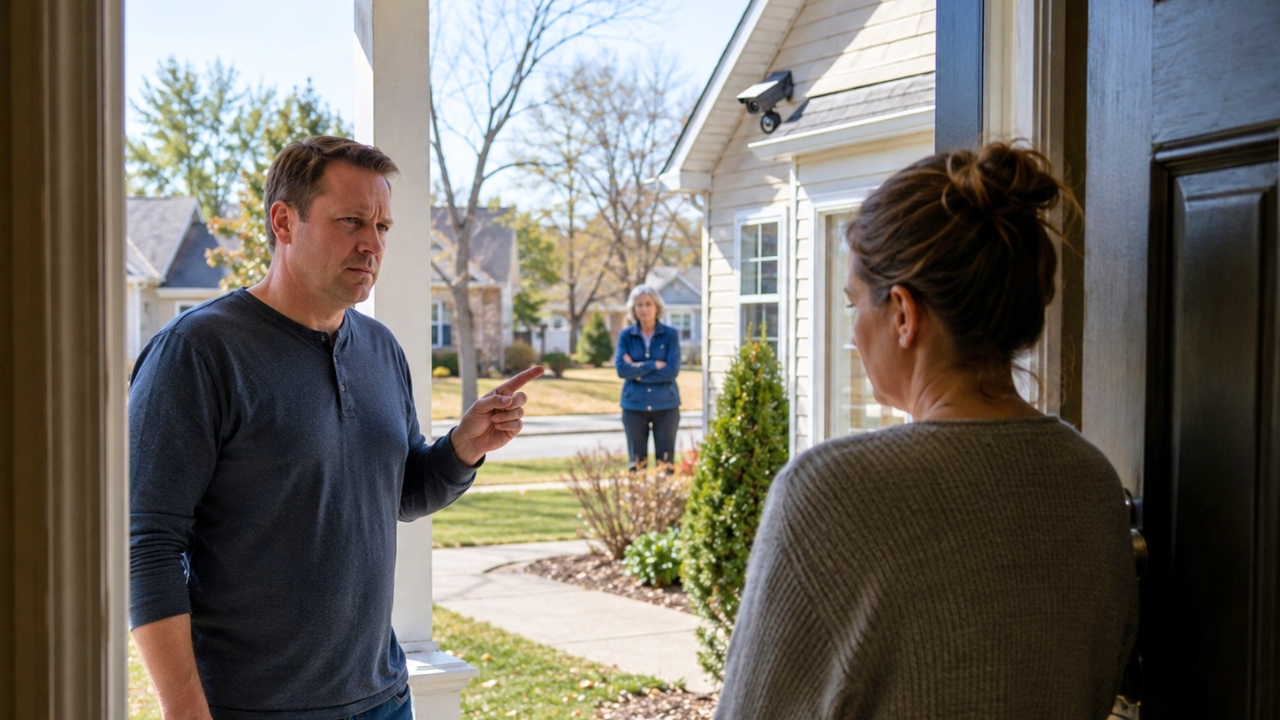
The neighbor then installed cameras pointed directly at their house, according to the post. The family also said the neighbor began talking to herself outside and saying things that made them even more uncomfortable, including claims that she knew they were “trying to astral project” into her home.
That detail made the situation harder to handle. The family was not describing a normal property dispute where two neighbors disagreed about a fence, a tree, or a parking spot. They were describing accusations that did not seem connected to reality, followed by cameras, confrontation, and other people being sent to their door.
The family said they later overheard the neighbor’s adult children sitting in a car and talking about how they did not know what to do because their mother kept harassing the family. That seemed to confirm that the family was not imagining the tension.
For a while, things quieted down.
Then a cat got into the neighbor’s shed.
The family said they knew about the cat but chose not to tell the neighbor because of the past accusations. They did not want to be drawn back into the conflict or give her another reason to claim they had been on her property.
But after people came to clean out the shed, the neighbor allegedly sent a man to the family’s house. According to the family, the man said they were “going to file a police report” because they supposedly had the family on camera breaking in.
The family was stunned again. This time, instead of trying to explain quietly, they told the man to please call police so the issue could be cleared up and so they could file a harassment report of their own.
That response showed how exhausted they had become. The family was no longer only worried about being falsely accused. They were worried about random people showing up at their home, confronting them, and repeating claims that could create real legal problems if they were believed.
The family said the situation had caused a lot of stress, especially because they had a sibling with a disability who required 24/7 care. That detail mattered because the family was already carrying serious responsibility inside the home. Having outsiders come to the door with accusations added fear and pressure to a household that needed stability.
The family’s biggest question was what they could legally do. They had not filed reports every time something happened, but after the latest confrontation, they decided to start documenting everything.
That was the point where the situation crossed from strange neighbor behavior into something that felt like a pattern.
Commenters Told the Family to Stop Treating It Like a Neighbor Argument
Commenters urged the family to begin documenting everything immediately and to avoid direct engagement with the neighbor or anyone she sent over.
Several people said the family should keep a written log with dates, times, names, descriptions, and any witnesses. If someone came to the door again, they suggested documenting who it was, what they said, and whether there was video from a doorbell camera or security system.
Others said the family should file a police report, especially after the neighbor allegedly sent multiple people to confront them. Even if police did not take major action right away, commenters said a report would create a record that the accusations were part of a repeated pattern.
Some also recommended calling police if anyone came to the home again to accuse or threaten them. The advice was not to argue at the door or try to reason with the messenger. Instead, commenters said the family should stay calm, avoid escalation, and let officers deal with the accusation directly.
Several commenters focused on the neighbor’s cameras. They noted that outdoor cameras are often legal if they are recording areas visible from the neighbor’s property or public view, but the cameras still mattered as part of the larger harassment pattern. The family could not necessarily force the cameras down, but they could document where they were pointed and when they appeared.
Others suggested practical safety steps, including installing their own cameras, adding a doorbell camera, saving footage, and making sure everyone in the household knew not to open the door for people sent by the neighbor.
A few commenters also said that if the neighbor’s behavior appeared connected to a mental-health crisis or cognitive decline, the family might consider contacting adult protective services or a local crisis line. But they were careful to separate that from the family’s immediate safety. Whatever the explanation, commenters said the family still needed to protect themselves and create a record.
The story did not end with an arrest, a lawsuit, or a restraining order. It ended at the moment many people recognize from ugly neighbor disputes: the point where the family realized this was not going away on its own.
They had tried distance. They had stopped speaking to the neighbor. They had avoided bringing up the cat in the shed because they did not want to be accused again. But the accusations still came back to their front door.
That is what made the situation so draining. The family was not trying to win an argument or prove a point. They were trying to live in their home without being accused of breaking into someone else’s property.
Once police reports enter the conversation, the stakes change. A false accusation can follow a person in ways a regular neighbor argument does not. And when other people are sent to deliver those accusations face-to-face, the situation can feel unsafe even if no one has made a direct physical threat.
Commenters seemed to understand that. Their advice was not dramatic. It was practical: document every incident, report the pattern, avoid direct confrontation, and make sure the next time someone shows up accusing the family of a crime, there is an official record showing this has happened before.
For the family, that paper trail may be the only way to keep a strange situation from turning into something with bigger consequences.

Abbie Clark is the founder and editor of Now Rundown, covering the stories that hit households first—health, politics, insurance, home costs, scams, and the fine print people often learn too late.