College Renter Refused to Pay an Extra $200 a Month for a Roommate’s Poker Room After Subleasing Plans Fell Through
Photo credit: AI-generated image created using ChatGPT.
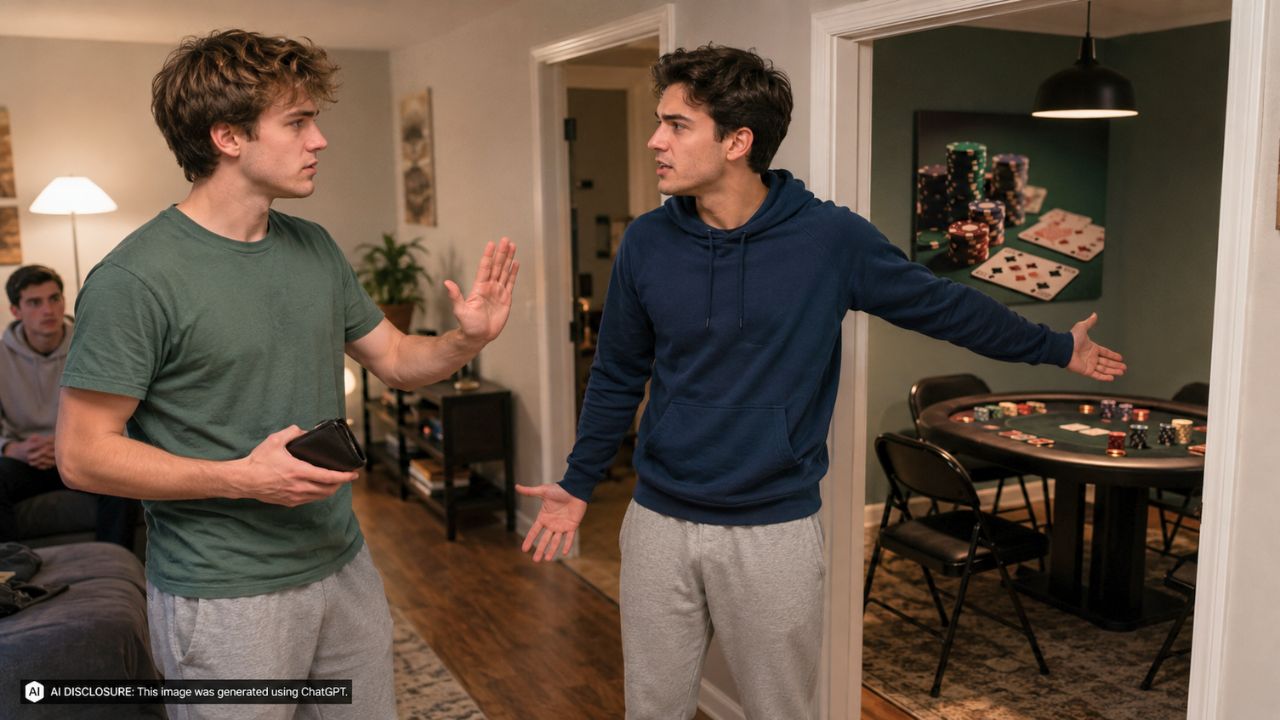
With three months left on a shared lease, a college grad thought the last stretch would be simple: keep paying their portion, finish out the contract on paper, and move on. Instead, a surprise visit back to the house turned into a gut-punch—one bedroom had been repurposed into a full-on poker room, complete with trash, alcohol, and a smell that made it clear nobody was treating the space like someone else’s rented home.
In the original post, the former roommate laid out how an already touchy rent arrangement spiraled after a subleasing plan quietly collapsed. Now they’re trying to lower what they pay for the final months, and the roommates still living there are responding with anger and refusing to accept anything less.
The rent split changed, and the resentment never really went away
The lease was a one-year deal shared by four roommates, totaling $2,600 a month. At first, everyone paid evenly: $650 each. Two of the roommates— including the person writing the post—had larger bedrooms, while the other two had smaller ones.
In February 2025, the group changed how they split rent. The two people with the larger rooms started paying $750 each, while the two with smaller rooms paid $550. The poster says that shift was driven by one roommate “throwing a fit” about having a smaller room, even though everyone knew the room sizes before signing.
That context matters, because by the time the poster moved out early after graduating six months ahead of schedule, the monthly numbers already felt loaded. The difference between $550 and $750 wasn’t just a math problem—it was part of a bigger argument about fairness and who gets stuck paying for what.
Subleasing was supposed to be the clean exit
The poster says they knew they’d be leaving early and tried to find someone to sublease their room. But a roommate—someone they considered a friend at the time—pushed back hard on the idea of a stranger moving in. According to the post, that roommate said he knew “several people” who would take the spot and asked the poster not to list the room online.
Then, the plan changed. The roommate later told the poster that nobody would actually be moving in. By the time that admission came, the poster says the seasonal demand for summer subleases had dried up, and it was too late to find a replacement tenant.
That left the poster paying for a room they weren’t using. And because the group had already adjusted the rent based on bedroom size, they kept paying the higher $750 share, even after leaving the city.
The “compromise” fell apart a week before move-out
After the sublease option fizzled, the roommate offered what sounded like a middle ground: he would move into the poster’s larger bedroom once the poster left. With that switch, the poster would effectively drop to the lower rent amount tied to the smaller room for the remaining months.
But the post says that agreement didn’t hold. One week before the poster moved out, the roommate backed out of the switch and said he didn’t want to do it anymore. The poster left anyway, and for three months continued paying $750 despite not stepping foot inside the house once.
From the poster’s perspective, that’s where the goodwill ran out. They say they were still meeting their lease obligation, but the roommates living in the house weren’t meeting basic expectations about permission and respect.
The unannounced visit revealed what the room had become
Three months into paying for an empty room, the poster returned to the house without warning anyone. That’s when they discovered the room hadn’t just been left unused—it had been converted into a poker room “without asking.”
The description is blunt: alcohol and trash “all over the room,” and a bad smell. It wasn’t framed as a one-night mess. It read like a room that had become a hangout space, likely used repeatedly, while the person paying for it wasn’t even told.
The poster acknowledges the legal reality: they’re still on the lease. But emotionally and practically, they see it as roommates taking their money while using their paid-for space as a party room. They say if someone had asked first, they “probably would have been cool” with paying less—maybe even just $50 less per month. The issue, they argue, wasn’t the concept of using the empty room. It was doing it secretly and acting entitled to it.
They decided to pay less, and the house responded with hostility
After seeing the poker-room setup, the poster ran the numbers. The lease has six months remaining after they moved out, but only three months left now. If they’d paid the same $550 as the roommate in a smaller room for the six months they were gone, that would total $3,300. Paying $750 for those same six months totals $4,500—a $1,200 difference.
So they proposed a self-correction: pay $350 per month for the last three months. In their math, that would make it “as if” they had paid $550 since moving out.
They sent that plan by text, since they don’t live in the same city anymore. The response was immediate and ugly. The roommates “name called,” insulted them, and said they didn’t accept the reduced amount. The roommates argued the poster was trying to back out of something they’d already agreed to, and suggested that if they didn’t want anyone using the room, they should have locked it or successfully found a subleaser.
That’s the standoff: one side saying, “You owe what you agreed to pay,” the other saying, “You used what I was paying for without permission, and I’m done overpaying for it.”
People zeroed in on proof, the lease, and the landlord question
The post itself doesn’t include a detailed comment thread, but the story naturally triggers the same set of practical concerns people tend to raise in roommate disputes: what the lease says, what the landlord expects, and what happens if one tenant simply starts paying less.
Even if the poster feels morally justified, the risk is straightforward. If the full rent doesn’t get paid, the landlord typically doesn’t care which roommate decided to “adjust” things—everyone on the lease can be on the hook, and late payments can create fees, credit damage, or eviction pressure depending on how the lease is written and enforced.
At the same time, the poster’s narrative raises its own paper-trail questions. If the roommates converted a bedroom into a recurring drinking-and-gambling hangout space, that’s the kind of detail some tenants would document with photos, timestamps, and written messages—not necessarily to start a war, but to protect themselves if the dispute escalates into claims about damage, cleaning, or who had access to the room.
For now, the poster seems focused on a narrow outcome: stop paying a premium for a room they no longer occupy—especially after learning it’s being actively used as a poker room. With three months left, the clock is running, the relationships sound burned, and the next move could determine whether this ends as a messy roommate breakup or a financial headache that follows them after graduation.
Check out more from Now Rundown:
- A Party of 12 Came Back a Month Later Demanding Their $80 Tip Refunded — My Restaurant Made Me Pay It
- Her Coworker Kept Filing the Same Complaint About Her After Being Warned — Then She Filed a Counter-Report With Every Email Documented
- Siblings Demanded Half of Their Sister’s $11 Million Inheritance — She Refused Because They Never Visited
- The Kid I Bullied in Middle School Just Interviewed for a Job on My Team — He Bombed It and I Didn’t Hire Him

Abbie Clark is the founder and editor of Now Rundown, covering the stories that hit households first—health, politics, insurance, home costs, scams, and the fine print people often learn too late.