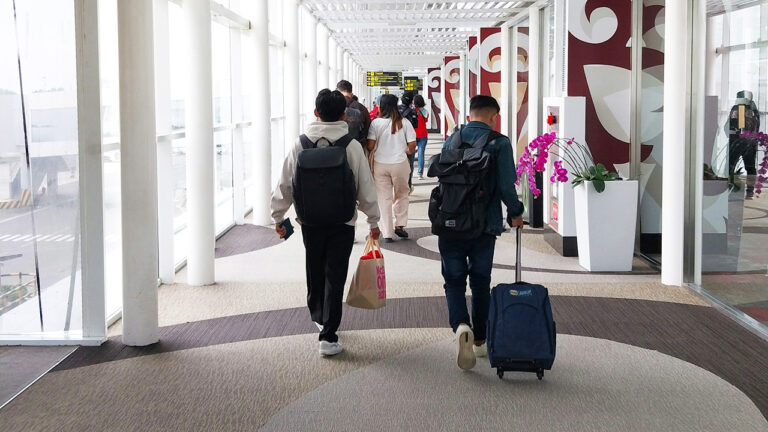
Travelers face delays as winter systems snarl flights and highways
Photo credit: Anete Lūsiņa/Unsplash.com
Winter weather has turned the year’s busiest travel stretch into a test of patience, with flight boards flashing red and long-haul drives stretching late into the night. You are contending with storms that are hitting both the skies and the highways at once, forcing last minute changes, backup plans, and in some cases, outright cancellations of long‑planned trips.
Across the country, airlines are scrubbing departures, interstates are closing, and millions of people are waking up to alerts that their route is no longer safe. If you are trying to get home, get away, or simply get across town, the combination of snow, ice, and high winds is reshaping how and when you move.
Storm systems collide with peak holiday demand
You are running into this disruption at the worst possible moment, as powerful winter systems collide with peak post‑holiday demand. More than 30 million people are under winter weather alerts across the Midwest and Northeast, a footprint that stretches across key population centers and travel corridors where you are most likely to be flying or driving. That broad warning area means even if your own town looks manageable, the storm’s reach can still knock out the hub you connect through or the interstate you rely on, with ripple effects that last for days as airlines and highway crews work to catch up to the conditions that More than 30 million people are facing.
At the same time, you are traveling in a window when demand is already stretched, with planes full and hotel rooms tight, so there is little slack in the system when weather forces changes. Earlier in Dec, forecasters warned that a sprawling winter pattern would overlap with the final holiday push, and that is exactly what you are seeing now as storms sweep from the Plains into the Great Lakes and then the Northeast. The result is a chain reaction in which a single closed runway or icy mountain pass can cascade into missed connections, diverted flights, and hours‑long detours for anyone trying to move through the affected regions.
Air travel buckles under cascading cancellations
If you are flying, the numbers tell you just how fragile the system has become once snow and ice enter the picture. Since Friday, at least 4,400 flights have been canceled across the U.S., with thousands more delayed as crews struggle to de‑ice aircraft, clear runways, and keep operations moving in low visibility. Earlier in the weekend, Nearly 800 domestic and international flights were already scrubbed before midday, a sign that airlines were preemptively thinning schedules rather than risking planes and passengers in deteriorating conditions.
Carriers have been trimming their operations day after day, with Airlines canceling 1,000 U.S. flights on Saturday after more than 1,700 cancellations Friday, a one‑two punch that leaves you with fewer options and tighter rebooking windows. When Hundreds of flights vanish from the schedule in a matter of hours, as they did earlier in Dec, you are competing with entire planeloads of fellow travelers for the same limited seats, and even a short delay can turn into an overnight stay if your connection disappears while you are still in the air.
New York and the Northeast feel the brunt
Nowhere are you seeing the aviation crunch more clearly than in New York City and the broader Northeast, where a Severe Winter Storm Disrupts Air Travel Across Northeastern United States and pushes airports to their limits. New York City’s three major airports, LaGuardia, JFK, and Newark, have been hit hard by the disruptions, with waves of cancellations and diversions as snow bands move through and crosswinds make landings more difficult. Two US airlines, JetBlue and Delta, have been among the worst affected, topping the list for cancellations and delays as they try to protect crews and aircraft from the worst of the conditions.
On the ground, you are being urged to stay off the roads in much of the Northeast as visibility drops and ice turns even short drives into hazards. People in much of the Northeast have been advised to avoid driving altogether, with states of emergency declared in some areas as plows struggle to keep up. When a Severe Winter Storm Disrupts Air Travel Across Northeastern United States, as it has in late Dec, it is not just about flights; it is about the entire transportation grid, from commuter rail to neighborhood streets, slowing to a crawl while you weigh whether that trip is worth the risk.
Highways shut down from the Plains to the Upper Midwest
If you chose to drive instead of fly, the highway picture is not much better, particularly across the central corridor of the country. A long stretch of I‑35 is closed from Ames, Iowa up through the Minnesota border, cutting off a major north‑south artery that many of you rely on to connect the Plains with the Upper Midwest. In Minnesota itself, I‑35 is listed as “no travel advised” across long stretches, a blunt warning that even four‑wheel drive and winter tires may not be enough when whiteout conditions and drifting snow take over the roadway.
Those closures are not just an inconvenience; they are a safety valve that keeps you from getting stranded in ditches or stuck for hours behind jackknifed trucks. When state troopers and transportation departments decide to shut down a corridor like I‑35, they are responding to the same storm system that has put More than 30 million people under alerts across the Midwest and Northeast, and they are doing it because visibility, wind, and ice have combined into a mix that even experienced drivers cannot reliably handle. If your route runs through Ames, Iowa or toward Minneapolis‑St. Paul, you are being forced to reroute hundreds of miles or wait it out in roadside hotels until plows and salt trucks can reclaim the pavement.
Mountain passes and Western routes add another layer of risk
Farther west, you are facing a different but equally disruptive set of challenges as snow targets higher elevations and key passes. In the Rockies, transportation officials are warning that a winter storm will significantly impact mountain roadways, urging you to check Planner App tools like COtrip.org and the COtrip Planner App before heading into the high country. When chain laws go into effect and avalanche control work closes stretches of interstate, your carefully timed drive from Denver to ski towns or over the Continental Divide can quickly turn into a long wait at a closure gate, with limited services and few safe turnarounds.
On the West Coast, a powerful “bomb cyclone” is ushering in a period of cold and snow for some parts of the United States for the end of the year, affecting both coastal rain bands and inland mountain snow. If you are driving through California, that means you may encounter heavy rain and wind at lower elevations, then sudden snow and ice as you climb into the Sierra Nevada, all tied to the same storm complex that forecasters describe as a bomb cyclone. The combination of slick pavement, falling temperatures, and rapidly changing visibility makes it essential for you to build extra time into your drive and to carry winter gear, even if your starting point feels more like autumn than deep winter.
Major hubs from Chicago to Denver grind through delays
In the center of the country, the storm’s reach is most visible in the way it slows down the big connecting hubs you depend on to get almost anywhere. Hundreds of flights out of major US airports have been grounded amid winter weather warnings, with travelers facing massive delays as operations in Chicago, Denver, and Minneapolis struggle to keep up. If you are connecting through Chicago O’Hare or Denver International, you are likely to see rolling delays as de‑icing crews work through long queues of aircraft and ground operations slow down to keep workers safe on icy tarmac.
In the Upper Midwest, the same storm that has closed I‑35 is also affecting air travel through Minneapolis-St. Paul, where Hundreds of flights have been disrupted as snow and wind reduce runway capacity. When you see a ground stop or flow control program at one of these hubs, it does not just affect local passengers; it ripples outward to smaller cities that rely on those airports as their primary connection to the national network. That is why you may be stuck in a place with clear skies, watching your departure time slip later and later because the plane you need is still waiting for a slot to leave Chicago, Denver, or Minneapolis.
Southern and coastal routes are not immune
Even if you aimed to avoid snow by heading south, you are not entirely in the clear. Winter storms have disrupted travel plans across the U.S., with Major systems on both coasts and into the interior South affecting everything from short‑haul commuter flights to long‑distance road trips. In some cases, you are seeing heavy rain and severe thunderstorms instead of snow, but the impact on visibility and runway conditions can be just as significant, especially when crosswinds and low ceilings force pilots to divert or delay.
For many travelers, the goal this season has been to reach warmer destinations like Orlando, Fort Lauderdale, and Miami, which rank as the top three domestic destinations for holiday travelers this year. Yet even those flights are vulnerable when the same storm systems that bury the Midwest also send bands of rain and turbulence sweeping across the Southeast and along the Atlantic coast. You may find that your sunny beach getaway starts with a long wait on the tarmac or a diversion to a different airport while air traffic controllers manage crowded skies and weather‑related restrictions.
How airlines and authorities are trying to keep you safe
Behind the scenes, airlines and transportation agencies are making choices that can feel frustrating in the moment but are designed to keep you safe. When Winter storms have disrupted travel plans across the U.S., carriers often choose to cancel flights in advance rather than risk last‑minute scrambles that leave you stranded at the gate. They are also coordinating with federal authorities when airspace restrictions are needed, as happened when the FAA limited some routes nationwide amid winter weather and heavy traffic, leading to additional delays even in regions with relatively calm skies.
On the ground, state transportation departments are leaning on technology and real‑time data to guide your decisions. In Colorado, for example, officials are urging motorists to use COtrip.org and the COtrip Planner App to check conditions before heading into mountain corridors, a model that other states are echoing with their own 511 systems and travel apps. In the Northeast, where People were advised to stay off the roads because of treacherous conditions, those warnings are backed by plow GPS data, traffic cameras, and weather sensors that give you a clearer picture of what you would face if you ventured out. The goal is to give you enough information to decide whether to delay, reroute, or cancel your trip before you end up stuck in a closure zone.
What you can do if you still have to travel
Even in the middle of this disruption, you still have tools to improve your odds of getting where you need to go. If you are flying, start by building flexibility into your plans, including earlier departures, longer layovers, and backup routes that avoid the hardest‑hit hubs like New York City, Chicago, and Denver when possible. Many airlines are issuing weather waivers that let you change flights without fees, especially when Hundreds of flights are already canceled or delayed, so it pays to check your carrier’s alerts and app frequently rather than waiting for a gate agent to make the first move.
If you are driving, treat the current pattern as a reminder that winter travel is as much about preparation as it is about timing. Before you set out, check state travel sites and apps for closure information on corridors like I‑35 from Ames, Iowa to the Minnesota border, and avoid pushing through “no travel advised” zones just because your vehicle feels capable. Keep a winter kit in your car with blankets, water, snacks, and a phone charger, and let someone know your route in case conditions deteriorate faster than expected. Whether you are navigating a bomb cyclone affecting the United States for the end of the year or a Severe Winter Storm Disrupts Air Travel Across Northeastern United States, the most important step you can take is to slow down, stay informed, and give yourself permission to change plans when the weather does not cooperate.
Why this holiday feels different for travelers
What you are experiencing this season is not just another round of routine winter delays; it is a convergence of intense weather, packed schedules, and a travel network still adapting to shifting patterns. Earlier in Dec, forecasters warned that a “bomb cyclone” would usher in a period of cold and snow for some parts of the United States for the end of the year, and that forecast has played out across multiple regions at once, from California’s mountains to the Northeast’s coastal cities. When storms hit both coasts and the interior at the same time, as they have with Major systems affecting roads and airports, there are fewer unaffected hubs to absorb rerouted flights or detoured drivers, so every disruption feels larger and longer lasting.
You are also seeing the impact of how people choose to travel now, with more of you opting for road trips over flights in some corridors and others concentrating on a handful of popular air routes. Winter storms have disrupted travel plans across the U.S. at a moment when millions were forecast to fly and millions more to drive, stretching everything from rental car fleets to airport security lines. That is why a closure on I‑35 or a ground stop at JFK can feel like it reaches all the way to your neighborhood, even if the snow outside your window is light. In a season when Dec storms are snarling both flights and highways, the best strategy you have is to stay nimble, keep your expectations realistic, and remember that sometimes the safest choice is to wait for the plows and de‑icing trucks to finish their work before you start yours.
Supporting sources: Flights canceled, roads closed as storms hit US holiday travel.