Man Cut Off His Adult Son After the Boy’s Mother Passed Away, Even Though He Had Raised Him Since He Was One
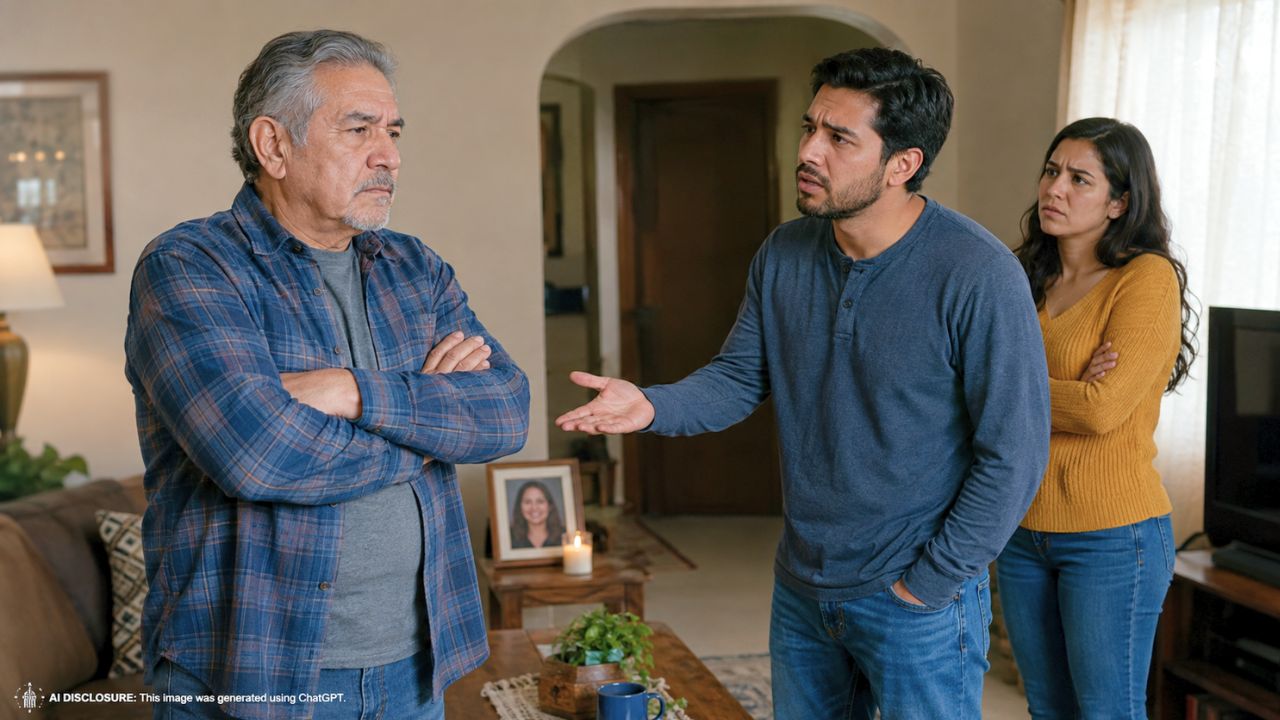
Photo credit: AI-generated image created using ChatGPT. Illustrative only.
For most of Mark’s life, the man he called “Dad” was the one who showed up—bike lessons, school events, vacations, and a college graduation without debt. But after Mark’s mother died, that relationship collapsed into a blunt, money-centered standoff that left both sides feeling discarded.
In the original post, the father figure describes raising Mark from the time the boy was one year old, marrying Mark’s mom when Mark was three, and formally adopting him at five. Mark is now 27, married, and working—but his adoptive dad says the calls only started coming once the monthly support Mark had been receiving through his mother stopped.
He stepped in early, and the family ran like a partnership
The man explains he was friends with Mark’s mother, Tammy, before she got pregnant. Mark’s biological father left, and he stayed around to help. Over time, friendship turned into a relationship, though he describes it less like a fairy tale and more like a practical partnership that worked.
They built a stable home: Tammy handled the household, and he worked and paid the bills. He says he never planned on having kids, but he loved Mark and treated him like his own in every way that mattered to him—showing up, teaching life skills, and investing in his future.
That investment included making sure Mark finished university without student debt. From the father’s perspective, he did what many parents hope they can do: provide security and support, and be present along the way.
Things shifted after college, and the distance became a habit
The father figure says the relationship started to deteriorate during Mark’s university years. Mark grew distant and would call Tammy, but not him. At first it sounded like emotional drift, the kind families sometimes chalk up to adulthood and busy schedules.
Then he learned Mark had reconnected with his biological father. He also points to Mark’s girlfriend—now wife, Sarah—as someone who influenced that turn, describing her as adopted and carrying her own emotional baggage around family identity.
From his seat, the result was simple: he felt replaced. He still had a front-row view of it because Tammy remained close with Mark and supported him, even when the relationship between father and son had cooled to the point of polite minimal contact.
When Tammy got sick, the family was in the same room—but not together
As Tammy’s health declined, Mark visited to see his mom. The father figure says those visits brought Mark and him into the same space, but not into conversation. They were connected by the same crisis, yet separated by years of quiet withdrawal.
After Tammy died, the father says he saw Mark at the funeral, then heard from him again only to settle the estate. Even that, he implies, felt transactional—another exchange where he was useful, but not truly wanted.
The estate details mattered because Tammy’s finances revealed something he says he hadn’t fully absorbed until it was laid out in black and white: Mark’s adult life was still being partly funded from Tammy’s budget.
The money trail didn’t stop with grief—and it turned into a showdown
The father explains Tammy had a small life insurance policy that she left to Mark, while “everything else” went to him. He says Tammy’s bank account mainly held the portion of money they budgeted for her each month—money he deposited—yet much of it was being sent out to Mark regularly since Mark graduated.
There was also a second life insurance policy the couple had set up together, larger than the one left directly to Mark. The intent, he says, was to ensure the surviving spouse could live and continue caring for Mark if something happened. Since he paid for it, he was the beneficiary.
Once Tammy was gone and her monthly help disappeared, Mark began calling his adoptive dad for financial support. This time, the father says he didn’t soften it. He told Mark no, pointed him to the life insurance money his mom left, and drew a hard line: the rest of the assets were his, including the car Tammy drove, which he says was leased under his name.
To Mark, that refusal became proof of something deeper. Mark accused him of never truly viewing him as a son if he could cut him off now. The father’s response went straight for the open wound: he told Mark to ask his biological father for help, since that was who Mark seemed to want in his life.
Sarah escalated it to future grandkids, and he didn’t blink
The tension didn’t stay between father and son. Sarah called, according to the post, and delivered a threat designed to hit where it hurts: if he didn’t help, he’d be cut out of their lives and would never see their future children.
They don’t have kids yet, he notes, but Sarah apparently framed it as the next step. His reply was short and final—he was okay with it. No bargaining. No plea to stay connected. Just acceptance, and maybe a little exhaustion.
He describes his life now in quiet, practical terms: he misses Tammy, but he has his dogs, his job, and close relationships with his sisters and their children and grandchildren. He’s not isolated, and he’s not scrambling to keep a door open that feels like it’s been closing for years.
Most reactions centered on boundaries, not blood
Even without a comment section included in the source material, the pressure points are obvious: Is financial support the same as parental love, and does parenthood obligate someone to keep paying once a child is grown?
The father figure frames it as a boundary with an adult who has a job and a spouse. Mark frames it as abandonment timed to the moment his mother is no longer around to buffer the relationship. And Sarah’s ultimatum suggests the couple sees access—calls, visits, future grandchildren—as leverage in a money dispute.
What many people tend to focus on in stories like this is the pattern: Mark stopped maintaining a relationship when no money was needed, then returned when the subsidy ended. In that light, the father’s refusal reads less like punishment and more like a decision to stop being treated as an ATM—especially after years of feeling emotionally sidelined.
At the same time, the emotional wreckage is hard to ignore. This wasn’t a short-lived relationship or a casual step-parent arrangement. He adopted Mark, raised him from toddlerhood, and watched that bond fray slowly until it snapped during the ugliest season a family can go through.
Now, with Tammy gone, there’s no shared center holding them together. What’s left is a son asking for help, a father who feels used, and a future that may come down to whether either side is willing to rebuild the relationship without money acting as the admission price.
Check out more from Now Rundown:
- A Party of 12 Came Back a Month Later Demanding Their $80 Tip Refunded — My Restaurant Made Me Pay It
- Her Coworker Kept Filing the Same Complaint About Her After Being Warned — Then She Filed a Counter-Report With Every Email Documented
- Siblings Demanded Half of Their Sister’s $11 Million Inheritance — She Refused Because They Never Visited
- The Kid I Bullied in Middle School Just Interviewed for a Job on My Team — He Bombed It and I Didn’t Hire Him

Abbie Clark is the founder and editor of Now Rundown, covering the stories that hit households first—health, politics, insurance, home costs, scams, and the fine print people often learn too late.