Coworker Took Photos of Her License Plate — Then HR Got Involved
Photo credit: Now Rundown
A California worker said a tense situation with a coworker started to feel less like workplace friction and more like a safety concern after she learned he had photographed her license plate.
The worker shared the situation in a post on r/AskHR, asking whether she should involve police instead of only relying on HR. According to her account, the problem centered on a male coworker whose behavior had already made her uncomfortable before the license plate incident happened.
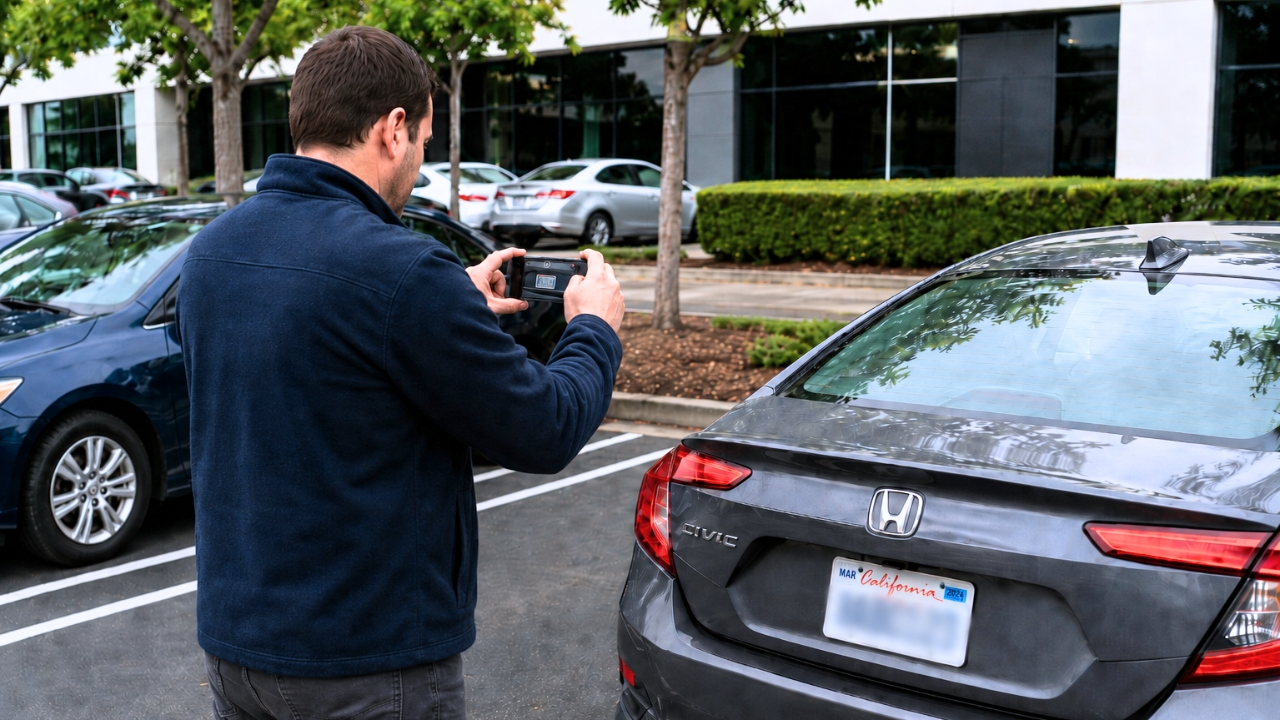
She said the coworker had been acting in ways that crossed normal workplace boundaries, and things escalated when she found out he had taken pictures of her car’s license plate. That detail changed the tone of the situation. Office drama is one thing. Someone documenting your personal vehicle information can feel much more personal, especially if you do not know why they are doing it or what they plan to do with it.
The worker did what many employees are told to do first: she reported the concern at work. HR became involved, but she still felt unsettled. The question she brought to Reddit was direct: should she keep this inside the company, or should she get police involved too?
The post did not read like someone trying to turn a minor annoyance into a scandal. It read like someone trying to figure out where the line is between “HR issue” and “I need an outside record of this.” That line can be hard to see when the behavior is creepy but not always openly criminal.
A coworker taking a license plate photo may have an explanation. They could claim it was for parking, reporting, security, or some other workplace-related reason. But in the context of a coworker who already made someone uncomfortable, the worker clearly did not feel safe brushing it off.
That is what made the situation so uncomfortable. The behavior happened at work, but the information involved her life outside work. A license plate connects to the car she drives home in, the parking lot she uses, and the route she takes away from the building. It can make a workplace conflict feel like it has followed you beyond the clock.
The worker seemed stuck between not wanting to overreact and not wanting to ignore her instincts. HR had a role to play, but HR exists to protect the company as much as the employee. Police, on the other hand, create an outside record, but calling them can also feel like a major escalation.
The post captured that awkward middle space many workers recognize: when something feels threatening, but the company process moves slowly or does not give clear answers.
The worker did not describe a dramatic confrontation in the parking lot. The tension was quieter than that. It came from not knowing why the coworker took the photo, what he might do next, and whether HR would treat the behavior as seriously as she did.
That uncertainty can be its own kind of stress. Once someone at work makes you feel watched or targeted, even ordinary parts of the day start to feel different. Walking to the car feels different. Seeing the coworker in the hallway feels different. Leaving after dark feels different.
The worker asked Reddit because she wanted to know what the practical next move should be before the situation got worse.
Commenters Said HR and Police Serve Different Purposes
Commenters generally told the worker that HR and police were not interchangeable. HR could handle workplace discipline, workplace separation, scheduling, internal documentation, and company policy. Police could create an outside report if she believed the behavior was part of stalking, harassment, or a safety threat.
Several commenters said she did not have to wait for HR to “approve” a police report if she genuinely felt unsafe. Others urged her to document every interaction, including dates, times, what happened, who witnessed it, and what she reported to HR.
A repeated point was that a license plate photo by itself might not lead to immediate police action. But commenters still said a report could matter later if the coworker escalated. If there were more incidents, the worker would be able to point to a pattern instead of starting from scratch.
Some people advised her to ask HR very specific questions in writing. What steps were being taken? Would the coworker be told not to approach her? Could she be escorted to her car? Could her schedule, workspace, or parking arrangement be adjusted? Would the company document the complaint formally?
Others warned her not to rely only on verbal updates. If HR said they were handling it, commenters suggested following up by email so there was a written record. That way, if the coworker did something else, she could show that the company had already been warned.
The safety advice was practical too. Commenters told her to vary routines if possible, avoid being alone with the coworker, tell trusted people what was happening, and keep records of any messages or unusual contact outside work.
The discussion also pushed back against the idea that she had to prove the coworker’s intentions before taking precautions. Commenters noted that people often wait too long because they do not want to seem dramatic. By the time there is no doubt, the situation may already be worse.
The worker’s post did not end with a clean resolution. There was no final update saying the coworker was fired, removed, or confronted. Instead, the story stayed at the point where she was trying to decide whether the company process was enough.
That is often where these situations feel the scariest. Not because one single moment has exploded, but because several smaller moments have stacked up into something that no longer feels normal.
The license plate photo became the detail that made the worker stop and ask a bigger question. If he was willing to photograph her car, what else was he willing to do?
Commenters did not tell her to panic. They told her to document, escalate in writing, and take her own safety seriously even if HR moved slowly.
For employees dealing with a coworker who makes them feel targeted, that was the clearest takeaway from the thread: HR can be part of the solution, but it should not be the only place a safety concern exists. If something feels like it could cross into stalking or harassment, a paper trail outside the workplace may matter just as much as the one inside it.

Abbie Clark is the founder and editor of Now Rundown, covering the stories that hit households first—health, politics, insurance, home costs, scams, and the fine print people often learn too late.