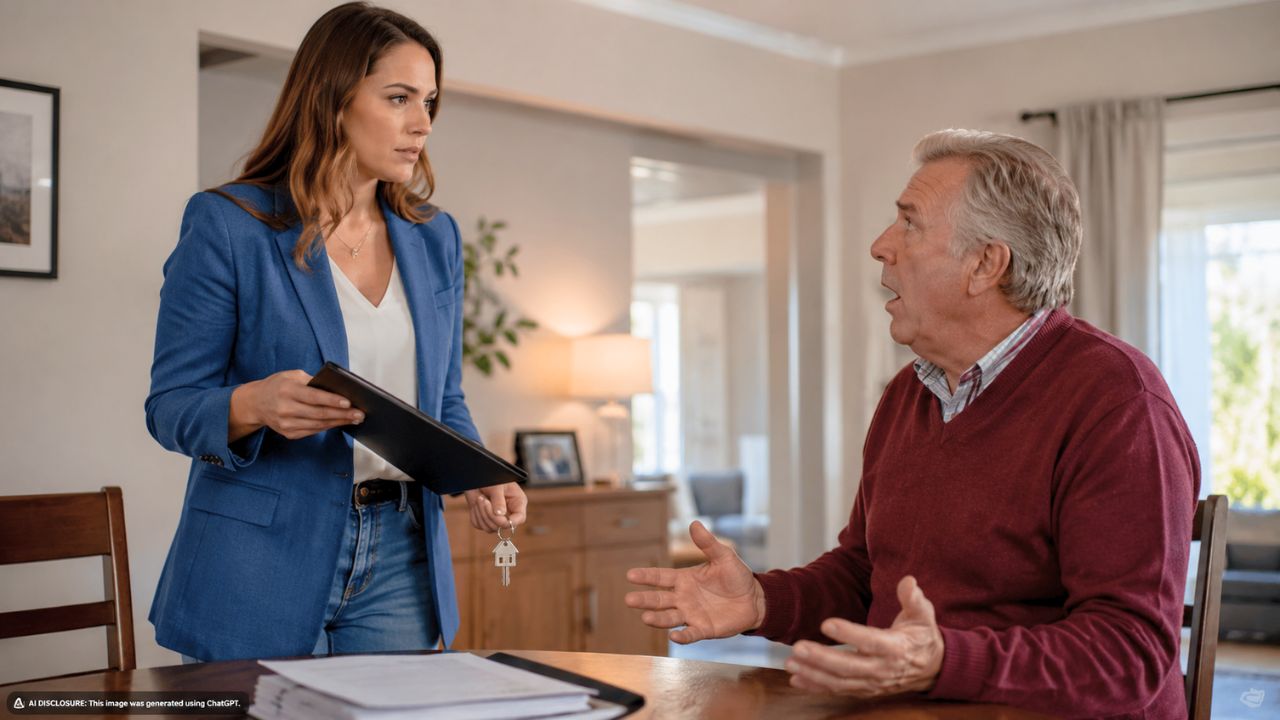
Woman Kept It From Her Father That She Owns the Biggest Share of the Family Home They Bought Together — Sparked an Ownership Dispute
Photo credit: AI-generated image created using ChatGPT. Illustrative only.
A woman who uprooted her life to help care for her mother in Spain is now sitting on an uncomfortable secret about the family home they all bought together: legally, she owns the largest share, even though her father still believes it’s an even split. In the original post, she asks whether staying quiet makes her the bad guy—or whether telling him would only pour gasoline on a relationship that’s already been strained for years.
The core of the dispute isn’t just money. It’s grief, old resentments, and the kind of quiet paperwork reality that can detonate families years after a funeral.
They moved countries and bet everything on making it work
In 2018, the woman, now 42, moved to Spain with her husband and their young son. The move wasn’t framed as a fresh adventure so much as a family plan: she wanted to be close so she could take care of her mother “when needed,” and so her mother could spend more time with her grandson.
At the time, her mother was doing well. The family believed they had years—maybe a decade—before caregiving would become urgent. But the move still came with real pressure, and she describes her and her husband “moving heaven and earth” to find work and stay afloat, coming close to not making it.
Despite the stress, all four adults—her, her husband, her mother, and her father—eventually bought a property together in Spain. According to her account, they purchased it mortgage-free, and the jobs the couple fought for helped make that possible.
Then cancer moved faster than anyone expected
In the summer of 2021, her mother died “very quickly” from cancer. The speed of the loss mattered, because it didn’t just take a loved one—it yanked away the assumptions the family had built their life around, including what “later” was supposed to look like.
The woman also makes it clear that her relationship with her father, now 72, has never been easy. Even before her mother’s death, it wasn’t the kind of bond where hard conversations came naturally.
After her mother passed, she hoped her father might change. But hope and reality don’t always line up, especially when grief is layered on top of a long history.
The paperwork didn’t match what her father believed
The real twist arrived through Spanish inheritance law. The woman says that under the law, she is the beneficiary of most of the home her family bought together, even though her father thinks he owns 50%.
Her description is specific: she says her father has 8% of the property, a share that “protects him until he passes.” But the bulk of ownership, as she understands it, sits with her.
That mismatch—legal reality versus family assumption—is where the tension starts to feel inevitable. A parent who believes he owns half a home may make decisions, speak with authority, or plan his future around it. A daughter who knows that isn’t true has to decide whether she’s protecting him, protecting herself, or simply avoiding the explosion.
Why she kept quiet: age, grief, and a fragile peace
She says she didn’t see a reason to raise the issue, especially because her father is older. In her mind, the fact that he’s 72 changes the stakes: she’s not trying to upend his sense of security late in life, particularly after he lost his wife.
There’s also the emotional math of their relationship. If you already don’t trust someone to handle conflict well, volunteering information that could be interpreted as a power shift can feel like an invitation to months—or years—of arguments.
But silence has a cost. The longer someone believes a false number, the more it hardens into “truth,” and the more personal it feels when corrected. The woman’s central question is blunt: is it wrong not to tell him?
The dispute isn’t just hypothetical when a house is involved
A home isn’t a casual asset. It’s where people live, store their belongings, host family, and anchor their finances. Ownership percentages can affect everything from who can sell, to who can renovate, to who can borrow against the property, to what happens if relationships collapse.
Even without a mortgage, property comes with ongoing costs—taxes, utilities, repairs—and families often fall into informal arrangements where “who pays what” follows “who owns what.” If her father believes he owns half, he may feel entitled to dictate decisions or refuse compromises.
On the other side, if the woman is the largest owner on paper, she could feel trapped by a dynamic where she carries legal responsibility without getting equal say in daily life. That imbalance is the kind that tends to surface during stressful moments—an expensive repair, a disagreement about who can live there, or a future plan to move.
What people tend to focus on in ownership fights like this
The post itself doesn’t include a rundown of responses, but disputes like this reliably push people toward the same practical pressure points: documentation, clarity, and timing. When a family home is involved, the advice usually isn’t “win the argument,” it’s “make sure you’re not blindsided.”
That typically means confirming exactly what the deed and inheritance documents say, understanding what the father’s “protective” share actually allows him to do while alive, and thinking through what would happen if either party needed to sell, relocate, or cover major costs. It also means recognizing that a conversation framed as “by the way, you don’t own what you think you own” can land as humiliation, even if it’s legally accurate.
The other theme people fixate on is whether silence is truly kindness—or just delay. If the father eventually finds out through a lawyer, a future partner, or a routine property matter, it could feel like a betrayal layered on top of grief. But telling him without a plan could also make home life unbearable.
For now, the woman is left balancing two hard realities: the law appears to be on her side, and the family dynamic may not survive the moment her father realizes it. Whatever she chooses next, the home they bought together is no longer just a shared achievement—it’s a fault line running straight through what’s left of their family.
Check out more from Now Rundown:
- A Party of 12 Came Back a Month Later Demanding Their $80 Tip Refunded — My Restaurant Made Me Pay It
- Her Coworker Kept Filing the Same Complaint About Her After Being Warned — Then She Filed a Counter-Report With Every Email Documented
- Siblings Demanded Half of Their Sister’s $11 Million Inheritance — She Refused Because They Never Visited
- The Kid I Bullied in Middle School Just Interviewed for a Job on My Team — He Bombed It and I Didn’t Hire Him

Abbie Clark is the founder and editor of Now Rundown, covering the stories that hit households first—health, politics, insurance, home costs, scams, and the fine print people often learn too late.