Sibling Refused to Sign Over Their Half of a Jointly Owned Property Until They Got Legal Security on a Promised Inheritance
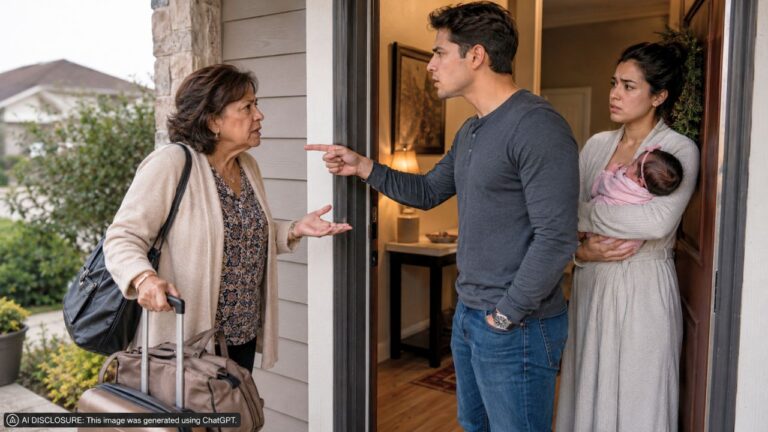
Photo credit: AI-generated image created using ChatGPT. Illustrative only.
It started as a family “understanding” made years ago—one sibling gets a piece of land, the other gets the family home someday. Now, with paperwork suddenly on the table, that old promise is colliding with a hard reality: one side wants signatures now, while the other wants legal protection before giving up the only thing they currently own.
In the original post, a person in their 20s explained that they co-own a property with a sibling and are being pushed to sign over their half immediately. The reason, they say, is that their sibling is trying to secure a bank deal and wants full ownership, but the poster doesn’t want to hand over their share unless the inheritance they were promised is guaranteed in writing.
A “verbal deal” made when they were a minor came back to haunt them
The property in question wasn’t a simple gift. It came with a significant debt attached—enough that it couldn’t even be used until the debt was cleared. Over time, the sibling paid the debt down and eventually covered the remainder themselves, which the poster estimated at around €5,000.
From the sibling’s perspective, that payoff was the whole point: once the debt was gone, they’d get full ownership. But the poster says they only recently learned they still had legal rights to the property. For years, they believed they’d already signed those rights away through a family agreement made long ago.
That earlier agreement was made when the poster was still a minor. The basic trade was straightforward: the sibling would get the jointly owned property, and the poster would inherit their parent’s house after the parent passed away. The poster says they agreed on one condition—that the parent would formalize it in a will naming them as the sole inheritor.
That will, according to the poster, never happened, despite years of asking. And now, the family wants the poster to give up their legal share based on the same promise that was never officially put into place.
The pressure campaign began once signatures became urgent
The flashpoint came when the poster was told they needed to sign their half over “last week.” They weren’t refusing outright. They say they agreed to do it if the parent would finally notarize a will guaranteeing the promised house.
Instead of signing off on that, the poster says the family rejected the idea and started attaching new terms. Suddenly, inheriting the house came with conditions that went beyond what the poster had agreed to years earlier.
One new condition was financial: the poster would be responsible for all funeral expenses. The poster says they agreed to that part. Another condition was about control over the home after inheritance: the poster says they were told they would not be allowed to turn away family members who needed housing.
That’s where the poster drew a line. In their view, they’d be taking on obligations and costs while giving up the ability to make basic decisions about their own property. It also raised the question they couldn’t shake—if the family can change terms now, what stops the promised inheritance from changing again later?
Why the poster says this isn’t about greed—it’s about not being left with nothing
The sibling, according to the post, accused them of being greedy and claimed the delay could jeopardize a bank deal. The parent went further, the poster wrote, suggesting they “don’t deserve” the home and should be grateful for whatever they receive.
For the poster, those comments didn’t just sting—they made the risk feel real. The entire arrangement relies on trust and a future event that could be decades away. The poster noted they could be waiting 30 years or more to inherit the home, with no notarized will and no legal transfer.
Meanwhile, the one asset they can actually point to today is the share of the jointly owned property. Signing it away without legal security would mean trading something concrete for a promise that, so far, hasn’t been honored on paper.
The poster also flagged a practical concern: as a co-owner, they don’t want their sibling building on or selling portions of the property in a way that sidelines their rights without compensation. Once construction starts, property lines and value can get messy fast—especially when the people involved are family and already fighting.
The compromise they offered was designed to protect both sides
Rather than holding the property hostage, the poster proposed a contract meant to keep everyone moving. The idea: the sibling could proceed with their plans and even start building, while the poster keeps their legal half until the promised inheritance actually happens.
To show they weren’t trying to leverage the situation for profit, the poster says they also offered to limit themselves: they would agree not to sell their half or “do anything with it” until the inheritance question is resolved.
If the poster ultimately doesn’t inherit the parent’s house, the contract would require the sibling to buy them out at fair market value. In the poster’s mind, that’s the cleanest way to prevent anyone from walking away empty-handed. The sibling gets a path to full ownership, and the poster gets protection if the promised house never becomes theirs.
But the family reportedly didn’t see it as a compromise. They viewed it as manipulation—another sign, in their eyes, that the poster should simply trust them and sign now.
People focused on paperwork, not promises
The post was tagged “Not the A-hole,” and the advice the poster referenced afterward pointed in one direction: stop treating this like a handshake deal and start treating it like the property transaction it is.
Even in the poster’s own framing, the biggest red flag wasn’t just the lack of a notarized will—it was the shifting conditions once they asked for legal security. A promise that comes with new rules every time you ask for documentation doesn’t feel like a promise. It feels like leverage.
The poster ultimately said they were contacting a lawyer and trying to gather more information privately, especially after learning new details they hadn’t shared yet. That step matters because it changes the dynamic: once lawyers and contracts enter the picture, the family can’t rely on urgency, guilt, or vague future assurances to force a signature.
For now, the standoff remains painfully simple. One sibling wants full ownership immediately to move forward with finances and plans. The other is willing to step aside—but only if the promised inheritance stops being a moving target and becomes something real, written, and enforceable.
Check out more from Now Rundown:
- A Party of 12 Came Back a Month Later Demanding Their $80 Tip Refunded — My Restaurant Made Me Pay It
- Her Coworker Kept Filing the Same Complaint About Her After Being Warned — Then She Filed a Counter-Report With Every Email Documented
- Siblings Demanded Half of Their Sister’s $11 Million Inheritance — She Refused Because They Never Visited
- The Kid I Bullied in Middle School Just Interviewed for a Job on My Team — He Bombed It and I Didn’t Hire Him

Abbie Clark is the founder and editor of Now Rundown, covering the stories that hit households first—health, politics, insurance, home costs, scams, and the fine print people often learn too late.