Job Candidate Called Out Her Interviewer’s String of Inappropriate Personal Questions During a Job Interview — The Man Was Fired as a Result
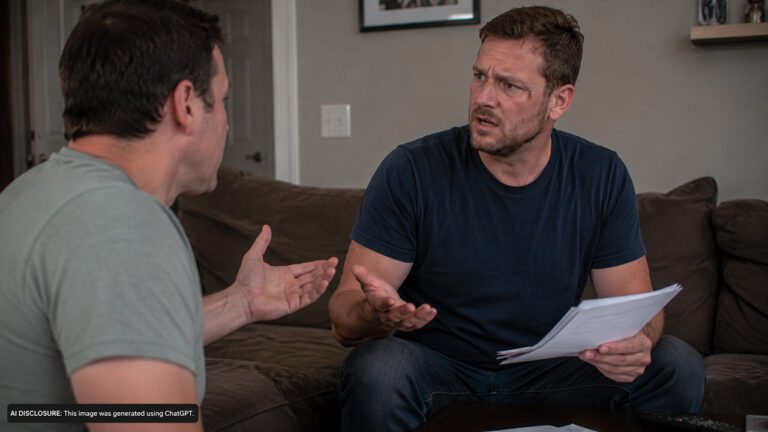
Photo credit: AI-generated image created using ChatGPT. Illustrative only
A 27-year-old woman walked into what she hoped would be a straightforward job interview and instead found herself fielding questions that felt less like screening for a role and more like being sized up. She stayed polite at first, trying to figure out whether the odd tone was some misguided “stress test” or just a bad first impression. But the longer it went on, the harder it became to treat it like normal interview awkwardness.
In the original post, she described an interviewer she called “Eddie,” a man in his 30s who greeted her, looked over her CV, and quickly shifted into personal territory. What happened next set off a chain reaction inside the company—ending with the interviewer losing his job and the candidate wondering if she’d gone too far by speaking up.
The interview started normal, then swerved into personal territory
According to her account, Eddie began by reviewing her resume, then started asking questions that didn’t seem connected to the position. Instead of focusing on experience, skills, or job scenarios, he asked if she was in a relationship.
Then came questions about her appearance, including whether her eye color was “real” or contact lenses. The candidate said the tone kept drifting further into uncomfortable territory, with questions about how she spends her time when she’s “alone” and what type of “dudes” she likes.
At that point, she wasn’t just confused—she felt like the interview had turned into something else entirely. Still, she said she kept her cool and tried to answer politely, at least until he pushed her past the point where it felt appropriate to play along.
She tried to stay professional—until the “weakness” question
The moment she chose to draw a line came when Eddie asked a classic interview prompt: what her greatest weakness was. Instead of offering a safe, rehearsed answer, she responded with a pointed one: “keeping up with your inappropriate questions and answering them politely!”
That changed the room immediately. Eddie, she said, looked upset and told her she had an “attitude.” From there, it became clear the interview wasn’t going to continue in any productive way.
She said Eddie ended it by telling her she didn’t get the job. To her, that felt like being punished for objecting to questions that never should’ve been asked in the first place. She argued with him and told him she planned to report what had happened.
Reporting it didn’t just escalate things—it ended his employment
After leaving the interview, she went directly to a supervisor at the company and filed a complaint about Eddie’s behavior. The supervisor apologized, according to her post, and offered to reschedule a new interview.
Even with that offer, she felt hesitant. The interaction had already shaken her confidence in the environment. It’s one thing to salvage a hiring process; it’s another to feel safe walking back into the same workplace where a boundary-crossing interview just happened.
Not long after she reported him, she learned Eddie had been fired. That outcome was bigger than she expected, and it immediately complicated how she felt about speaking up. She wrote that she started to feel guilty, especially after her parents told her they agreed his questions were inappropriate but believed she went too far by reporting him and “having him fired.”
Then he contacted her—and blamed her for the fallout
The guilt didn’t stay contained to her own thoughts. Eddie, she said, reached out to her via email after the fact.
In his message, he argued that what she did could have been resolved “between us.” He also suggested he could have arranged a new interview for her, but claimed she “ruined” it for herself—and cost him his job.
That kind of follow-up would likely raise even more alarms for many candidates. It wasn’t just an attempt to explain himself; it was a direct effort to reframe the consequences as her fault. And coming from the person who had just been in a position of power over her employment prospects, it added another layer of pressure.
What people focused on: power, boundaries, and why companies act fast
The post framed the question as a moral one—was she wrong for getting him fired?—but the details kept pulling the focus back to the interview itself. The questions weren’t merely awkward small talk. They were about her relationship status, her looks, and her preferences in men, which she experienced as inappropriate and unrelated to the job.
A key point raised in the discussion was the reality that she didn’t technically “fire” anyone. She reported what happened, and the company made a decision. If termination was the result, many readers argued that it likely meant the employer either had clear standards about interviewer conduct, prior issues with the employee, or saw enough risk in his behavior that they moved quickly.
Others homed in on the practical side: interview settings involve a built-in power imbalance, and personal questions can be used to test boundaries or create vulnerability. From that angle, calling it out and documenting it wasn’t vindictive—it was a way to protect future candidates and signal that the interview room isn’t a free-for-all.
His email also became part of the picture. The idea that it should have been handled “between us” didn’t sit well with many commenters, because it implied a private negotiation over professional conduct—something employers typically want out in the open, especially when it involves hiring practices.
The job offer was already gone, but the aftertaste lingered
By the end of her account, the candidate wasn’t celebrating. She was stuck in an emotional whiplash: offended during the interview, indignant at being dismissed, then uneasy when she found out he was fired.
The company’s attempt to reschedule suggested they wanted to make it right, but her hesitation makes sense given how the first meeting went. Even if management handled the complaint appropriately, the experience can leave a candidate wondering what else is tolerated behind closed doors, or how seriously boundaries are treated day-to-day.
Eddie’s message placed the responsibility for his firing on her, but the chain of events started with his own choices in the interview room. She went in looking for a job. She left feeling like she’d had to defend her dignity—and then had to decide whether protecting herself and the next candidate was worth the guilt that followed.
Check out more from Now Rundown:
- A Party of 12 Came Back a Month Later Demanding Their $80 Tip Refunded — My Restaurant Made Me Pay It
- Her Coworker Kept Filing the Same Complaint About Her After Being Warned — Then She Filed a Counter-Report With Every Email Documented
- Siblings Demanded Half of Their Sister’s $11 Million Inheritance — She Refused Because They Never Visited
- The Kid I Bullied in Middle School Just Interviewed for a Job on My Team — He Bombed It and I Didn’t Hire Him

Abbie Clark is the founder and editor of Now Rundown, covering the stories that hit households first—health, politics, insurance, home costs, scams, and the fine print people often learn too late.