Brother Returned the Car With a Dent, New Air Freshener, and 300 Extra Miles on It
Photo credit: Nowrundown.com
She only handed over the keys because she thought it would be simple. Her younger brother said his car was in the shop, he had a shift across town, and he just needed hers for “one day, tops.” She had an early meeting the next morning, but he promised he’d be careful and bring it back that night with a full tank.
When the headlights finally swept across her apartment parking lot close to midnight, she felt that small wave of relief you get when you realize you won’t have to rearrange your whole life tomorrow. Then she walked outside in socks and saw the passenger-side bumper.
There was a dent that hadn’t been there, the kind that catches the light at the wrong angle and makes your stomach drop. And when she opened the door to grab her work bag, a thick, chemical “new car” scent punched her in the face like a cover-up. That’s when she glanced down at the odometer and realized the car had been driven a lot more than across town.
The problem started before the keys ever changed hands
In their family, her brother had always been the one who “meant well” while other people cleaned up the mess. He was charming in a way that worked on their mom especially, always good at sounding overwhelmed, always good at making his problems feel urgent.
She, on the other hand, was the reliable one. She was the sibling who paid her bills on time, kept her insurance current, and didn’t treat favors like a blank check.
So when he texted that morning with a dramatic story about his mechanic pushing the timeline back and his manager warning him not to be late again, she hesitated but caved. She even reminded him—twice—that her car had a brand-new paint job from a minor parking lot scrape months ago, and she didn’t want anything happening to it.
He sent a thumbs-up and a “promise,” then showed up smiling like it was no big deal.
It came back looking “fine” until it didn’t
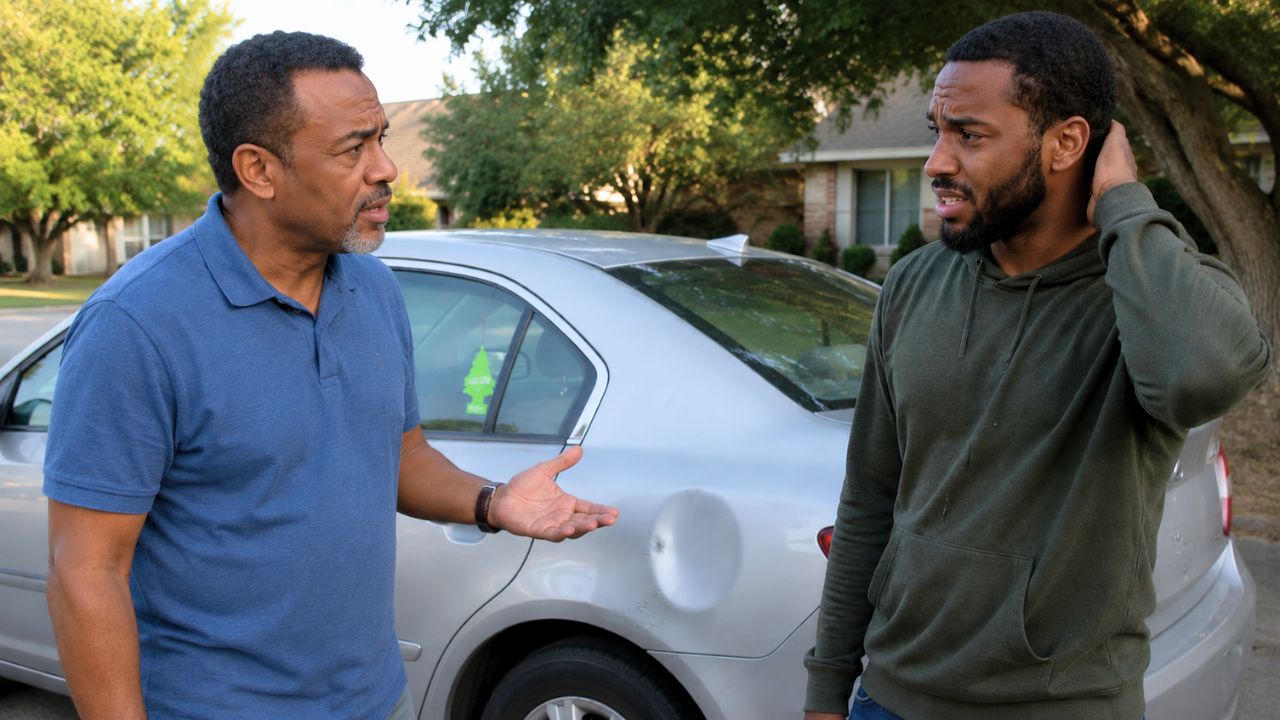
Standing by the car in the parking lot, her brother tried to play it casual. He pointed out that he’d put gas in it. He mentioned he even “tidied up” a little. He said the scent was just an air freshener because he didn’t want it smelling like food.
She didn’t even answer at first. She ran her hand near the dent without touching it, like her fingers could confirm it wasn’t real. It was low on the bumper, a shallow crunch with a thin smear that looked suspiciously like it had been rubbed with something.
He insisted it was probably already there, which was bold because she had pictures of the car from the weekend when she washed it. When she said that, his tone shifted into annoyed disbelief, like she was accusing him of something unfair.
Then she got in the driver’s seat and saw the mileage. Over three hundred more miles than when she’d handed him the keys that morning.
Three hundred miles doesn’t happen by accident
She asked him where he went, and his answers came in fragments. First it was just work. Then it was work and “a quick stop.” Then it was helping a friend. The story kept stretching like taffy.
Finally, he admitted he’d driven out to see a girl he’d been talking to, because she was upset and he wanted to show up in person. He framed it like he was doing something sweet, like the kind of gesture you’re supposed to clap for.
The dent, according to him, happened in a parking lot. Someone had backed into him, but he “didn’t think it was worth making a whole thing,” and he didn’t get their information. He said he rubbed at the mark and bought an air freshener because he’d spilled coffee on the floor mat and didn’t want her to notice.
That’s what made her jaw go tight. Not just the dent or the miles—though those were bad enough—but the way he’d decided what she deserved to know, and when. Like her car was his for the day, and honesty was optional.
She asked him to pay for the damage. He laughed once, quick and sharp, and said she had insurance “for a reason.”
Mom got involved and made it worse
Her brother didn’t even wait until morning to start recruiting backup. Before she’d finished taking pictures of the dent with her phone, their mom was calling.
Her mom’s opening line wasn’t “Are you okay?” or “What happened?” It was a tired sigh and a reminder that her brother had been stressed lately. Their mom said the dent was “small,” that cars are “meant to be driven,” and that family helps family.
When she explained the mileage and the weird scent and the shifting story, her mom brushed it off like it was teenage drama. She suggested her daughter was being dramatic, then slid into the familiar script: her brother was trying his best, he was sensitive, he didn’t need to be “attacked.”
That word—attacked—hit her like a slap. Asking for basic accountability was suddenly cruelty, and her brother was suddenly the victim of her unreasonable expectations.
She hung up, then texted her mom pictures of the odometer and the dent. Her mom left her on read for an hour and then wrote back that she “didn’t want to be in the middle.”
But she was already in the middle. She just picked a side.
People around her weren’t buying the innocent act
The next day, she drove to a body shop on her lunch break, still smelling that sugary, artificial scent every time she turned the air on. The estimate made her stomach sink. Bumper repair and paint blending, plus the possibility of a hidden bracket needing replacement—it wasn’t a tiny fix.
She told two coworkers what happened, mostly because she needed to say it out loud to make sure she wasn’t overreacting. Their reactions were instant: the miles were the giveaway, and the air freshener felt like a cover.
One coworker asked if her brother had a history of “borrowing” things and returning them worse off. Another asked if he’d ever paid her back for anything without being chased. The questions were uncomfortable because they were accurate.
Even her best friend, who normally tried to find a softer interpretation, didn’t this time. She pointed out that someone who actually felt bad would have told her immediately, offered to pay something, and at minimum not tried to rewrite reality by claiming the dent was already there.
Hearing it from other people made it feel less like a sibling squabble and more like a pattern she’d been trained to tolerate.
The consequence wasn’t just about the car
That evening, her brother showed up again, not with money or an apology, but with an attitude. He acted like she was enjoying being “in control” and said she cared more about a bumper than about him.
She didn’t argue about love. She kept it practical. She told him she’d gotten an estimate, she expected him to pay for the repair, and until then he wasn’t borrowing her car again. She also told him that if he didn’t pay, she would file through insurance and let the insurer handle it—meaning they’d be asking questions he didn’t want to answer.
He accused her of threatening him. He said she was trying to ruin his life over something “minor.” Then he tried one last move: he asked their mom to cover it and said he’d “pay her back.”
Their mom floated the idea in a text like it was a compromise, as if her daughter should be grateful for the privilege of not being the one fully stuck with the bill. That was the moment she realized the dent wasn’t the real damage.
She replied that she wasn’t discussing it anymore. Either her brother paid for what he did, or she would handle it officially. And she meant it.
In the weeks that followed, the car got repaired, and the air freshener smell slowly faded. The family conversations, however, stayed sharp and awkward. Her brother stopped dropping by, and their mom kept trying to nudge things back to normal without acknowledging what “normal” had been costing.
She didn’t feel triumphant. She felt tired. But when she looked at her fixed bumper and her own keys back on her counter, she also felt something else—clear. If her brother wanted to be treated like an adult, he could start by acting like one.
Check out more from Now Rundown:
- A Party of 12 Came Back a Month Later Demanding Their $80 Tip Refunded — My Restaurant Made Me Pay It
- Her Coworker Kept Filing the Same Complaint About Her After Being Warned — Then She Filed a Counter-Report With Every Email Documented
- Siblings Demanded Half of Their Sister’s $11 Million Inheritance — She Refused Because They Never Visited
- The Kid I Bullied in Middle School Just Interviewed for a Job on My Team — He Bombed It and I Didn’t Hire Him

Abbie Clark is the founder and editor of Now Rundown, covering the stories that hit households first—health, politics, insurance, home costs, scams, and the fine print people often learn too late.