My Mother-in-Law Secretly Tried On My $3,000 Wedding Dress While I Was at Work — Then Put It Back
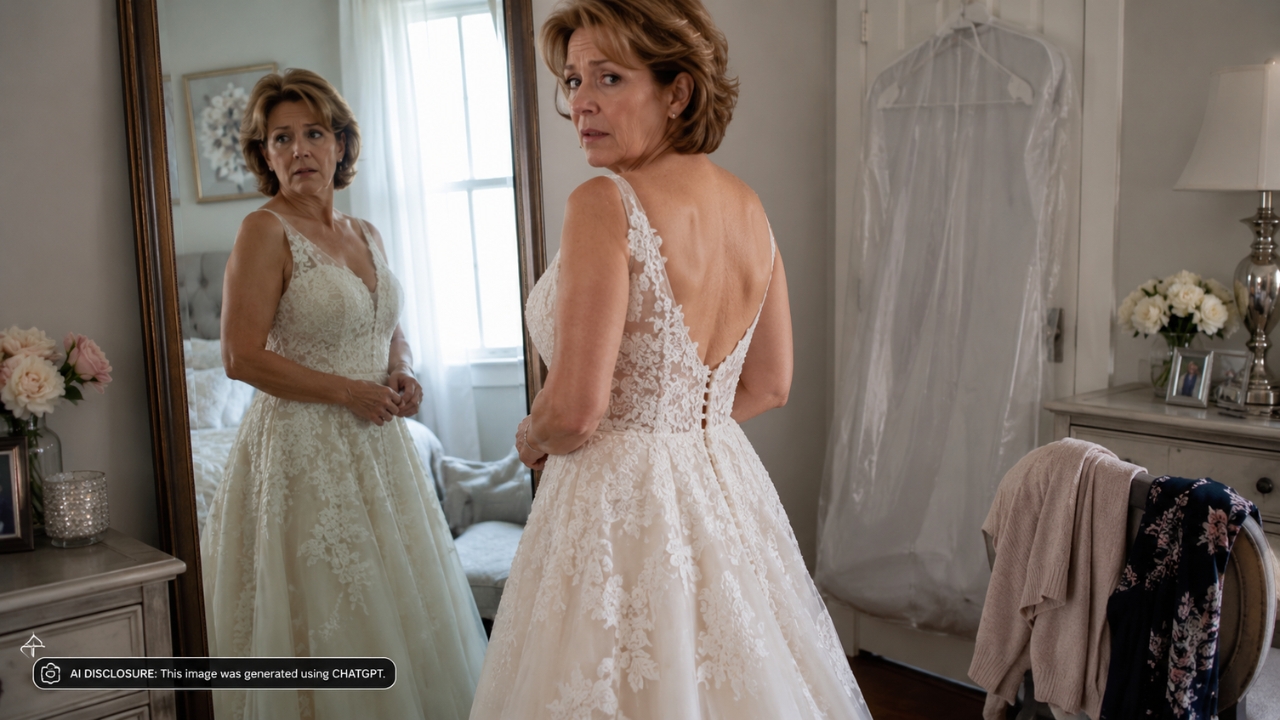
Photo credit: AI-generated image created using ChatGPT. Illustrative only.
She thought she was coming home to a normal afternoon. Instead, she walked in early from work, saw her fiancé acting strangely, and realized someone was inside her bedroom. When she pushed past him and opened the door, she says she found his mother wearing her wedding dress.
It wasn’t a cheap gown, either. The bride-to-be says she spent $3,000 on it and had been guarding it closely for weeks. Now, after seeing her future mother-in-law in it, she says she can’t even look at the dress the same way—and she’s demanding a replacement.
The pressure to “just try it on” started weeks earlier
Before the bedroom discovery, the conflict had already been building. The woman says her fiancé’s mother repeatedly asked to try on the wedding dress, and she repeatedly said no.
She describes her future mother-in-law as obsessed with wedding dresses, claiming it was about “love” for them. At one point, the older woman even offered $100 to be allowed to put it on, an offer the bride-to-be says she firmly refused.
To her, the boundary was simple: a wedding dress is for the bride, and only the bride, and she wasn’t interested in negotiating that.
Coming home early turned a suspicion into a blowup
The turning point came when she got home from work earlier than expected. Her fiancé was already there, and she says his reaction was immediate panic—he “freaked out” upon seeing her and tried to stop her from going into the bedroom while also texting someone.
That moment set off alarms. She went to the room anyway, opened the door, and says she found his mother standing there in the gown.
In the heat of it, she pulled out her phone and took a picture. She describes both her fiancé and his mother panicking after she did, and says the confrontation escalated quickly from shock to demands.
Her demand: pay for a replacement—or the photo gets shared
After seeing the dress being worn by someone she had already told “no,” she says she felt “disgusted” and didn’t want the gown anymore, even though it was physically put back. Her stance wasn’t that the fabric was necessarily damaged; it was that the dress was ruined for her emotionally, and she didn’t want to walk down the aisle in it.
She told her future mother-in-law she had three days to pay for a new dress. If she didn’t, the bride-to-be said she would show the family the photo of her wearing it. She saw that as accountability—and, frankly, leverage.
Her fiancé saw it differently. He reportedly exploded at her, saying she was overreacting because his mother “just wanted to try the dress on” and that no harm had been done. When she refused to back down, the argument blew up enough that he left and began staying with his mother.
Meanwhile, the bride-to-be says her own family thinks she’s escalating things and putting her relationships at risk. But she keeps returning to the same point: she worked hard to buy that dress, and now she can’t stand the sight of it.
Then her fiancé offered to pay—along with conditions
After she shared her story publicly in the original post, she added an update that changed the power dynamic again. Her fiancé called and offered to pay for the dress himself in order to “end the conflict.”
But the offer came with a list of conditions. According to her update, he wanted her to hand him her phone so he could delete the photo himself. He also wanted her to swear she didn’t have any copies she could “use” against his mother later.
On top of that, he asked her to apologize to his mother. And he wanted her to quit his family group chat and log out of Facebook for at least a month.
She hadn’t agreed when she posted the update, and she made it clear why: she didn’t want him to cover for his mother. She wanted the person who crossed the line to be the one who paid for the replacement.
Why the photo became the biggest flashpoint
The dress was the original boundary, but the photo became the real threat. From the bride-to-be’s perspective, it was immediate documentation of what happened in her room after she’d already said no.
From her fiancé and his mother’s perspective, the picture represented humiliation, a permanent record, and family fallout. That’s why her fiancé’s conditions focused so heavily on controlling the image—deleting it himself, getting assurances there weren’t backups, and limiting her access to family chat and social media.
It also raised another issue: trust. She says he tried to physically block her from entering the room while texting someone, suggesting he knew exactly what was happening and was trying to manage it before she found out.
By the end of her update, the dress wasn’t just a purchase. It had turned into a symbol of who gets listened to in this family—and what happens when someone decides “no” doesn’t count.
People zeroed in on control, boundaries, and what the marriage would look like
The woman labeled her post “Not the A-hole,” and the strongest reactions centered less on fashion etiquette and more on the fiancé’s role in the moment. Readers focused on the fact that he appeared to be actively helping—or at least covering—while his mother wore the dress, then turning the anger on his fiancée when she reacted.
Others fixated on the conditional payment offer. To them, paying for a replacement while demanding access to her phone and restricting her online presence sounded less like problem-solving and more like damage control for his mother.
There was also a practical money angle: a $3,000 dress is a major expense, and “just put it back” doesn’t erase the feeling of violation when someone goes into your private space, handles an important item, and does the one thing they were explicitly told not to do.
Whether she ultimately shows the photo or accepts a replacement from her fiancé, the bigger question hanging over the engagement is harder to refund: if this is how conflicts are handled before the wedding, she has to decide what it means for the marriage after it.

Abbie Clark is the founder and editor of Now Rundown, covering the stories that hit households first—health, politics, insurance, home costs, scams, and the fine print people often learn too late.