Adult Child Refused to Share Her Grandmother’s Inheritance With Siblings Who Were Written Out of the Will
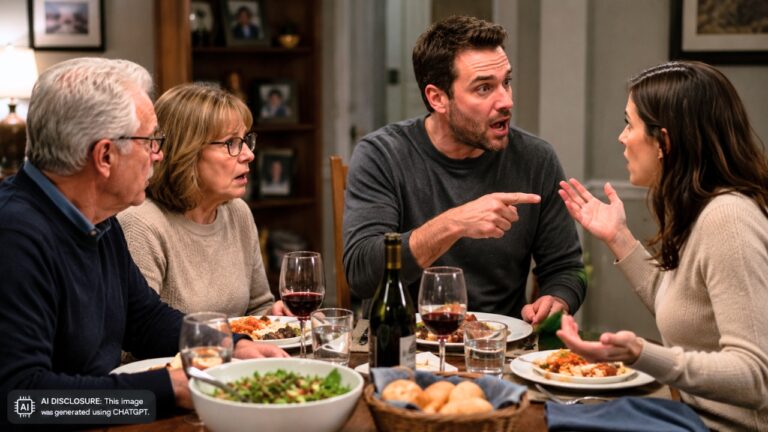
Photo credit: AI-generated image created using ChatGPT. Illustrative only.
A 25-year-old woman thought grief would be the hardest part after her mother died unexpectedly. Instead, the months that followed turned into a tug-of-war over money, family loyalty, and what it means to respect someone’s final wishes.
In the original post, she explained that her mother’s will left the bulk of the estate to her, with smaller trusts set aside for her two much younger half-siblings. Now her stepfather is pushing her to redistribute what she inherited, and parts of the extended family are backing him up.
She grew up close to her mom, but never felt fully “in” the new household
The woman said her parents divorced when she was 10. After that, she lived primarily with her mother and saw her father on weekends, a schedule that kept her closely tied to her mom as she grew up.
About a year after the divorce, her mother remarried and had two more children: a boy who is now 12 and a girl who is 10. She described her stepfather as nice, but also said she never really felt like she was a full part of that family unit. The age gap didn’t help, and neither did the sense that she was living in a household that had moved on in a way she couldn’t fully join.
Even so, she says she loves her half-siblings. That’s part of why the pressure campaign is working on her emotionally, even as she believes the will was written exactly the way her mother intended.
The will was specific: a future set up for her, with trusts for the younger kids
Before her death, the mother apparently talked openly about wanting to “set [her daughter] up for life.” The reason, as her daughter understood it, was practical: her biological father “was not very set up,” and her mother wanted to make sure her oldest child had stability.
When the mother died unexpectedly, the estate plan reflected that. The daughter says her mother left “everything” to her and included language stating the money was meant for her education, her future, and her general well-being.
At the same time, the younger children were not left with nothing. The mother set aside a smaller amount for each of them in trust, to be accessed when they turn 18. But the largest share of the estate went to the 25-year-old, and she says that was by design.
That structure matters, because it’s not just about who gets what. The will, as described, wasn’t vague or accidental. It was a roadmap.
Then the requests started, and the tone turned into pressure
The woman said her stepfather has been “insisting” she share what she inherited with her half-siblings. His argument is emotional and framed as a matter of basic fairness: that the mother would never want “one of her children to live better than the others,” especially while the younger two are still minors.
To the daughter, that claim doesn’t match what her mother actually did. Her point is simple: if her mother didn’t want one child better provided for than the others, she could have written the estate differently. Instead, she wrote it “so precisely” that the daughter feels changing it would be rewriting her mother’s final decisions.
Her biological father is firmly on her side. He told her she shouldn’t feel guilty for honoring her mother’s wishes, which gives her some emotional cover but doesn’t fix the day-to-day stress of being criticized by other relatives.
Because the pushback isn’t coming from just one person. The woman said her stepfather and some extended family members are now painting her as “selfish and greedy,” accusing her of choosing money over “the best interests of the family.” That kind of label sticks, especially when the other people involved are children.
Real-world stakes: money, guardianship dynamics, and the long tail of resentment
Underneath the arguments about what the mother “would have wanted” is a more immediate reality: two kids are being raised by their father, and a significant amount of money is sitting with their older half-sister.
Even if the trusts exist, those funds can’t be accessed until the children are 18, at least based on the daughter’s description. That means the stepfather may be looking at the next several years thinking about expenses, school, and stability, while knowing a larger pot of money went elsewhere.
On the other hand, the 25-year-old is at a point in life when money can permanently change her trajectory—education costs, housing, career flexibility, and the ability to handle emergencies without debt. Her mother explicitly tied the inheritance to her future and well-being, and that detail is what she keeps coming back to when she feels pressured.
There’s also the relationship risk. If the stepfather treats her inheritance like a family bank account, the daughter may start avoiding contact to protect herself from constant negotiations. And if her half-siblings grow up hearing that their sister “kept” their mother’s money, resentment can set in long before they’re old enough to understand what a will is.
That’s the kind of tension that can sit quietly for years and then explode later—around college applications, first cars, weddings, or any major life event where money becomes the unspoken scoreboard.
What outside reactions tended to focus on: honoring the will and protecting boundaries
While the post itself centered on whether she was wrong to refuse to share, the practical responses people tend to focus on in stories like this are less about moral philosophy and more about preventing the pressure from escalating.
When one relative controls a large inheritance and others feel entitled to it, the advice often boils down to boundaries and documentation: keep communication clear, avoid informal promises made in emotional moments, and don’t let “family meetings” turn into surprise negotiations. Inheritance disputes have a way of turning casual conversations into lasting obligations if expectations aren’t managed early.
People also tend to flag the importance of separating love for the children from financial control by the adult pushing for changes. Wanting to be a supportive older sibling can look like staying involved in their lives, helping in ways that don’t undermine the will, and making sure any support is voluntary—not extracted through guilt.
And because the younger children already have trusts, many outside observers would likely see that as the mother’s attempt to balance care for them with a different level of support for her oldest child.
Stuck between compassion and a final request she doesn’t want to override
The woman doesn’t describe wanting to shut her half-siblings out. She describes feeling responsible for following her mother’s instructions, even while acknowledging that the family pressure is intense and personal.
Her stepfather’s message is basically: prove you care by sharing. Her response is: my mother already decided how to care, and it’s not my job to rewrite it after she’s gone.
For now, she’s left managing grief alongside a dispute that keeps reopening it. Every time someone calls her greedy, it reframes her mother’s death as a financial fight instead of a loss. And every time she considers giving in, she hears the part that feels like a promise: the will was her mother’s plan, and she doesn’t want to be the one who changes it under pressure.

Abbie Clark is the founder and editor of Now Rundown, covering the stories that hit households first—health, politics, insurance, home costs, scams, and the fine print people often learn too late.