Mechanic Kept the Car for Two Weeks and Billed for Work She Never Approved
Photo credit: Nowrundown.com
By the time Daniela realized she was being strung along, it had already been fourteen days without her car and three missed shifts at her second job. She’d been borrowing her sister’s sedan in the evenings, juggling school pickup for her kindergartener, and paying for rides when the sister couldn’t help. Every time she called the shop, she got the same calm answer: they were “almost done.”
The car itself wasn’t fancy—an older compact with a few scratches and a stubborn check-engine light—but it was the one thing Daniela couldn’t function without. She’d brought it in for what she thought was a straightforward fix after it started shuddering when she accelerated. The plan was simple: diagnostic first, then she’d decide what to do.
The problem started with a “quick look”
Daniela chose the shop because it was close to her apartment and her dad liked the owner. Her dad even made the call for her, which should’ve been her first warning sign. He had a habit of smoothing things over with “they’re good people,” then expecting Daniela to be grateful no matter what happened.
When Daniela dropped the car off, she was clear: she wanted to know the total before anything major was done. The front desk guy nodded, scribbled a few notes, and said someone would call after they ran the diagnostic. Daniela left feeling relieved, like she’d handled an annoying adult task on a tight schedule.
The first call came later that afternoon. They said it needed “a few things” and they’d get back to her with a number. Then nothing. The next day, Daniela called and got told the mechanic was “under a car” and would call her back.
Two weeks of vague updates and a shrinking patience
By day four, she was already getting that heavy feeling in her stomach. She started keeping track: who she spoke to, what time, what they said. Each conversation sounded confident but slippery, like everyone knew just enough to sound helpful without committing to anything.
On day six, a different employee told her they were waiting on a part. On day eight, they said the part arrived but they’d found another issue once they got it apart. Daniela asked what issue. The answer was a string of terms that sounded expensive, followed by the reassuring phrase: “It’s for safety.”
She asked for a total. They said they’d need to “finish up” to calculate everything. That was the moment her patience turned into anger, because it made no sense. How were they doing work on her car without knowing what it would cost—or without asking her?
Daniela texted her dad, thinking he’d at least be on her side. Instead, he told her not to “accuse” anyone and said she should be patient because mechanics were busy. He offered to call the shop himself, which felt less like help and more like taking the steering wheel out of her hands.
Pick-up day turned into a bill she didn’t recognize
On the fourteenth day, the shop called Daniela and said the car was ready. No mention of total cost, no breakdown, just ready. Daniela left work early, took a rideshare across town, and walked in determined to get her keys and go.
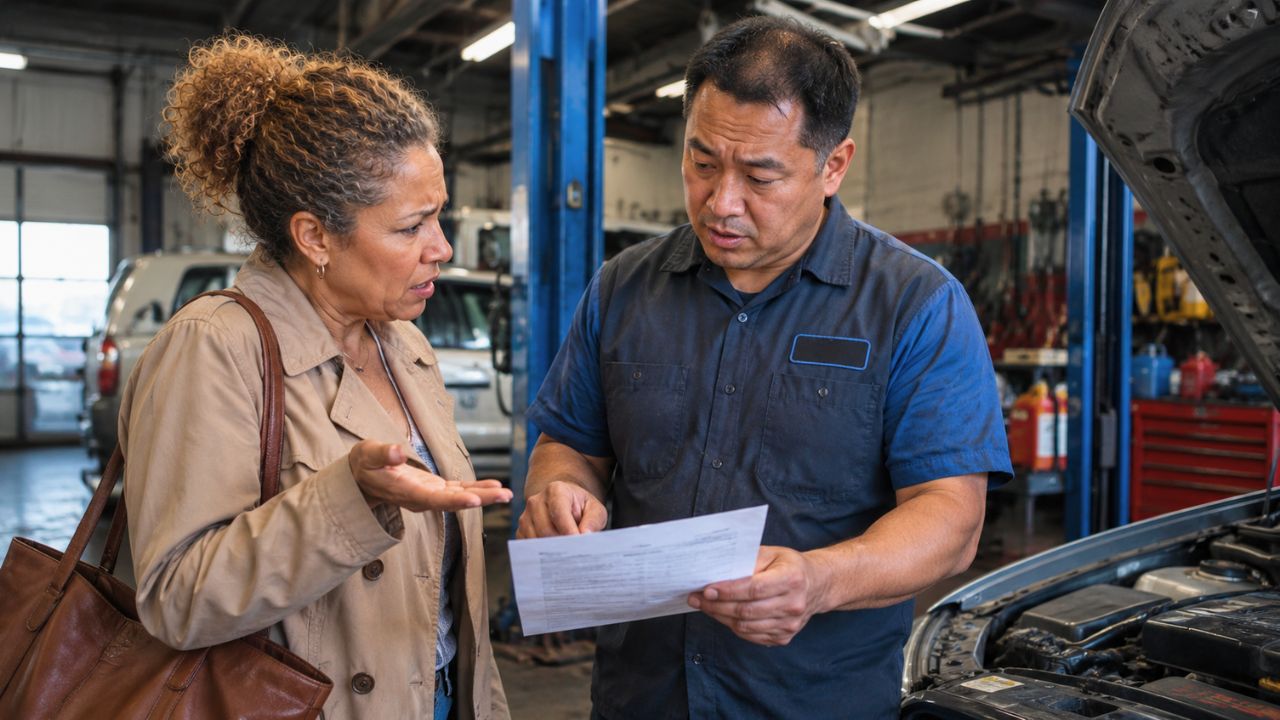
They handed her an invoice that looked like it belonged to someone else. There was the original diagnostic fee, but then it ballooned into multiple labor charges, replacement parts she hadn’t heard about, and a line item for an additional repair that didn’t match anything she’d asked for. The total was over a thousand dollars—more than her rent.
Daniela’s face got hot. She told them she never approved any of that. The employee behind the counter gave her a practiced look and said the work was already done. Then he said something that made her feel trapped: the car couldn’t leave until the bill was paid.
Daniela asked to speak to the owner. She was brought into a small office where the owner flipped through a folder as if this were a misunderstanding she’d created. He said they tried to call her, and when they didn’t hear back, they moved forward because the car was “unsafe.”
Daniela asked for proof of those calls. The owner tapped his phone screen and said he didn’t have time for “back and forth.” She asked again, calmer this time, because she could feel herself shaking. That’s when he told her, point blank, that if she didn’t pay, storage fees would start adding up daily.
Family got involved, and it somehow got worse
Daniela called her dad from the parking lot, half crying, half furious. He immediately took the shop’s side without even seeing the invoice. He told her she shouldn’t have “left them hanging” and said if she’d answered the phone, this wouldn’t have happened.
Daniela pulled up her call log. No missed calls from the shop. Not even a voicemail. She said so, and her dad paused, then pivoted into something else: maybe they called her old number, maybe it was a misunderstanding, maybe she should just pay and “learn from it.”
That phrase—learn from it—landed like an insult. Daniela wasn’t a teenager who forgot to put gas in the car. She was a grown woman who’d been without transportation for two weeks and was now being pressured into paying for repairs she didn’t authorize.
Her dad offered to put it on his credit card and “deal with it later,” but it came with strings. He wanted to be the one to talk to the shop, to control the narrative, to keep the peace with his “good people.” Daniela could hear the unspoken part: if she pushed too hard, she’d embarrass him.
Instead, Daniela asked for the keys and told the shop she wanted her old parts back. The employee’s smile thinned. He said the parts were already disposed of. Then he slid a card reader toward her like this was the most normal thing in the world.
She didn’t fold, but she didn’t get her car back that day
Daniela stepped outside and called a friend who’d worked in insurance claims. The friend told her to get everything in writing and stop arguing in circles. Daniela went back in and asked for an itemized invoice, the work order, and whatever documentation they had showing she’d approved anything at all.
That request changed the mood. Suddenly they could “check” and “look into it.” Suddenly the owner was busy and would be back “in a minute.” Daniela sat in the waiting area with her phone in her hand, taking photos of the invoice and sending them to her friend.
After almost an hour, the owner came out with a different tone. He said they could “work with her” and offered to knock off one of the bigger labor charges. Daniela asked why they could remove it if it was necessary. He didn’t answer directly; he just repeated that they were trying to help.
Daniela said she’d pay the diagnostic and the single repair she actually requested, but she wasn’t paying for anything else without proof of approval. The owner said that wasn’t acceptable.
So Daniela did the one thing she could do without a car and without a spare thousand dollars: she filed complaints, started a paper trail, and arranged for a tow from the lot once she was legally allowed to. The shop posted a notice about daily storage fees, which only made her more determined to document every interaction.
People around her focused on the pattern, not just the bill
When Daniela told her sister, her sister wasn’t surprised. She said this was exactly why she never used “family recommendation” businesses. In her experience, those were the ones that counted on social pressure to keep customers quiet.
At Daniela’s work, one coworker admitted she’d had a similar experience at a different shop: the long delays, the vague “safety” language, the sudden extra repairs. Another coworker told Daniela to stop talking to them on the phone and insist on email, because people get brave when nothing is written down.
Even Daniela’s mom, who usually tried to keep peace, told her this wasn’t about being dramatic. It was about being backed into a corner. The two-week hold had already cost Daniela money, and now the shop seemed willing to keep squeezing because they knew she needed the car.
The most painful reaction was still her dad’s. He kept pushing the idea that she should “just pay it” and move on, like her time and stress didn’t count as real costs. Daniela stopped updating him after that. She didn’t have the energy to fight the shop and defend her own judgment at the same time.
In the end, the car situation didn’t wrap up in a neat bow. Daniela got louder, more organized, and more careful about every receipt and record. She also got quiet in her family group chat, because it turned out the invoice wasn’t the only thing she didn’t approve—she hadn’t approved of being treated like someone who should be grateful for being overcharged, either.
Check out more from Now Rundown:
- A Party of 12 Came Back a Month Later Demanding Their $80 Tip Refunded — My Restaurant Made Me Pay It
- Her Coworker Kept Filing the Same Complaint About Her After Being Warned — Then She Filed a Counter-Report With Every Email Documented
- Siblings Demanded Half of Their Sister’s $11 Million Inheritance — She Refused Because They Never Visited
- The Kid I Bullied in Middle School Just Interviewed for a Job on My Team — He Bombed It and I Didn’t Hire Him

Abbie Clark is the founder and editor of Now Rundown, covering the stories that hit households first—health, politics, insurance, home costs, scams, and the fine print people often learn too late.