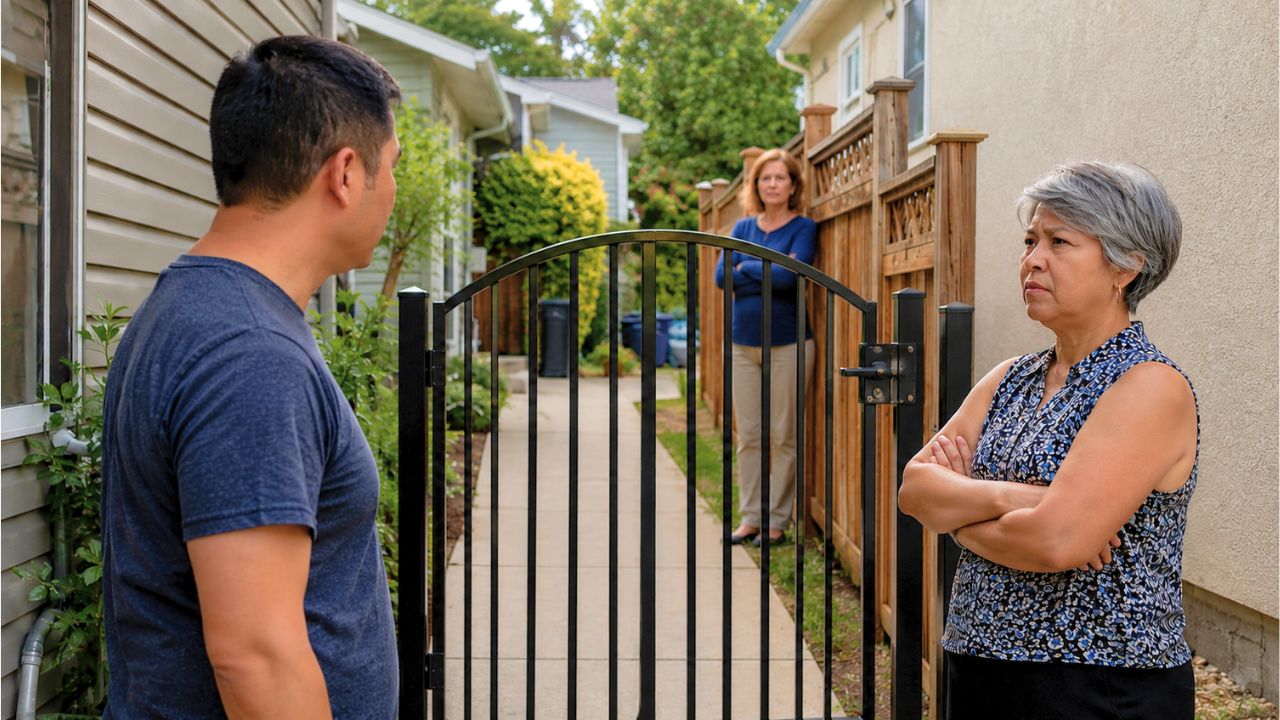
New Neighbor Installed a Gate on the Path Between Their Houses and Said Access Was Now By Request
Photo credit: Nowrundown.com
When Maren and Jonah bought their little starter house, the narrow walkway between their place and the one next door felt like a bonus. It ran from the sidewalk to the backyards, just wide enough for two trash bins and a stroller, and for years it worked like an unspoken agreement: whoever needed to get through, did.
They used it constantly. Their bins rolled down that way. Their toddler’s trike lived in the back, and Maren would cut through the path instead of squeezing around the garage. Even the mail carrier occasionally stepped through when snow piled up on the front steps.
Then the neighbors sold. A couple moved in with a renovation timeline and a very different vibe. Within two weeks, there was a brand-new gate installed right in the middle of the path—lined up with their side fence like it had always been part of the plan.
It was a “quick improvement” until it wasn’t
The new neighbor, Ellis, introduced himself the first weekend with the polite, tight-smiled energy of someone already keeping a mental list. He mentioned they were “cleaning things up” and asked if Maren and Jonah knew where the property line was.
Jonah shrugged it off at first. Plenty of people cared about fences. Maren even understood wanting privacy; their yards were close, and the houses sat like siblings who didn’t get along.
But the first sign things were going sideways was the contractor measuring, then placing stakes right across the shared walkway. Maren asked what they were doing, and Ellis said it was just for a gate “for security.”
She assumed it would be at the far back, near their yard, or something ornamental. It wasn’t. The gate was placed in a way that cut Maren and Jonah’s easiest route to their own backyard in half.
The new rule came with a smile and a threat
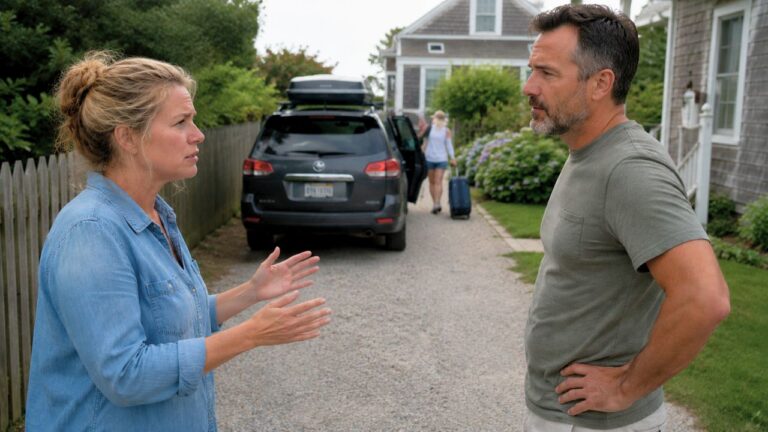
The day the latch went on, Ellis knocked on their door with an envelope. Inside was a printed letter that looked like it came from a template, explaining that the passage was part of Ellis’s property and any future use would be “by request.” He’d be happy to unlock it if they texted first.
Maren read it twice, standing in her kitchen with her toddler tugging at her leg. By request. Like she was asking permission to reach her own fence gate.
Jonah went outside immediately, tried the latch, and found it locked. Not a simple hook-and-eye, not a “please keep closed.” A lock.
When Jonah knocked next door, Ellis didn’t act like it was a big deal. He said they’d already had “random people” cutting through and didn’t want liability. He also said he’d noticed Maren’s dad had been coming through sometimes, and he wasn’t comfortable with it.
Maren’s dad did cut through, but not to be nosy. He’d been doing daycare pickup when Maren was overwhelmed postpartum, and the path made it easier to load the car seat without juggling everything around the front.
Ellis kept it cheerful and firm: if they needed access, they could ask. If he wasn’t home, they’d need to wait.
The first time they actually needed it, everything went wrong
The next week, the toddler got sick. The kind of stomach bug that turns a house into an emergency triage. On trash day, Maren realized the bins were still at the back because Jonah had rushed out early for work.
She couldn’t haul them around the long way without leaving her kid alone, even for a minute. She texted Ellis anyway, even though the whole thing made her stomach flip.
No response. She texted again, then tried knocking. No answer.
By the time she gave up and dragged the bins the long way through the narrow side of their garage, she had scraped her shin, their toddler was crying, and the trash truck had already passed. That night, Maren found the bins flipped on their side by the curb, lids open, like a small punishment staged for her to notice.
Jonah was furious in a quiet way, the kind that meant he was already thinking about paperwork. He started pulling up the survey from their closing documents, zooming in on the faint lines and easements.
Maren was just exhausted. She didn’t want a feud with people who lived ten feet away, but she also wasn’t going to text for permission every time she needed to move through a space that had functioned like a shared walkway for years.
Then it got personal in the most embarrassing way
Things escalated when Maren’s dad came over on a Saturday to help fix their back step. Without thinking, he walked down the familiar path carrying a toolbox and stopped short at the locked gate.
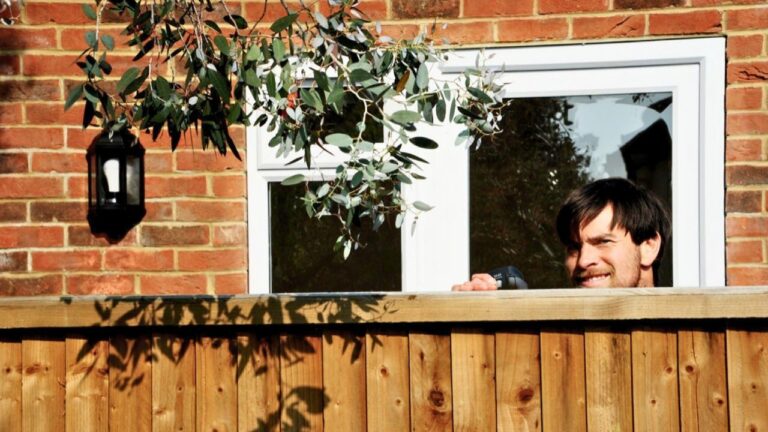
Ellis’s ring camera caught it, and Ellis came outside like he’d been waiting. He told Maren’s dad, right there in the open, that he’d asked for no one to use the walkway without contacting him first.
Maren’s dad, who is the kind of older man who hates being corrected in public, asked if Ellis was serious. Ellis said yes, and added that he didn’t know him well enough to be comfortable with him “around their home.”
Maren stepped outside mid-conversation and felt her face burn. It wasn’t even the gate at that point. It was the implication, said loudly enough for the other neighbor across the street to look over.
Her dad left, tight-lipped, and later told Maren he wouldn’t be back if it meant being treated like a trespasser. Jonah said Ellis was trying to bully them into accepting a new normal because they were young and didn’t want drama.
Maren, meanwhile, started thinking about all the times she’d waved at the old neighbor, exchanged holiday cookies, picked up a misdelivered package. That whole rhythm was gone.
The neighborhood picked sides faster than Maren expected
Within days, it wasn’t just between two houses. People noticed the lock. People noticed that Maren and Jonah were now taking the long route with bins and bikes. People love a small, contained story that gives them something to discuss while watering plants.
The couple across the street mentioned, casually, that the previous owner had always called the walkway “shared access,” even if the deeds weren’t crystal clear. Another neighbor said Ellis had complained about kids chalking near his driveway and had asked the HOA about “loitering.”
Ellis’s partner, Tessa, tried to smooth things over once by waving and saying they’d just had a break-in at their last place and were anxious. But it didn’t change the rule: ask first, wait for a response, and don’t assume.
Maren felt weirdly singled out, like her household had been filed under “potential problem” the second the moving truck arrived. Jonah started documenting everything—dates, messages, photos of the lock, and screenshots of the letter.
And then there was the petty stuff. A leaf blower pointed directly at Maren’s open garage. A passive note about “keeping the walkway clear,” even though it wasn’t accessible. A complaint to the city about their fence needing paint, which had never been an issue before.
The final move wasn’t dramatic, but it changed the whole vibe
Jonah eventually paid for a surveyor to come out. Maren watched from the kitchen window as little flags appeared like confetti along the side of both homes.
The results didn’t give them a satisfying “gotcha.” The walkway did sit on Ellis’s side, but there was also a recorded easement for utility access that complicated things. It didn’t guarantee Maren and Jonah casual daily use, but it did mean Ellis couldn’t treat it like a private hallway whenever it suited him.
They took the survey and the letter to a local attorney for a consultation, mostly to understand what they could reasonably ask for without turning it into a war. The attorney’s advice was simple: stop using the path unless necessary, communicate in writing only, and request a formal agreement if Ellis insisted on controlling access.
So Maren and Jonah did something that felt both petty and sad: they installed their own small gate on their side and reconfigured their backyard entrance so they didn’t need that walkway at all. It cost money they didn’t have lying around, but it bought them independence.
Ellis noticed immediately. He didn’t say anything. He just kept his lock and his new rule, like a trophy.
Maren still hears the latch sometimes when she’s outside—metal on metal, a deliberate click. It’s a small sound, but it changed how their home feels. The houses are close. The air is shared. And now, so is the tension, sitting right there between two fences where a simple path used to be.
Check out more from Now Rundown:
- A Party of 12 Came Back a Month Later Demanding Their $80 Tip Refunded — My Restaurant Made Me Pay It
- Her Coworker Kept Filing the Same Complaint About Her After Being Warned — Then She Filed a Counter-Report With Every Email Documented
- Siblings Demanded Half of Their Sister’s $11 Million Inheritance — She Refused Because They Never Visited
- The Kid I Bullied in Middle School Just Interviewed for a Job on My Team — He Bombed It and I Didn’t Hire Him

Abbie Clark is the founder and editor of Now Rundown, covering the stories that hit households first—health, politics, insurance, home costs, scams, and the fine print people often learn too late.