Homeowner Refused to Trim Shade Trees So a Neighbor Could Keep Her Lake View From Across the Street
Photo credit: AI-generated image created using ChatGPT. Illustrative only.
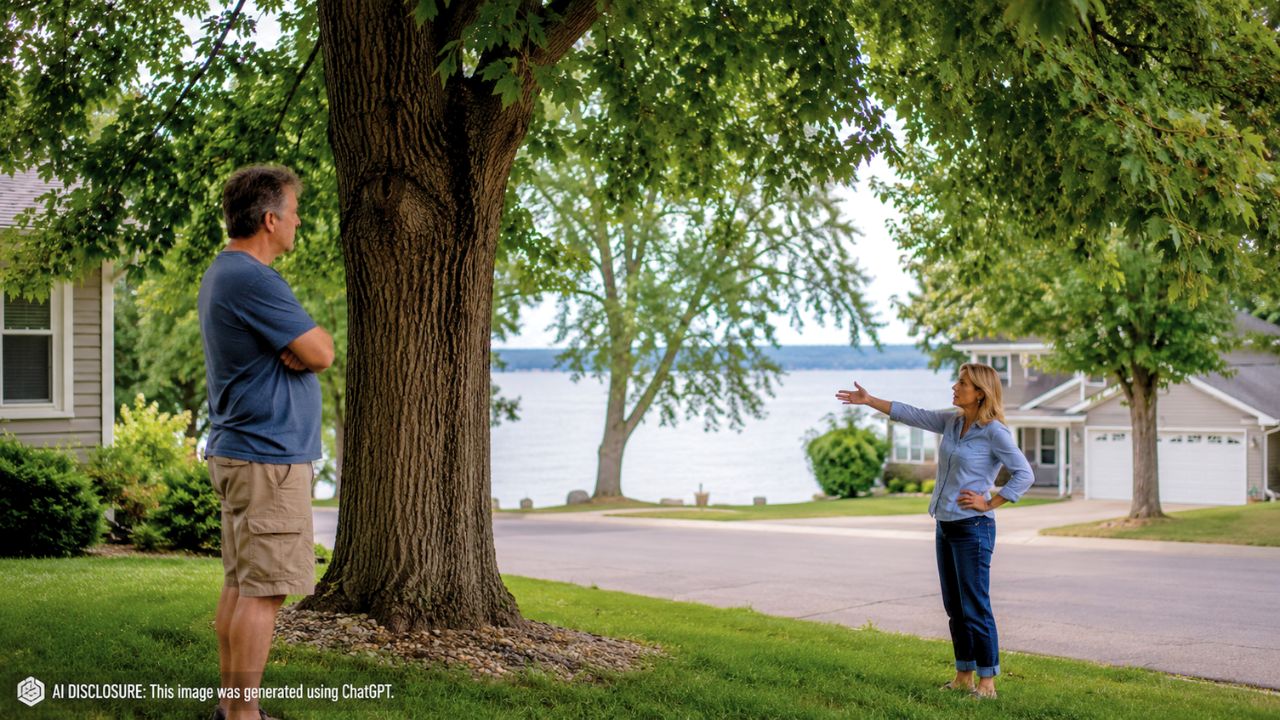
In a lake community where summer temperatures regularly hit the 100s, one homeowner says seven shade trees have become the difference between an unbearable house and a livable one. The trees, planted in the front and side yard, finally grew tall enough to cool the property noticeably—so much that stepping from the street into the driveway feels like “a 10+ degree drop in temp.”
But the same growth that brought relief also sparked a neighborhood feud. In the original post, the homeowner explains that a neighbor across the street believes the expanded canopy is interfering with her view of the lake from her front porch—and has been escalating the fight without ever directly coming over to talk.
Shade trees turned into a quality-of-life upgrade
The homeowner describes the trees as more than landscaping. With no central air conditioning, the shade has become a practical tool for getting through extreme heat. Inside the house, it’s cooler. Outside, the yard is more usable, and the plants are “thriving now because of it.”
There’s also a ripple effect that goes beyond comfort. The homeowner says they’ve noticed more wildlife around the property—frogs, king snakes, lizards—since the yard became a cooler, more sheltered space. In a hot climate, that kind of cover can change the whole feel of a home.
From the homeowner’s perspective, these aren’t trees grown “too big.” They’re trees that finally reached the point where they do the job they were planted to do.
Across the street, the porch view became the priority
The neighbor’s issue, according to the homeowner, is that the lake view from her front porch isn’t as clear as it used to be. The homeowner emphasizes the trees aren’t completely blocking the lake—just getting “in the way” more now that they’re bigger.
It’s also not a case of lakefront property losing a direct shoreline vista. The neighbor lives across the street from the homeowner, and the homeowner notes that the neighbor bought a home behind another home and within a full neighborhood layout. That context matters, because it shapes what each person sees as reasonable: one sees a basic right to shade on their own lot; the other treats a view from across the street like something that should be preserved.
The homeowner even acknowledges a twinge of guilt about standing firm, noting the neighbor is older and lived in the area before they did. But they also question why the neighbor is demanding a major change without taking the simplest first step: speaking directly to the people who own the trees.
The first communication wasn’t a conversation—it was porch talk and threats
Instead of knocking on the door, the homeowner says the neighbor, her daughter, and grandkids began “talking” about the trees from the porch—loudly enough for the homeowner, their teenage daughter, and a roommate to hear. The homeowner describes it as trash talk and threats, aimed at whoever happened to be outside.
Then a grandson came over with a blunt request: “hey, can I chop all your trees down so my grandma can see the lake?” The homeowner says they laughed and responded with a firm no, but offered a middle ground—trimming the tops down so the neighbor could get some of the view back.
That didn’t land as a compromise. The homeowner says the grandson rejected it outright, responding, “nah..f that! You’re f’d up for doing that to a sweet little old lady!” The homeowner adds their own assessment: she may be old, but “she’s not sweet.”
From there, the dispute wasn’t about pruning techniques. It became a standoff over entitlement, respect, and who gets to dictate what happens on someone else’s property.
When the neighbor couldn’t persuade them, she tried outside pressure
After the homeowner refused to cut down the trees, the neighbor allegedly started contacting third parties. She called the county, claiming the trees were an eyesore. She also called the electric company and internet company, claiming the trees were a threat to their lines.
The homeowner says those calls “amounted to nothing.” In other words, the authorities and utilities didn’t come in and force a trim or removal based on what was reported. That left the trees standing—and likely deepened the neighbor’s frustration.
She also contacted another nearby homeowner who used their house as a vacation property, telling him some branches were over a fence line. Again, it didn’t produce results that satisfied her. The homeowner’s biggest irritation isn’t just the complaints; it’s the pattern of going to everyone else first while refusing to speak directly to the person who can actually make decisions about the trees.
At that point, the homeowner sees the demand as “all or nothing,” with no interest in negotiation unless it ends with the trees drastically reduced or removed.
People focused on boundaries, documentation, and not giving an inch
While the post centers on whether refusing to cut the trees makes the homeowner the bad neighbor, the practical reality is that the dispute already has a paper trail. The neighbor has made calls to county offices and utilities, and the homeowner has a clear timeline of how they learned about the issue—through porch threats and a grandchild’s request, not a polite conversation.
In these kinds of disputes, many readers typically zero in on boundaries: whose property the trees are on, whether any branches cross a line, and whether there’s any legal requirement to trim for view protection. But just as important is the human pattern that can spiral—using relatives to confront someone, escalating to official complaints, and keeping the conflict loud and public.
The homeowner already offered what most people would consider a reasonable starting point: trimming the tops rather than removing seven established shade trees in extreme heat. The refusal to accept that kind of partial solution signals that even if the homeowner gave a little, the demands might not stop there.
A hot summer, a cool house, and a feud that isn’t going away
The homeowner is left weighing two pressures: the practical need for shade in relentless heat, and the social pressure of living near someone who’s angry and persistent. The neighbor’s age and time in the community add emotional complexity, but they don’t change the basic issue—these are trees on someone else’s property that provide real cooling and comfort.
For now, the trees are still doing what they were grown for: lowering temperatures, helping the yard thrive, and making a house without central air more bearable. Across the street, the neighbor is still looking at the same canopy, still wanting the same view back, and still choosing confrontation at a distance over a direct conversation.
Unless one of them changes tactics—either with a calmer approach or a clearer boundary—the standoff seems set to last as long as the heat does, and probably longer.
Check out more from Now Rundown:
- A Party of 12 Came Back a Month Later Demanding Their $80 Tip Refunded — My Restaurant Made Me Pay It
- Her Coworker Kept Filing the Same Complaint About Her After Being Warned — Then She Filed a Counter-Report With Every Email Documented
- Siblings Demanded Half of Their Sister’s $11 Million Inheritance — She Refused Because They Never Visited
- The Kid I Bullied in Middle School Just Interviewed for a Job on My Team — He Bombed It and I Didn’t Hire Him

Abbie Clark is the founder and editor of Now Rundown, covering the stories that hit households first—health, politics, insurance, home costs, scams, and the fine print people often learn too late.