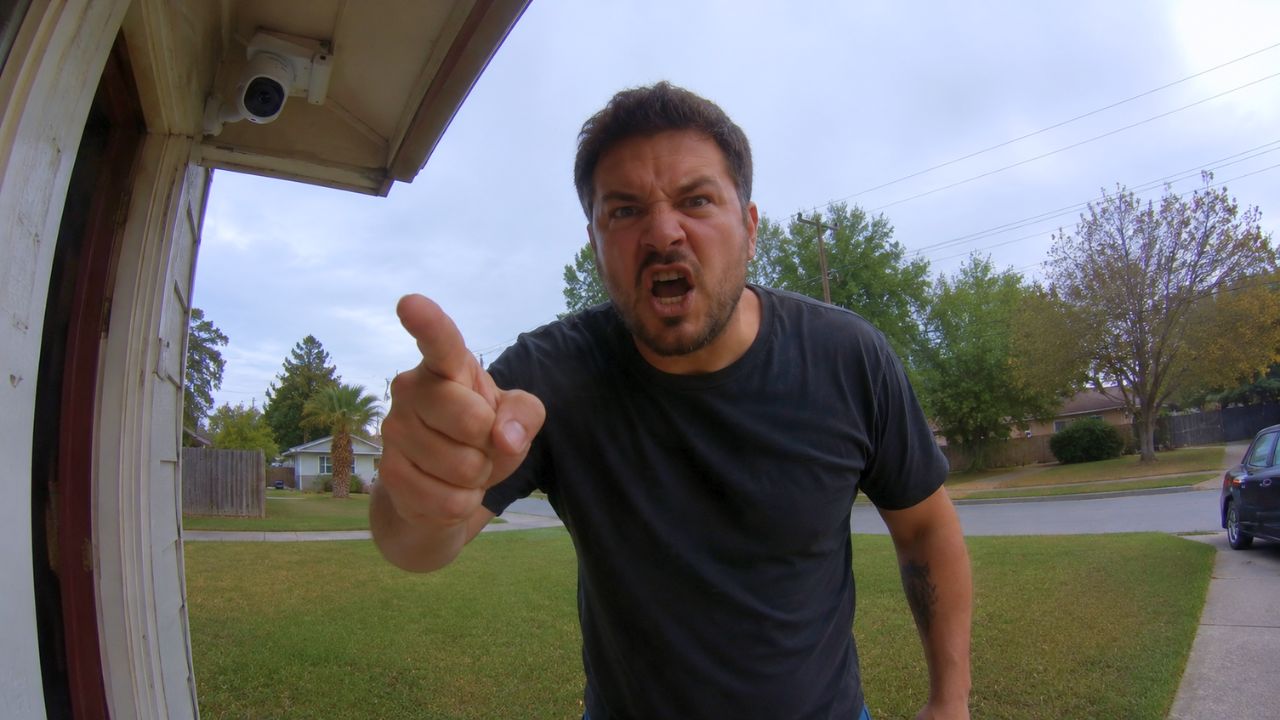
Neighbor Yelled “I’ll Get a Gun” at the Security Camera — Then Police Said He Was Too Unstable to Take Seriously
Photo credit: Nowrundown.com
A homeowner said a frightening neighbor dispute escalated after a neighbor allegedly threatened them through a security camera, but police reportedly told them the man was too unstable for the threat to be taken seriously.
The homeowner shared the situation in a post on r/legaladvice, explaining that the threat was captured through their security camera. According to the post, the neighbor yelled that he would get a gun and put a bullet in them.
That is not the kind of comment most people can brush off as normal neighbor tension. People argue over fences, noise, parking, pets, trees, trash cans, and property lines all the time. Most of those disputes stay in the miserable-but-manageable category. But once someone allegedly brings up a gun and describes shooting another person, the situation moves into a much more serious place.
The homeowner had proof, or at least a recording of the threat. That usually matters in neighbor disputes because so many of them turn into one person’s word against another’s. A security camera can capture the exact words, tone, date, time, and location. It can show whether the neighbor was standing near the property, whether he was yelling toward the house, and whether the threat was directed at a specific person.
But according to the homeowner, police did not respond the way they expected.
The homeowner said officers told them the neighbor was too unstable to take seriously. That response left the homeowner in a strange and upsetting position. From their perspective, the neighbor’s instability did not make the threat less scary. It made it more concerning. If someone is unstable and talking about getting a gun, a homeowner may feel less safe, not more.
That was the core frustration. The homeowner had a recording. The words were serious. The person lived nearby. Yet the response they described made it sound as if the neighbor’s mental state was being used as a reason not to act.
The homeowner wanted to know what options they had. Could they get a restraining order? File another report? Ask for a supervisor? Keep calling police? Use the video as evidence? Were there any legal steps they could take before the situation got worse?
Those questions matter because neighbor threats are different from a random angry comment online. The person making the threat may know where the homeowner lives because they are right there. They may be able to see when the homeowner leaves, when they return, who visits, and whether anyone is outside. The threat does not vanish when the neighbor walks back inside.
It can change how the homeowner lives. They may stop using the yard. They may check cameras constantly. They may avoid taking out trash at night, worry about family members outside, or feel nervous every time they hear the neighbor outside again.
The post did not describe a final court order or police action. It captured the uneasy stage where someone felt threatened, believed they had evidence, and still did not know how to get authorities to treat the situation as serious.
Commenters focused on the fact that a recorded threat involving a gun should not be treated casually.
Several people told the homeowner to save the video immediately and make backups. If the footage stayed only inside the security camera app, it could be deleted or overwritten. The homeowner needed a copy with the date and time preserved, plus any related footage showing what happened before and after the threat.
Others said the homeowner should ask for a police report number and make sure the incident was officially documented. A conversation with officers is not always the same as a formal report. If the homeowner later needed a restraining order or had to call again, having a report number would matter.
Some commenters suggested asking to speak with a supervisor if officers dismissed the threat. The homeowner could calmly explain that the neighbor made a specific threat involving a gun and that it was captured on camera. If the first officer’s response was not enough, commenters said the homeowner could keep pushing through official channels.
A restraining order also came up, but commenters warned that the standard would depend on local law and the full pattern of behavior. One recorded threat could be important, but a stronger case might include prior incidents, other witnesses, repeated harassment, trespassing, or additional police reports.
Several people also said the homeowner should keep documenting everything going forward. Any future yelling, threats, property damage, trespassing, or camera footage should be saved in a timeline. If the neighbor was unstable and escalating, the pattern could become just as important as the one recorded statement.
The post did not end with the homeowner getting the protection they wanted. It ended with them trying to understand what to do after a threat that felt obvious to them was allegedly minimized by police.
That is what made the situation so disturbing. The neighbor’s words were not vague. The homeowner said the threat was recorded. Yet the response they described left them feeling like they still had to prove danger before anyone would act.
Commenters did not tell them to ignore it. They told them to save the video, get report numbers, escalate if needed, and build a record strong enough for police or a court to see the threat as part of a documented pattern.
Because when a neighbor yells about getting a gun and shooting someone, the safest response is not to assume it was meaningless. It is to make sure the threat is preserved, reported, and impossible to wave away later.
Check out more from Now Rundown:
- A Party of 12 Came Back a Month Later Demanding Their $80 Tip Refunded — My Restaurant Made Me Pay It
- Her Coworker Kept Filing the Same Complaint About Her After Being Warned — Then She Filed a Counter-Report With Every Email Documented
- Siblings Demanded Half of Their Sister’s $11 Million Inheritance — She Refused Because They Never Visited
- The Kid I Bullied in Middle School Just Interviewed for a Job on My Team — He Bombed It and I Didn’t Hire Him

Abbie Clark is the founder and editor of Now Rundown, covering the stories that hit households first—health, politics, insurance, home costs, scams, and the fine print people often learn too late.