Maintenance Man Was Caught Going Through Dresser Drawers During an Apartment Job
Photo credit: Now Rundown
A Texas tenant said a routine maintenance visit turned into a privacy concern after a camera allegedly caught a maintenance worker rifling through dresser drawers during a job.
The tenant shared the situation in a post on r/legaladvice, explaining that maintenance had entered the apartment for work. That part, on its own, was not the issue. Tenants expect maintenance workers to come in sometimes for repairs, inspections, appliance problems, leaks, or other rental-related needs.
The problem was what allegedly happened once the worker was inside.
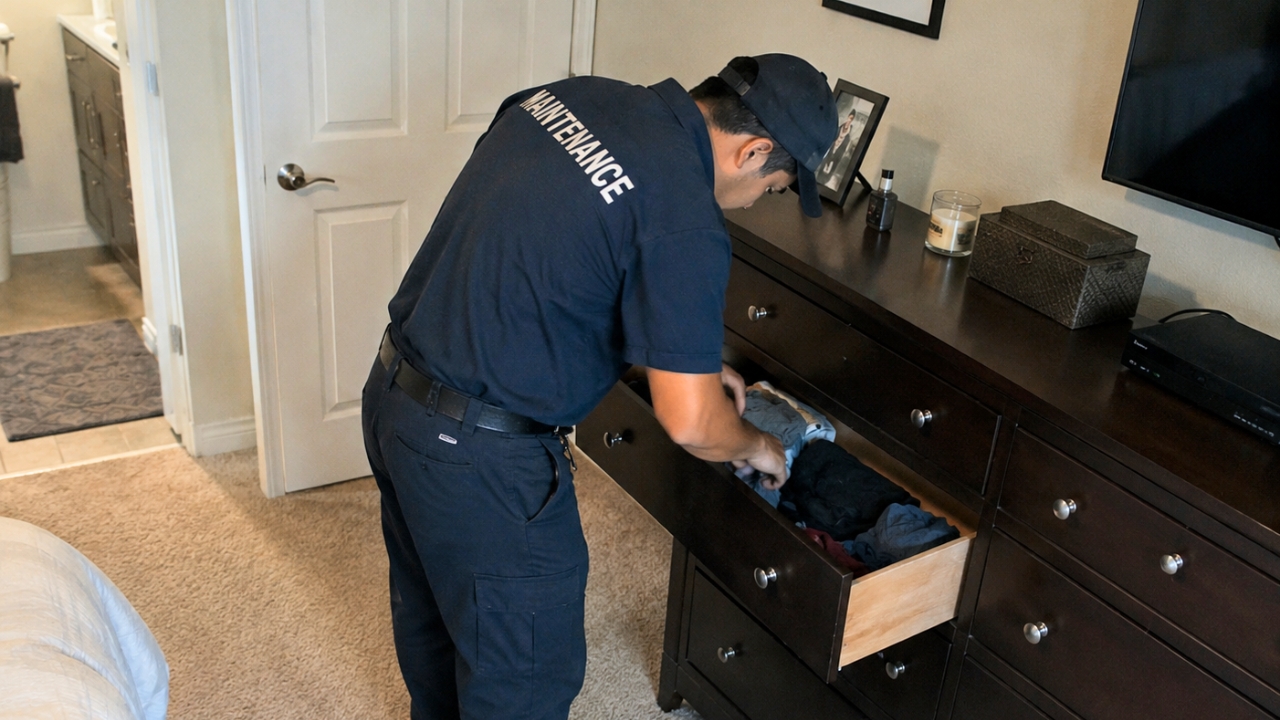
According to the tenant, camera footage appeared to show the maintenance man going through a dresser. That detail changed the situation immediately. A maintenance worker may need to access a sink, HVAC unit, outlet, window, appliance, or wall. They may need to move around the unit to complete the job. But opening dresser drawers and going through someone’s personal belongings is not part of apartment maintenance.
That kind of discovery can make a tenant feel violated even if nothing obvious is missing. A dresser is private. It may hold clothing, documents, medication, money, jewelry, personal items, or things the tenant never expected a stranger to see. When someone who has keys or authorized access abuses that access, it can make the apartment feel unsafe in a very personal way.
The camera footage gave the tenant something stronger than a suspicion. Without video, a tenant might notice a drawer slightly open or feel that something looked off, but proving who did it would be difficult. With footage, the tenant could point to a specific person and a specific moment.
That raised the next question: what should they do with it?
The tenant needed to decide whether to report it to management, call police, demand that the worker never enter again, ask to change locks, or speak with a lawyer. There was also the possibility that other tenants had experienced something similar but never had footage.
The apartment setting made the issue more complicated. Maintenance workers often have access to units through keys, lockboxes, or management authorization. Tenants may not be home during repairs. They may have no choice but to trust that the person sent by the property will only do the work requested. If that trust is broken, it can change the way a tenant feels every time maintenance is scheduled.
The tenant also had to think about preserving the evidence. Camera clips can disappear from apps, be overwritten, or get deleted if they are not saved. If the tenant wanted management or police to take it seriously, they needed the full footage, not just a description of what they saw.
The post did not describe a loud confrontation or an immediate arrest. It captured the unsettling moment after a tenant watched footage and realized someone who was allowed into the apartment for one reason may have used that access for something else.
Commenters urged the tenant to save the camera footage immediately and keep multiple copies. The clip was the strongest evidence, and commenters warned not to rely only on a camera app or cloud account that might delete older recordings.
Several people told the tenant to check the dresser and surrounding areas carefully and make a list of anything missing or disturbed. If money, jewelry, medication, documents, or personal items were gone, the situation would become even more serious. Photos, receipts, and notes could help if the tenant filed a police report or insurance claim.
Others said the tenant should report the incident to property management in writing. A written complaint would create a record that the tenant had notified the landlord or apartment office. Commenters suggested including the date, time, work order, worker’s name if known, and a clear statement that the worker was caught on camera going through personal drawers.
Police came up too. Several commenters said that if the worker appeared to be searching through personal property without permission, filing a police report was reasonable, especially if anything was missing. Even if the police did not immediately make an arrest, the report would create an official record.
Some commenters also told the tenant to ask management what steps would be taken to make sure the worker never entered the unit again. That could include removing the employee from the property, requiring supervised maintenance visits, changing access procedures, or allowing the tenant to be present for all future repairs.
There was also advice about locks and entry. Depending on the lease and local law, the tenant might not be allowed to change locks without permission, but they could ask management to rekey the unit or provide notice before any future entry. If the tenant no longer trusted maintenance access, that concern needed to be stated clearly.
The post did not end with management’s final response or a court outcome. It ended with a tenant trying to understand how to protect their privacy after seeing something on camera that should not have happened.
That is what made the situation so uncomfortable. The worker was not accused of entering as a stranger. He was there because the apartment system gave him access. That made the alleged drawer-searching feel like a breach of trust by someone connected to the place the tenant lived.
Commenters did not tell the tenant to ignore it or treat it like an awkward mistake. They told them to save the video, check for missing items, report it in writing, consider police, and demand a clear plan for future access.
Because when a maintenance worker is caught going through dresser drawers, the issue is not only whether something was stolen. It is whether the tenant can feel safe letting anyone from the property enter again.

Abbie Clark is the founder and editor of Now Rundown, covering the stories that hit households first—health, politics, insurance, home costs, scams, and the fine print people often learn too late.