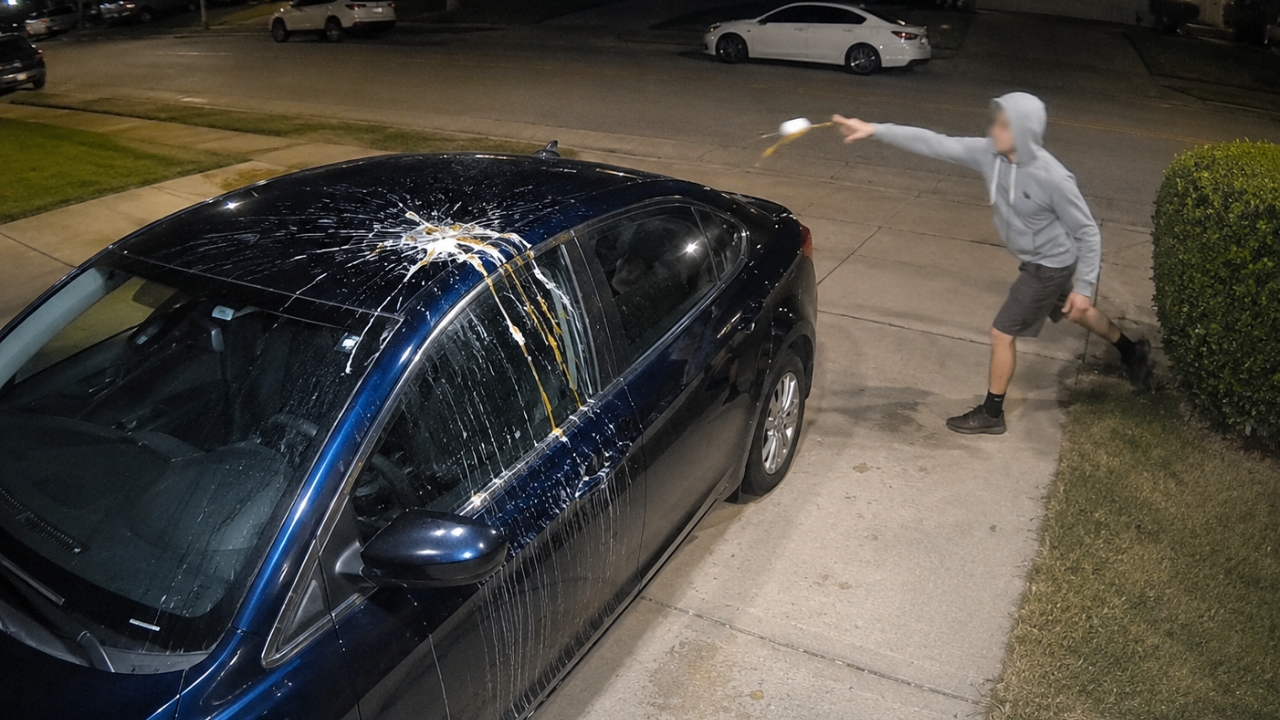
Security Camera Caught Neighbor Throwing an Egg at the Car, Driver Says
Photo credit: Now Rundown
A California resident said a neighborhood problem became harder to ignore after a security camera allegedly caught a neighbor throwing an egg at their car.
The resident shared the situation in a post on r/legaladvice, explaining that the camera footage appeared to show the neighbor targeting the vehicle. At first, an egg might sound like a small thing compared with more obvious vandalism. But anyone who has dealt with car damage knows it is not always harmless.
Egg can damage paint if it sits too long, especially in heat. The shell can scratch the surface. The residue can be difficult to clean off. And even if the physical damage is minor, the message behind it matters. Someone did not accidentally bump the car or make a parking mistake. According to the resident, the neighbor intentionally threw something at it.
That made the situation feel less like a prank and more like a property dispute with evidence.
The camera footage was the key detail. Without it, the resident may have been stuck guessing who did it. A damaged or messy car outside a home can be blamed on kids, passing strangers, birds, wind, or any number of random explanations. But footage allegedly showing the neighbor made the problem more direct and more uncomfortable.
Now the resident had to decide what to do with that proof.
They could confront the neighbor, but that might escalate the situation. They could call police, but they may have wondered whether an egged car would be treated seriously. They could ask for payment if there was damage, but the neighbor might deny responsibility or downplay it as nothing. They could also document it and wait, but waiting might invite more incidents.
The neighbor angle made the decision harder. If a stranger damages your car and leaves, the relationship is over. If a neighbor does it, the person is still nearby. The resident may see them outside, pass them in the street, park near them, or worry about what they might do next.
That is what makes small acts of vandalism feel bigger when they happen at home. The damage itself may be fixable. The loss of peace is harder to repair.
The resident’s concern seemed to be both practical and legal. They wanted to know whether the video was enough, what kind of report made sense, and whether there was a way to hold the neighbor accountable without turning the whole block into a bigger conflict.
The post did not describe a major confrontation or serious injury. It described a small but intentional act that could easily become part of a larger pattern if ignored. One egg may be dismissed as petty. Repeated damage, escalating behavior, or targeting the same vehicle again would be much harder to brush off.
The camera footage gave the resident a chance to act before the situation became worse.
Commenters focused on two things: saving the evidence and documenting any actual damage to the car.
Several people told the resident to download the security footage and back it up somewhere safe. If the clip stayed only on a camera app, it could be overwritten, deleted, or become unavailable later. The resident needed a copy that clearly showed the date, time, person involved, and what happened to the vehicle.
Others said the resident should photograph the car immediately, both before and after cleaning if possible. If the egg caused scratches, paint damage, residue, or any other issue, photos would help support a police report, insurance claim, or small claims case.
Commenters also suggested getting an estimate if the paint was damaged. A professional detailer or body shop could help show whether the egg caused actual financial loss. That matters because a report or civil claim is easier to explain when there is a clear repair cost.
Some people said the resident could contact police through the nonemergency line and report vandalism. The outcome might depend on the damage amount and local enforcement priorities, but a report would create an official record. If the neighbor did anything else later, the resident could show this was not the first incident.
Others suggested avoiding direct confrontation. Even with footage, accusing a neighbor face-to-face can turn quickly into yelling, denial, or retaliation. A written request for reimbursement, a police report, or an official complaint may be safer than a driveway argument.
There was also practical advice about future prevention. Commenters suggested parking in a more visible area if possible, keeping cameras aimed at the vehicle, adding lighting, and continuing to save footage if anything else happened.
The post did not end with the neighbor admitting to it or paying for repairs. It ended with the resident holding a video clip and trying to decide how to use it.
That is often the frustrating part of low-level vandalism. The act may look childish, but the consequences can still be real. A car can be damaged. A neighbor relationship can sour. A person can start feeling like their property is being watched or targeted.
Commenters did not tell the resident to shrug it off just because it was an egg. They told them to treat it like evidence, document the car, report it if appropriate, and avoid giving the neighbor a chance to turn the situation into a bigger personal fight.
Because once a camera catches a neighbor throwing something at your car, the issue is not only cleanup. It is whether that was the end of the problem or the first thing you were able to prove.

Abbie Clark is the founder and editor of Now Rundown, covering the stories that hit households first—health, politics, insurance, home costs, scams, and the fine print people often learn too late.