Woman Says Her Neighbor Blocked Her Car Door to Talk — Then Showed Up With Groceries and Tried to Come Inside
Photo credit: Now Rundown
A 25-year-old woman says the man across from her apartment started off by yelling across the street when she first moved in. Over time, the encounters became more personal, more frequent, and harder to avoid — until she began feeling unsafe just walking to her car.
She explained in a Reddit post that she lives in an apartment building, and directly across from her building is a large house where a man in his 50s or 60s lives alone. She called him Alvin and said he was the only person she had ever seen at that house.
From the beginning, something about him felt off to her.
When she first moved in, he yelled at her from across the street. She tried to ignore it, but after that, he seemed to notice her whenever she was outside. If he saw her car, he would come over and try to talk to her.
Sometimes he would walk right up to her car in a way that made it difficult for her to open the door and get out. Instead of casual neighborly conversation from a normal distance, she felt boxed in while he talked to her through the window.
Then he started offering help.
If he saw her carrying groceries, he would try to help bring them inside her apartment. She always told him no. She said she had it handled and did not need help, but he kept trying anyway.
At another point, he noticed her car had a light out and offered to fix it. About a week later, someone broke into her car and took off the door handle. Alvin then offered to drive her in his car to a repair shop to get it fixed.
That offer bothered her. If he genuinely wanted to be helpful, he could have given her the name or address of a shop. Instead, he wanted her to get into his car. She declined and told him she would figure it out herself like she always does.
She also felt like he was trying to gather information about her, including where she worked. That made the repeated interactions feel less random and more invasive.
Then came the grocery incident.
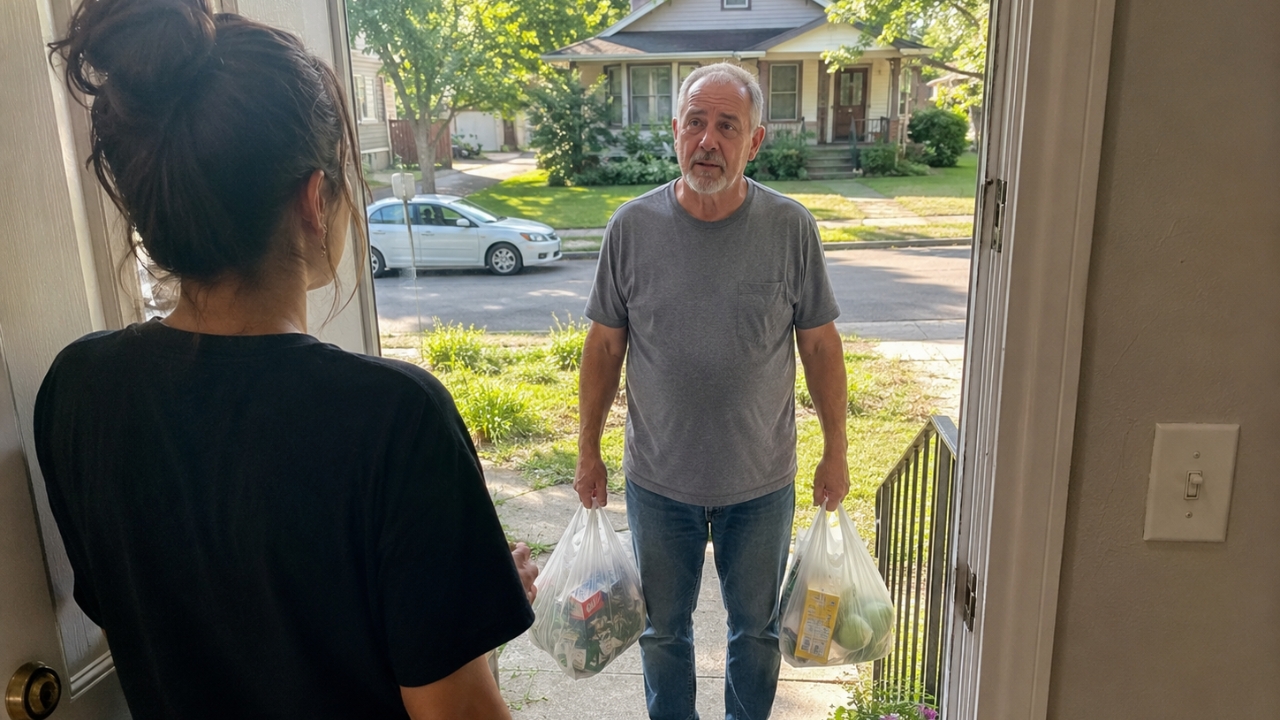
The woman was at home with friends when Alvin knocked on her door. She has a Ring camera, but he did not ring the doorbell. He only knocked. She thought it was a DoorDash driver dropping off food, so she opened the door.
It was him.
He was holding two bags of groceries and asked if she wanted any of them.
She did not want to be rude, so she took some apples and a bag of beans. Looking back, she wished she had simply said no. After she accepted a few items, he kept trying to offer to carry the bags upstairs into her apartment and put them away.
She told him no. She said she had people upstairs and did not need that many groceries.
He said okay and told her he would see if anyone else needed them. But instead of leaving, he stood there staring at her.
After a moment, she said, “All right, thanks,” and shut the door.
That interaction kept her up all night.
She said she tried to look him up on social media and through public records but could not find anything. That did not necessarily prove he was unsafe, but it also did not reassure her. She had an eerie feeling every time he came over or tried to talk to her.
The fear had started changing her routine. She said she has several locks on her door and a camera at the front door, but when she leaves for errands, she is always on high alert. Her apartment is the one closest to his house, so walking to her car feels stressful.
She asked for advice on how to tell him to stop bothering her without being rude. That part showed the uncomfortable bind she was in. She did not want to be mean, but she was also a small woman, about 5-foot-1, and worried that if she upset him, he might physically hurt her.
In an update, she said she could not move until her lease was up, but she had started parking in a different spot farther from her apartment door. The new spot allowed her to walk in a way that he could not easily see from his house.
She also told her apartment manager.
The manager walked her home one day while Alvin was outside trying to talk to her. According to the woman, as soon as he saw the manager with her, he did not try to speak. That detail stood out to her because he seemed to approach only when she was alone.
She had started ignoring him and pretending he was not there, but she still felt unsafe. She said she could not wait for her lease to end and added that the next time he came to talk to her, she planned to call police.
By the end, the question was not whether an older neighbor can ever be friendly. Of course he can. The issue was that this particular neighbor kept pushing toward access: her car, her apartment, her personal information, and possibly her routine.
And he seemed to back off only when someone else was watching.
Most commenters told her she was not overreacting. Many said the biggest warning sign was that Alvin only approached when she was alone and stopped when the apartment manager was with her.
Several people urged her to trust her gut, document every interaction, and keep management involved. They also suggested saving camera footage and calling police if he continued approaching after being told to stop.
A lot of commenters focused on the car and apartment access. Walking up so close that she could not comfortably get out of her car, offering to drive her somewhere, and trying to carry groceries into her apartment all seemed like boundary-pushing.
Some commenters said he might just be lonely or old-fashioned, especially because older neighbors sometimes offer food or help in ways that younger people find intrusive. But even those commenters generally agreed that once she felt unsafe, she had every right to be firm.
Others told her to stop worrying about being polite. They said she should clearly tell him she does not want help, food, rides, or visits, and that he needs to leave her alone.
The strongest advice was simple: friendly neighbors respect no. If he keeps approaching after she says no, then he is not being helpful. He is ignoring boundaries.

Abbie Clark is the founder and editor of Now Rundown, covering the stories that hit households first—health, politics, insurance, home costs, scams, and the fine print people often learn too late.