Woman Refused to Split Her Late Mother’s Inheritance Evenly With Her Siblings After Being Left the Majority for Helping Her Escape an Abusive Relationship
Photo credit: AI-generated image created using ChatGPT. Illustrative only.
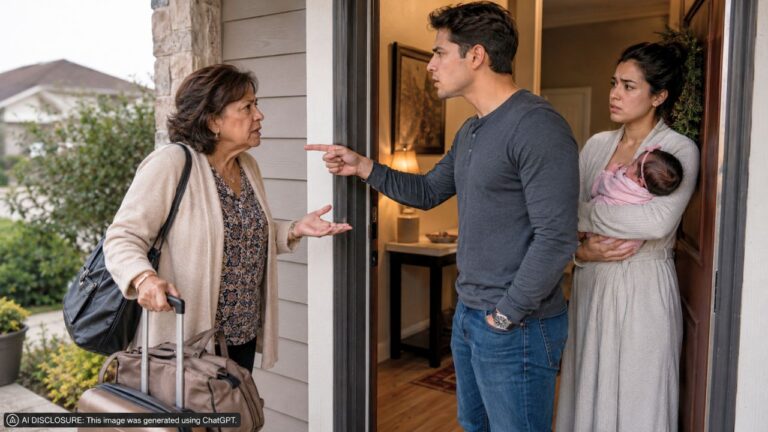
Six months before her mother died in a car accident, a 26-year-old woman showed up at her childhood home with two small kids and a life she was trying to rebuild. She had just escaped a controlling relationship that kept her from working and cut her off from family, and she said her mother took them in without hesitation, helping her restart everything from paperwork to therapy.
After the funeral, grief turned into a different kind of stress: money, and what her mother’s help was “worth” in the eyes of her siblings. In the original post, the woman described learning that her mother had changed her will during the months she was back home—and that her brother and sister now wanted her to give up part of what she was left.
She came home with nothing but her kids and a plan to leave
The woman said she hadn’t seen her mother since she learned she was pregnant with her son, meaning she’d been gone around six years. During that time, she was in a relationship she described as abusive and isolating: she wasn’t allowed to get a job, and she wasn’t allowed to stay in contact with family.
When she finally left, she did it with her two children—a 7-year-old boy and a 4-year-old girl—and went straight to her mother’s place. That decision, she implied, was the pivot point: her mother gave her a place to live and helped her stabilize quickly enough to start undoing the practical damage that can follow years of isolation.
She said her mother supported her through the legal process involving her ex, helped her obtain identification, open a bank account, and find her first job. Her mom also paid for private therapy for both her and the kids. Importantly, she said her mother wouldn’t accept money from her, specifically so she could save for housing.
Rebuilding family ties—then losing her mom
Living with her mother also reopened doors that had been shut for years. She said she reconnected with her siblings, Jake, 28, and Tilly, 31. At first it was awkward, but she described the relationship slowly returning to what it had been before she disappeared from their lives.
Then their mother was killed in a car accident earlier this year. The woman said all three siblings were devastated and tried to support each other through it, leaning on the sense that, after everything, they still had each other.
That fragile unity didn’t last. When the will was finally broken down, the numbers hit hard—and not in the same way for everyone.
The will wasn’t just sentimental—it was specific
The woman said their uncle, their mother’s brother, served as executor. The home and possessions were sold, and their mother’s debts were paid first. About 25% of the estate, she said, went to settling that debt.
What remained was split in a way that immediately caused friction. According to her, Jake received 10%, Tilly received 10%, and the uncle received 10%. Each of her two children also received 10%, placed into a trust until they turn 18. The remaining 25% went to her.
She didn’t know all the fine details of the estate accounting, but she did share approximate totals: each 10% share was “a little over” £75,000, and her 25% was around £185,000. And she noted one more detail that mattered: the will changes were made sometime after she came home, but before the accident.
Her siblings wanted “fair,” but she saw survival math
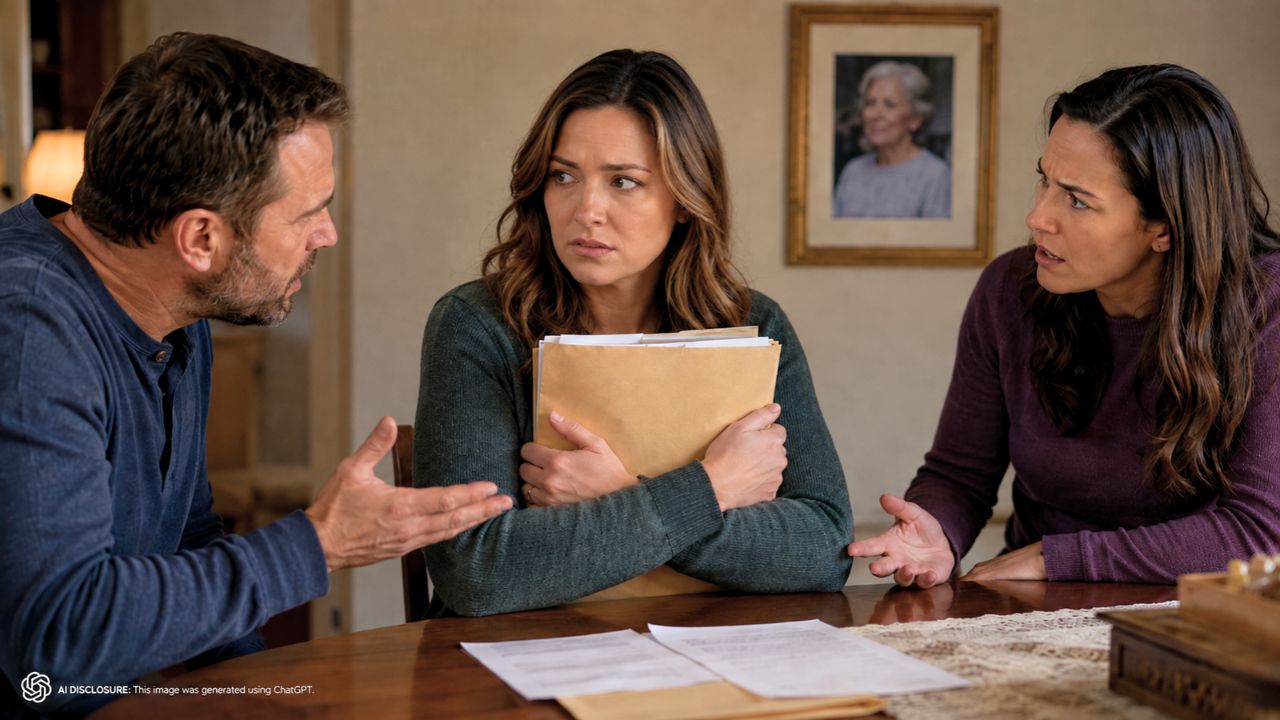
Jake and Tilly were angry about the distribution. The woman said they believed the “fair” solution would be for the siblings to re-divide their portions so the three of them each received one-third. Under that plan, she’d drop from 25% to 15%—about £112,000—while they’d each get a boost.
To her, that wasn’t a small adjustment. She described the inheritance as a chance to buy a modest home outright—something she said she could do with £170,000–£175,000 in her area if it was unfurnished. With only £112,000, she said she’d be unlikely to find a house big enough for herself and her children.
She also looked into a mortgage and hit another wall: she only started working about a year ago, and she said she has little financial history. Her bank, she wrote, wouldn’t even offer an overdraft, making a mortgage “a non starter.” In other words, she wasn’t debating upgrades or savings goals—she was trying to secure stable housing after years of financial control.
Her siblings’ circumstances were different. She said Tilly works in medicine and earns roughly three times what she does, and Jake is a university lecturer earning about the same as Tilly. They are child-free and intend to stay that way, she wrote, and their student debt was either paid off or close to being finished. Their £75,000 shares, she argued, amounted to about a year of wages for them, but more than three years of wages for her.
The pressure point: grief, guilt, and the fear of losing more family
The woman didn’t frame herself as entitled to the money so much as terrified of what giving it up would mean. She said she was surprised to be included at all after being gone for so long, and she acknowledged that even 15% would still be more money than she had recently.
But she also described the inheritance as “life changing” for her and her kids—money that could buy stability without needing a lender to take a chance on someone with a short work history. That’s what made the request from Jake and Tilly feel so loaded: it wasn’t just about what their mother intended, it was about whether her siblings understood what it costs to start over from scratch.
At the same time, she clearly worried about the relational fallout. She emphasized that she loves them and that they’ve already lost their mother. She didn’t want to lose her siblings too, especially not over money. The problem is that money was already doing what grief often does—forcing everyone to assign meaning to choices that can’t be explained by the person who made them.
Reactions centered on honoring the will and protecting the kids’ future
The post itself included a clear judgment label—“Not the A-hole”—signaling that many readers felt she shouldn’t be pressured into rewriting her mother’s decisions. The reasoning, based on the details she shared, was straightforward: her mother updated her will after seeing her daughter return, get established, and try to rebuild a safe life for her children.
The trust set up for the kids also shaped reactions. With 20% of the remaining estate earmarked for the children and locked away until adulthood, her mother’s priorities looked deliberate. And because the uncle also received 10%, it wasn’t a will that simply punished two siblings to reward another; it spread money across the family while still giving the biggest share to the daughter raising two kids with the least financial footing.
Readers also focused on the practical side of what her siblings were requesting. This wasn’t a symbolic reshuffle. It would potentially be the difference between buying a home outright and being stuck renting, unable to qualify for a mortgage, with two children to house and a newly rebuilt career to protect.
By the end of her post, she hadn’t announced a final decision—she was still at the stage of asking whether sticking to the original split would make her the bad guy. But the stakes were already clear in her numbers: giving up that extra 10% wasn’t “sharing,” it was changing the only realistic path she saw to a stable home, after years of instability that began long before the will was ever written.
Check out more from Now Rundown:
- A Party of 12 Came Back a Month Later Demanding Their $80 Tip Refunded — My Restaurant Made Me Pay It
- Her Coworker Kept Filing the Same Complaint About Her After Being Warned — Then She Filed a Counter-Report With Every Email Documented
- Siblings Demanded Half of Their Sister’s $11 Million Inheritance — She Refused Because They Never Visited
- The Kid I Bullied in Middle School Just Interviewed for a Job on My Team — He Bombed It and I Didn’t Hire Him

Abbie Clark is the founder and editor of Now Rundown, covering the stories that hit households first—health, politics, insurance, home costs, scams, and the fine print people often learn too late.