Woman Refused to Replace Her Guest Room’s Twin Beds With a Queen for Her In-Laws — She Keeps Them for Foster Kids Needing Emergency Housing
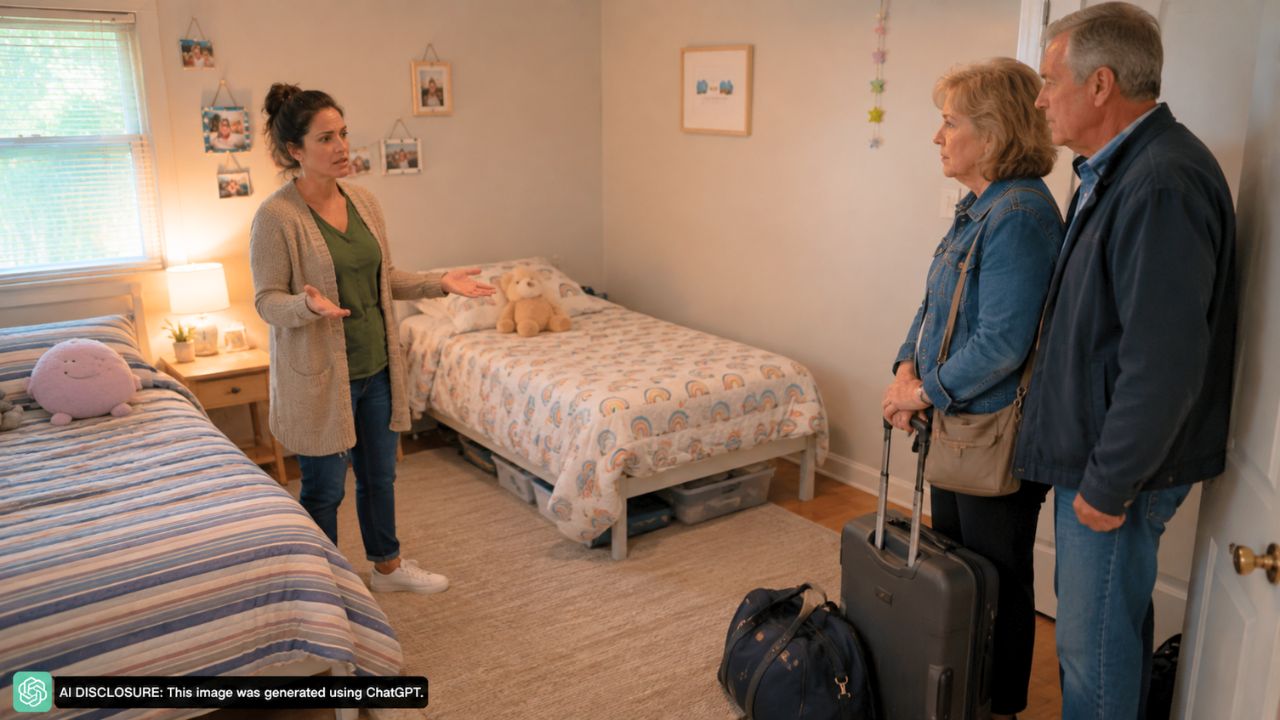
Photo credit: AI-generated image created using ChatGPT. Illustrative only.
The guest room in a 24-year-old couple’s three-bedroom house wasn’t designed to impress visiting relatives. It was designed for kids who show up with nowhere else to sleep.
But when the husband’s brother and sister-in-law moved in after losing their housing, the room’s setup—two twin beds with trundles underneath—turned into a family fight that didn’t stop at the bedroom door. The woman laid out the full story in the original post, asking whether she was wrong to refuse to swap the beds for a queen.
The guest room wasn’t really a guest room
The couple, married for two years, share a three-bed, two-bath home: their bedroom, a home office, and a third room that’s technically for guests. The wife is a social worker, and she said the foster care system where she lives is overwhelmed, with too few foster homes and too many kids needing immediate placements.
In her telling, that shortage has real, nightly consequences. Kids can end up stuck in hospitals, psychiatric facilities, group homes, or even sleeping on the floor at a CPS facility when there’s nowhere else to send them. She said it’s “very common” for social workers—including her—to bring children home for emergency overnights when placements can’t be found quickly.
So the third bedroom was arranged with that reality in mind: two twin beds, each with a pullout bed underneath. Four separate beds means she can keep siblings together for a night without kids having to share a mattress or sleep on the floor. She also said she worked hard to make the room feel welcoming to children who arrive in stressful circumstances.
Then the in-laws needed a place to land
Earlier this year, her husband’s brother and the brother’s wife ran into a housing crisis of their own. They lost their jobs and couldn’t renew their lease, leaving them temporarily homeless while they scrambled for work and a new place to live.
The couple offered their home for what became a two-month stay. The poster admitted she wasn’t excited about it, but felt it was the right thing to do. It wasn’t a quick weekend visit—it was living out of someone else’s house, settling into a room, and trying to get back on their feet.
That’s when the foster-friendly guest room became the center of the conflict. The brother and sister-in-law didn’t like the two-twin setup and didn’t want to sleep in separate beds.
The demand: make it a queen, even if it meant removing the beds
The issue wasn’t just preference; it was logistics. According to the post, the twin bed frames couldn’t be pushed together. The room was also small and oddly shaped, making it impossible to fit a queen air mattress unless the twin beds were removed entirely.
And removing them wasn’t as simple as sliding them into a garage—because the couple doesn’t have one. The in-laws wanted the beds gotten rid of or moved into a storage unit so they could replace them with a queen air mattress.
For the homeowner, that meant time, money, and disruption for what she believed was a temporary arrangement. She refused. She didn’t want the hassle, she didn’t want to undo a room she’d intentionally set up for emergency foster needs, and she didn’t want to make a major change for guests who “shouldn’t be staying for long anyways,” as she put it.
She also admitted to another motivation she did not share with the in-laws: she didn’t want them getting too comfortable. In her mind, a cozier setup risked turning a short-term stay into something open-ended.
Her husband drew a line—and the family backlash followed
The husband backed her decision. When his brother and sister-in-law kept complaining, he told them that if they didn’t like it, they could get a hotel. Otherwise, he wanted them to stop bringing it up.
He also warned that if the complaints continued, they would have to leave. The post makes it clear he didn’t treat this as a small spat about furniture. He treated it as disrespect toward the people giving them a roof.
The in-laws, however, took the dispute to the rest of the family. The poster said they started telling “everyone who will listen” that the couple were the ones in the wrong for making them sleep in “kid beds.”
That escalated things beyond the walls of the house. Instead of an awkward living arrangement that would end when the in-laws moved out, it became a wider family feud. The husband responded by telling relatives, in blunt terms, to stop contacting them unless they had something nice to say.
By the time she wrote her post, the in-laws were no longer staying with them. But the lingering problem wasn’t the beds. It was the story being told about them—and who in the extended family believed it.
What people focused on: entitlement, boundaries, and why the room exists
In her own summary, the poster said a “dozen people” in their orbit thought she and her husband were in the wrong. That appears to have been driven less by the physical discomfort of twin beds and more by the idea that a married couple “should” be accommodated with one shared bed, even in someone else’s home.
But the way she framed it, the guest room wasn’t meant to mimic a hotel. It was meant to meet a specific emergency need tied to her job: keeping kids—especially siblings—safe and together when the system can’t find a bed for them that night.
Others zeroed in on the in-laws’ request itself. Wanting a different sleeping arrangement is one thing; asking hosts to remove furniture, pay for storage, and reconfigure a room in a house they don’t own is another. In that light, the request read less like a reasonable preference and more like trying to take control of the space.
There was also an unspoken practical point: the in-laws weren’t just visiting. They were living there, and living there creates a different kind of pressure. The homeowner’s refusal—and her husband’s ultimatum—functioned as a boundary to keep the stay from stretching indefinitely.
The poster didn’t describe any compromise attempt, like temporary bedding options elsewhere in the house, and she didn’t say the in-laws offered to pay for storage or replacement costs. What she did make clear is that she wasn’t willing to dismantle a room designed for emergency child placements to make adult guests more comfortable.
After they left, the room stayed the same
When the in-laws finally moved out, the beds were still there, and the couple’s priorities were unchanged. The wife’s work still involves kids who may need a safe place for a night, and the room remains set up to handle that quickly.
What did change was the family dynamic. The poster’s husband took a hard stance with relatives who criticized them, and the couple appeared willing to accept distance rather than apologize for not remodeling a room for people who were already receiving help.
In the end, the argument wasn’t really about twin beds versus a queen. It was about what a home is for, who gets to dictate how it’s used, and how quickly “we need help” can turn into “you need to accommodate us”—even when the people being asked have built their spare room around someone else’s emergency.
Check out more from Now Rundown:
- A Party of 12 Came Back a Month Later Demanding Their $80 Tip Refunded — My Restaurant Made Me Pay It
- Her Coworker Kept Filing the Same Complaint About Her After Being Warned — Then She Filed a Counter-Report With Every Email Documented
- Siblings Demanded Half of Their Sister’s $11 Million Inheritance — She Refused Because They Never Visited
- The Kid I Bullied in Middle School Just Interviewed for a Job on My Team — He Bombed It and I Didn’t Hire Him

Abbie Clark is the founder and editor of Now Rundown, covering the stories that hit households first—health, politics, insurance, home costs, scams, and the fine print people often learn too late.