Woman Told Off Her Influencer Sister-in-Law for Trying to Film Her Daughter for Content — After the SIL Admitted She “Needed” a Girl
Photo credit: AI-generated image created using ChatGPT. Illustrative only.
A family birthday dinner turned into a parking-lot blowup after one mom realized her sister-in-law wasn’t just filming “memories” anymore—she was trying to turn a 13-year-old girl into usable footage.
In the original post, the mom explained that her sister-in-law, a stay-at-home parent with two sons deep in the hockey and baseball travel-tournament world, has spent the past year building an Instagram/TikTok “family lifestyle” presence. What started as game photos and hotel tips has, in her view, shifted into something more invasive: constant recording, staged “candid” moments, and repeated pressure on other people’s kids to perform on camera.
The “cool aunt” era ended when everything became content
The mom said her sister-in-law wasn’t always like this. When the boys were little, she often talked about wishing she’d had a daughter to do “girlie things” with, and she used to show up as a supportive, fun presence when the poster’s daughter, “S,” had milestones. One example: shopping for a first communion dress, where the aunt was described as sweet and genuinely helpful.
But as the influencer angle got more serious, the tone of family gatherings changed. The mom said holidays and get-togethers stopped feeling like normal time together and started feeling like a production set—camera out, narration going, and people being directed into the “right” moments.
Christmas was a turning point. The sister-in-law allegedly tried to dictate the whole day, turning gifts, crafts, and even movies into scripted segments. The older cousins, the mom wrote, ended up hiding in the basement just to avoid being recorded.
Her daughter didn’t want to be filmed—so she tried to make herself unusable
After that holiday, the mom said her daughter admitted she hated being recorded and didn’t want to appear on her aunt’s pages. The issue wasn’t just that a camera was present; it was the sense that the filming was constant and intended for posting, not private keepsakes.
The mom added that her sister-in-law kept pestering S to do specific activities—braiding hair, decorating cookies—because those were the kinds of “girlie” clips that would fit the brand. S didn’t know how to shut it down directly, so she resorted to making herself as “un-influencer-friendly” as possible, doing things like eye-rolling and even picking her nose to ruin the footage.
To the mother, that was a clear sign the boundary had already been crossed: a teenager was changing her behavior in public to avoid ending up online. She also clarified that despite the pressure, there is no content of her daughter online—only the sister-in-law’s own kids and partner.
The birthday dinner that snapped the last bit of patience
The final straw came at the mom’s own mother’s 70th birthday dinner. The sister-in-law started filming right away, the mom wrote, making the whole dinner feel awkward and performative. It got tense enough that the sister-in-law’s partner—who is also the poster’s brother—eventually snapped at her to stop.
Then S casually mentioned she was going dress shopping for her grade 8 grad. The sister-in-law “lit up,” according to the post, and pushed to come along—framing it as a way to “expand her brand” into full-family content.
The mom said she intentionally didn’t shut it down at the table because the dinner was meant to celebrate her mother. She planned to address it later, privately. But the sister-in-law kept pushing anyway, asking for the time and place and refusing to let it drop.
“She’s not your prop”: the parking lot confrontation
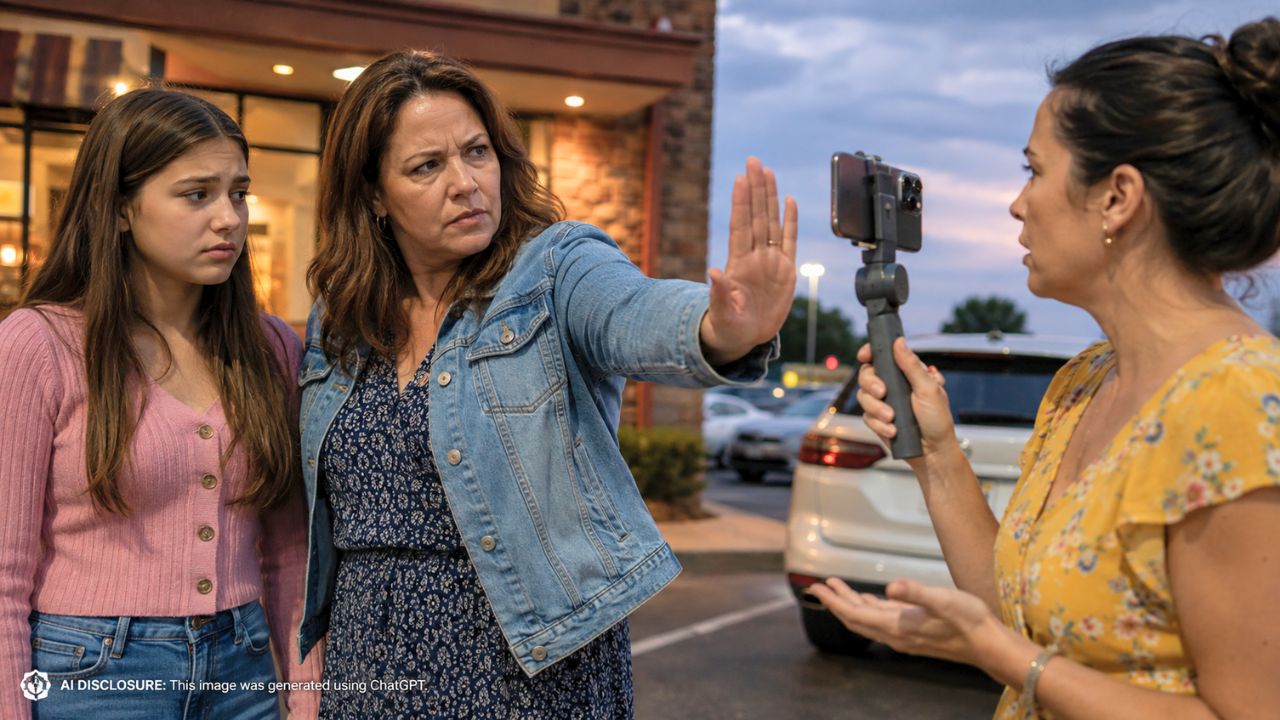
Out in the parking lot, the sister-in-law asked again for details about the shopping trip. That’s when the mom said she lost her cool. She told her sister-in-law that S was not a prop, not a substitute for the daughter she wished she’d had, and that she did not have permission to film or post her child.
The sister-in-law allegedly argued back that the mom was “stifling her creativity” and, more bluntly, that she “needs” S because she doesn’t have a daughter of her own. The mother responded loudly and “colourfully,” by her own description, with S close enough to hear—though she noted her daughter has heard rough language before because both parents work in construction.
To the mom, the volume wasn’t the point. She felt she’d already tried the polite route repeatedly, including telling her sister-in-law “no photos or recording,” often over text. The repeated pushing is what made her feel she had to escalate to something unmistakable.
The fallout moved straight to a family group chat
After the confrontation, the sister-in-law reportedly took the argument to a group chat, accusing the mom of being rude and humiliating her. She insisted “everyone posts everything these days” and demanded an apology.
The mom refused and doubled down on the boundary: no filming or posting her daughter. This time, she had backup. She wrote that her siblings supported her and also said they didn’t want their kids turned into content either.
That apparent shift—other relatives speaking up—seemed to stop the sister-in-law in her tracks. The mom said the sister-in-law hasn’t responded since.
What people zeroed in on: consent, boundaries, and keeping proof
While the post focused on whether yelling was justified, much of the practical attention landed on a simpler point: permission. S is 13, old enough to clearly express she doesn’t want to be filmed, and her parent is explicitly saying no to posting. For many readers, that should have been the end of it long before it reached a parking lot.
Some also latched onto the mother’s detail that she had already set boundaries over text. That matters because it creates a paper trail: a clear record that the sister-in-law had been told “no,” more than once, and kept pushing anyway.
The mom added a few context points that shaped how people read it. They’re Canadian, and she said there currently aren’t laws where they live about underage use of social media in this specific way. She also noted that S has been taught media literacy, digital literacy, and internet safety through school from an early age—meaning S understands what it can mean for images to live online permanently.
For this family, the practical next step isn’t just smoothing things over. It’s making sure the boundary is enforceable in real life: no filming at events, no staged moments, and no more treating a teenager’s milestone experiences—like dress shopping—as raw material for a “brand.”
And for now, that’s where it’s left: one sister-in-law who wanted a daughter-shaped content lane, a mother who says her child is not available for that role, and a wider family that’s starting to draw the same line.
Check out more from Now Rundown:
- A Party of 12 Came Back a Month Later Demanding Their $80 Tip Refunded — My Restaurant Made Me Pay It
- Her Coworker Kept Filing the Same Complaint About Her After Being Warned — Then She Filed a Counter-Report With Every Email Documented
- Siblings Demanded Half of Their Sister’s $11 Million Inheritance — She Refused Because They Never Visited
- The Kid I Bullied in Middle School Just Interviewed for a Job on My Team — He Bombed It and I Didn’t Hire Him

Abbie Clark is the founder and editor of Now Rundown, covering the stories that hit households first—health, politics, insurance, home costs, scams, and the fine print people often learn too late.