Woman Cut Off Contact With Her Son’s Ex-Wife After a Messy Divorce — Then Bluntly Told Her That Losing Her Family Wasn’t Her Problem to Fix
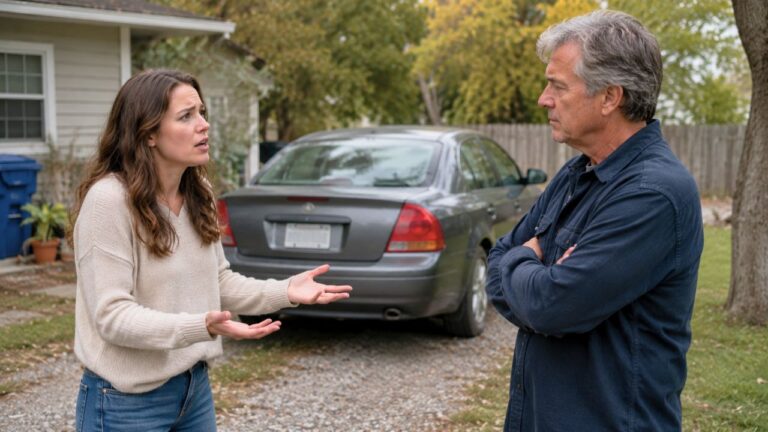
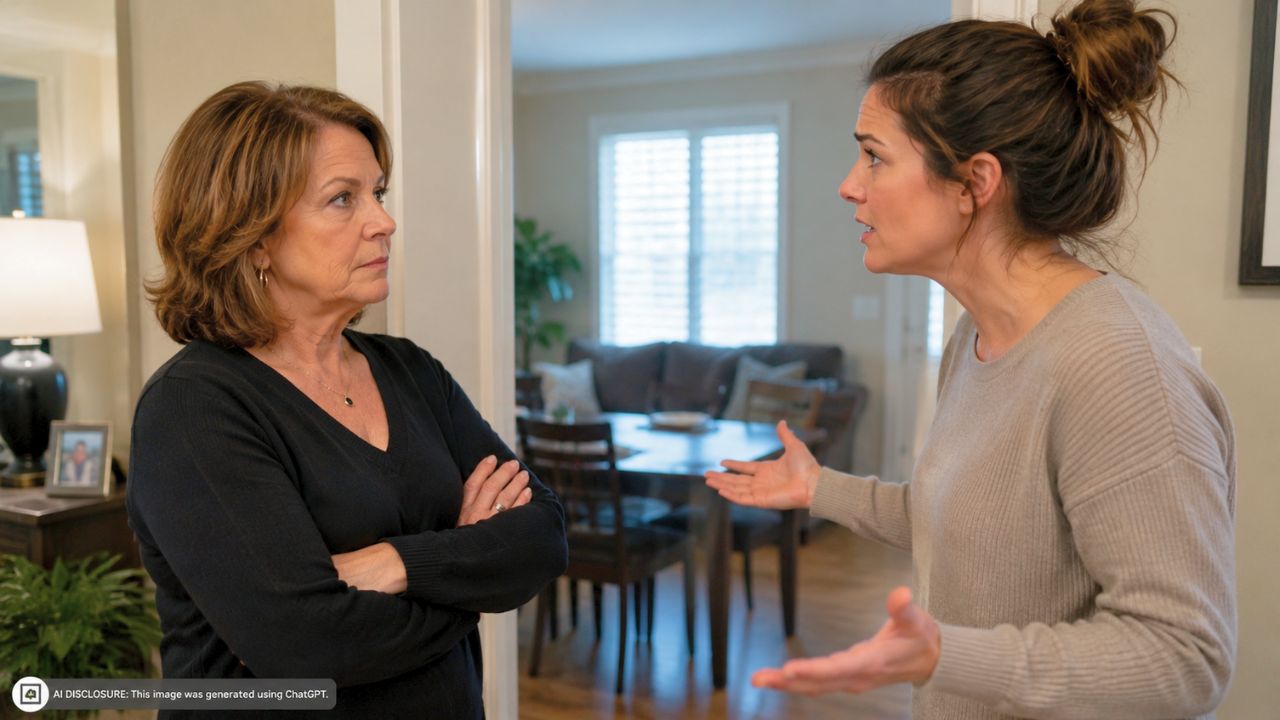
Photo credit: AI-generated image created using ChatGPT. Illustrative only
A mother thought she was setting a clean boundary after her son’s divorce. His ex-wife thought she was being erased from the only family she’d ever really had. When the two finally got on the phone, the conversation didn’t end with closure—it ended with a blunt line: her lack of a family “is not my issue.”
In the original post, the woman explains that her son was married for eight years to “Sam,” a former daughter-in-law she once treated like her own. But after a painful split, she stepped back completely. Sam called to ask why she’d been cut off, and the mother didn’t soften the message: the marriage is over, so the family connection is over too.
For years, she wasn’t just a daughter-in-law
The mother describes Sam as someone who “didn’t have a good childhood” and was “bounced a lot as a kid.” Over time, Sam integrated into the family and, by the mother’s account, she took on a parent-like role with her. It wasn’t just holidays and small talk—this was a relationship built on filling in gaps Sam didn’t have elsewhere.
That history is what made the post-divorce silence so jarring. The mother says Sam had been a kind person and fit well, which helps explain why Sam later felt comfortable enough to call and ask directly what changed. In Sam’s mind, it sounds like the family bond should have survived the end of the marriage.
But the mother frames it differently. To her, Sam’s place in the family existed because she was married to her son. Once that legal and personal tie snapped, everything else had to follow it.
The marriage ended after years of heartbreak
The divorce itself wasn’t presented as a simple falling out. The mother says the couple couldn’t have children, and that it “put a huge strain on their relationship.” She describes “two miscarriages” and calls the breakdown “a sad mess,” suggesting the grief and stress piled up for years before the marriage finally collapsed.
After the divorce, the son moved on and started dating someone new. The mother says she doesn’t know whether Sam is dating anyone. That detail matters, because it hints at two timelines moving at different speeds—one person rebuilding quickly, the other possibly still stuck with the same losses and fewer people around her.
Then came the messier details. In an edit, the mother adds that the split was “messy” and that “at the end they were both very unpleasant to each other.” She also says Sam filed for divorce and that one day her son came home to divorce papers and was then kicked out of the house.
The cutoff got real at family events
After the divorce, the mother didn’t just reduce contact—she essentially ended it. Sam was no longer invited to family gatherings, and the mother stopped messaging her. A clear example: when the mother’s daughter had a graduation party, Sam wasn’t included.
To the mother, this was straightforward. She doesn’t “hang out with” her kids’ exes and sees it as inappropriate. The unspoken rule is that divorce redraws the map, and former in-laws don’t automatically stay in the picture.
But for Sam, those missed invitations weren’t just social omissions. If Sam truly had no other stable family, being excluded from milestone events would read as a total abandonment, not a polite distancing.
That tension—between “normal boundaries” and “you’re all I’ve got”—is what finally led to the phone call.
The phone call turned into a fight fast
Sam called and asked a pointed question: did she do something wrong? The mother’s answer was blunt. Sam is divorced from her son, and the mother doesn’t keep relationships with exes.
Sam pushed back in a way that raised the stakes. She told the mother her son “didn’t have to know,” implying they could keep a separate relationship quietly. The mother said that wouldn’t fly—she believed her son would be upset if he found out she was seeing Sam behind his back.
That’s when the conversation slid from awkward to explosive. The mother told Sam she “isn’t family anymore,” and Sam argued that the mother was abandoning her and that she had no other family. The mother responded that this wasn’t her problem, repeating that divorcing someone means you don’t keep hanging around their family.
The call ended with name-calling from Sam, and the mother walked away unsure whether she’d been unnecessarily harsh or simply firm. Her own family, she says, thinks it’s “really odd” that Sam tried to keep hanging out in the first place.
People focused on boundaries—and on the emotional whiplash
The post was labeled “Everyone Sucks,” which matches the way the story lands: it’s easy to see why both sides felt cornered. The mother sees herself protecting her son and keeping family loyalty clear after a nasty divorce. Sam sees a parent figure cutting her off at the exact moment she has the least support.
One practical detail readers tended to latch onto was the secrecy suggestion. Sam’s “he didn’t have to know” line reads like an attempt to work around the son’s feelings, and it put the mother in a position where any continued contact could look like betrayal. Given the mother’s comment that the divorce ended with mutual unpleasantness, staying close to Sam could easily reopen old wounds.
At the same time, the mother’s phrasing—“not my issue”—was always going to hit hard. Even if the boundary is the same, a colder delivery can turn a painful change into a scorched-earth cutoff. The mother also acknowledged she previously took on a parent role, which makes Sam’s reaction more predictable: she wasn’t calling a casual acquaintance, she was calling someone she thought of as family.
There’s also a real-world consequence under the surface: if Sam is isolated, the pressure to reconnect somewhere familiar can get intense. The phone call wasn’t just about a graduation party invitation. It was about losing an entire support network in one sweep.
Now both sides are left with the same problem: no clean ending
The mother has drawn her line and doesn’t seem interested in reopening the relationship, especially if it risks conflict with her son or his new relationship. Sam, meanwhile, has learned that the family she leaned on is not available to her anymore—and that the door won’t be reopened quietly.
Nothing in the story suggests the two found a compromise. Instead, it ends where a lot of messy divorces end: one person trying to preserve a connection that feels essential, the other insisting that the connection was conditional all along. And once the words get sharp enough, even a soft landing starts to feel impossible.
Check out more from Now Rundown:
- A Party of 12 Came Back a Month Later Demanding Their $80 Tip Refunded — My Restaurant Made Me Pay It
- Her Coworker Kept Filing the Same Complaint About Her After Being Warned — Then She Filed a Counter-Report With Every Email Documented
- Siblings Demanded Half of Their Sister’s $11 Million Inheritance — She Refused Because They Never Visited
- The Kid I Bullied in Middle School Just Interviewed for a Job on My Team — He Bombed It and I Didn’t Hire Him

Abbie Clark is the founder and editor of Now Rundown, covering the stories that hit households first—health, politics, insurance, home costs, scams, and the fine print people often learn too late.