Dad Sold the Car That Was Titled in Her Name
Photo credit: Nowrundown.com
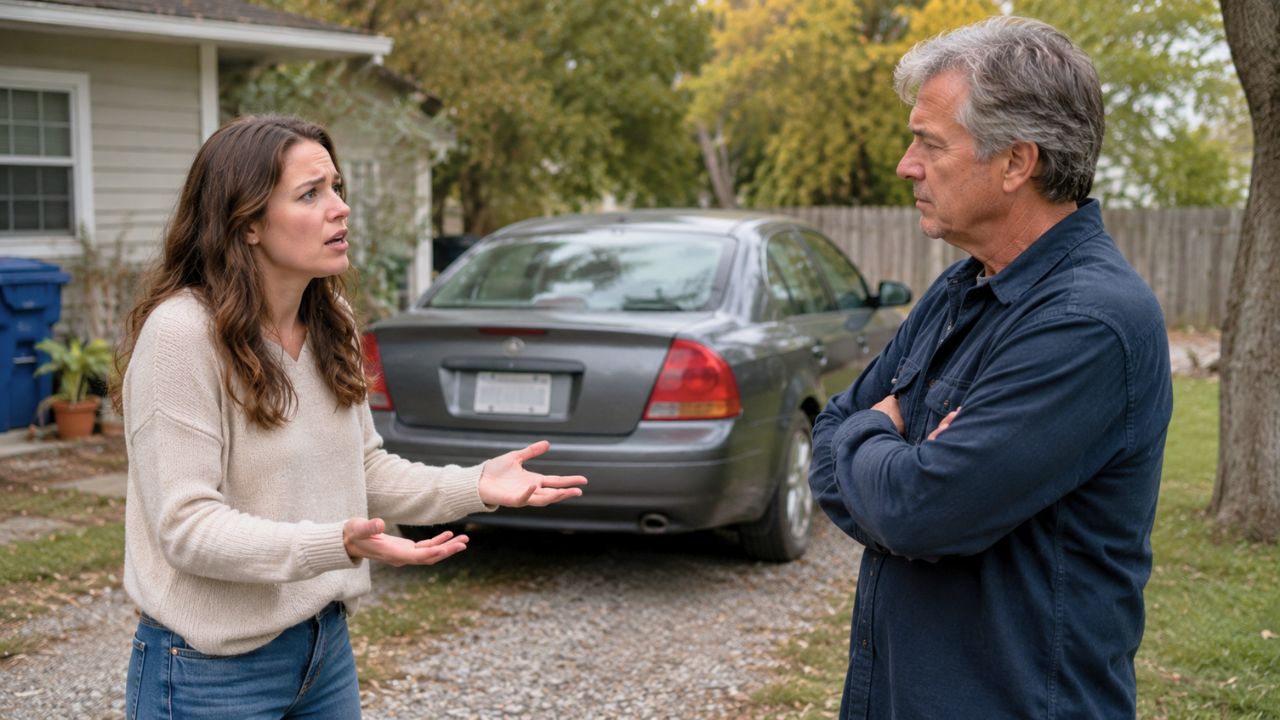
She noticed the empty spot in the driveway before she even got her key out. For a second she thought she’d parked on the street the night before. Then she saw the faint oil mark where the car usually sat and the way the garage looked just a little too tidy, like someone had gone out of their way to erase it.
She texted her dad a simple question, because simple felt safer. He called instead, voice bright and casual, and told her he’d taken care of something “that needed to be handled.” By the time he said the word “sold,” her stomach dropped so fast it felt like missing a step on a staircase.
That car wasn’t a shared asset. It wasn’t some family beater sitting around on a handshake agreement. The title was in her name.
The problem started before the big blowup
She was in her mid-20s, working a steady job, paying her own bills, and trying to untangle herself from the leftover strings of being raised by a father who liked control dressed up as help. When she moved back home after a breakup, it was supposed to be temporary—save money, regroup, then rent a place closer to work.
The car came into her life during that messy in-between. Her dad had insisted she needed something “reliable” and talked her into buying a used sedan from a friend of a friend. She put the money down herself and took out a small loan to cover the rest, but he was the one who negotiated, picked the insurance company, and acted like it was his project.
He also liked reminding her. Anytime she was late coming home, anytime she questioned a house rule, anytime she didn’t want to join a family dinner, he’d mention the car and how he’d “helped make it happen.” She kept telling herself it was temporary, that she’d be out soon.
Then her dad started commenting on her spending, even though she paid him rent. He’d notice a takeout bag, a new pair of shoes, a salon appointment, and suddenly she’d be getting lectures about responsibility. The car became part of that, too, like it was a trophy he could point to whenever he wanted to remind her who was in charge.
She thought the paperwork would protect her
That’s why she’d insisted on registering and titling the car in her own name. She wasn’t trying to be sneaky. She just wanted one clean line in her life that belonged to her—something she couldn’t be guilted about or threatened with.
When the title came in the mail, she tucked it into a folder with her birth certificate, passport, and other important documents. She didn’t exactly advertise where she kept it, but she also didn’t expect her father to go searching.
In her head, ownership meant security. If she paid the loan and insurance, and the state said it was hers, then it was hers. The most he could do was complain about it.
What she didn’t fully understand was how comfortable he was crossing lines once he decided a line shouldn’t apply to him.
The day she learned it was gone
When she got him on the phone, she expected him to say he’d had it towed for repairs or moved it for street cleaning. Something annoying, but explainable.
Instead, he told her he’d sold it to “a nice guy” who paid cash and was picking it up that morning. Her dad said the car was becoming a “distraction” and she didn’t deserve it if she couldn’t follow the rules of the house. He spoke like he’d just canceled cable.
She said she’d call the police. He laughed like she was being dramatic and told her she couldn’t prove anything. Then he added a detail that made her skin go cold: he’d found her folder and “handled the paperwork.”
When she hung up, her hands were shaking so badly she could barely scroll through her bank app to look at the auto loan balance. She was still paying for the car. She was still insured on it. And it was rolling away to someone else’s house because her father decided he could.
She ran to her room and checked the folder. It was there, but lighter. Some papers were out of order. The title was missing.
The confrontation turned into a family performance
She didn’t wait for him to get home. She called her mom first, hoping her mom would be horrified and make it stop. Her mom went quiet and said she didn’t know what he’d done, but then slipped into that familiar tone of smoothing things over.
When her dad came back later, he acted almost proud, like he’d solved a problem. He told her she was ungrateful and that she’d been acting “too independent” while still living under his roof. He said the money from the sale would go toward what she “owed” him for the times he’d covered groceries and the phone bill years ago.
She pointed out the obvious: the title had her name on it, she was still making payments, and he had no right. He didn’t deny any of that. He just kept repeating that she wouldn’t have the car if it weren’t for him, and that as her father he had the authority to make decisions that “teach lessons.”
Then the story shifted, because it always does in families like this. Suddenly it wasn’t about selling her car. It was about her attitude, her tone, her lack of respect, her “threats,” her “drama.” Her younger sibling wandered into the kitchen and got the edited version before she could even finish speaking.
By dinner, relatives had heard she was “trying to get her dad arrested.” A cousin texted her to calm down. An aunt called her father to praise him for being “firm.” The family machine was already working.
She made calls she never expected to make
The next morning she went to work without a car and sat on a bench outside her building, phone in hand, making a list of what she needed to do. It felt surreal. She was supposed to be answering emails and sitting in meetings, but her brain was stuck on one image: her dad handing her title to a stranger.
She called the lender to explain the car had been taken and sold without her consent. She called her insurance company to report it as stolen. She called the DMV to ask what could be done if someone transferred a title that wasn’t theirs to transfer.
Then she did something that made her feel both nauseous and steady: she filed a police report. Not because she wanted revenge, but because she needed a paper trail. She needed a record that she didn’t willingly sell the car and wasn’t signing anything over.
When the officer asked who had access to the vehicle and the title, she said the words out loud and felt her face burn: her father. The officer didn’t gasp or flinch. He just nodded like he’d heard this version of “family disagreement” before, and asked for dates and documents.
Back at home, her dad reacted exactly how she expected. He said she was dead to him. He said she was destroying the family. He said she’d regret it when she “needed help again.” Her mom cried and told her she was tearing everyone apart, as if the actual act—selling something that wasn’t his—was a minor detail.
She packed that night. Not everything, just the things she couldn’t bear to lose if the situation turned uglier: her documents, her laptop, a few sentimental items. She went to a friend’s couch and stared at the ceiling until sunrise, feeling sick about the car and also weirdly relieved to be out of the house.
People around her picked sides, and it got lonely fast
In the weeks that followed, the reaction from people in her orbit was split in a way that made her see her family clearly. Friends were stunned that a parent would do that, and they kept asking if she was safe and where she was staying.
Some relatives, though, treated it like a parenting choice. They asked what she did to “push him.” They suggested she apologize first so he’d “cool off.” They framed the car like a privilege he could revoke, ignoring the part where her name was on the legal ownership and her money was on the loan.
Her sibling stopped replying to messages. Her mom sent long texts about forgiveness, about stress, about how her dad had “good intentions.” Her dad sent one message that was almost worse than the screaming: he offered to “help” her get a different car if she agreed to put his name on it this time.
That was the moment she understood he didn’t think he’d done anything wrong. He thought he’d proven something.
She didn’t know how the paperwork and the money would shake out in the long run. She just knew she wasn’t going back to a house where her property could disappear the minute she didn’t perform gratitude correctly.
For now, she rode to work with coworkers, saved every receipt, kept every email, and built a life that didn’t require asking her father for anything. The empty space in the driveway stopped being the main thing she mourned. It was the way a parent could look at their adult child, see a possession instead of a person, and still expect to be thanked for it.
Check out more from Now Rundown:
- A Party of 12 Came Back a Month Later Demanding Their $80 Tip Refunded — My Restaurant Made Me Pay It
- Her Coworker Kept Filing the Same Complaint About Her After Being Warned — Then She Filed a Counter-Report With Every Email Documented
- Siblings Demanded Half of Their Sister’s $11 Million Inheritance — She Refused Because They Never Visited
- The Kid I Bullied in Middle School Just Interviewed for a Job on My Team — He Bombed It and I Didn’t Hire Him

Abbie Clark is the founder and editor of Now Rundown, covering the stories that hit households first—health, politics, insurance, home costs, scams, and the fine print people often learn too late.