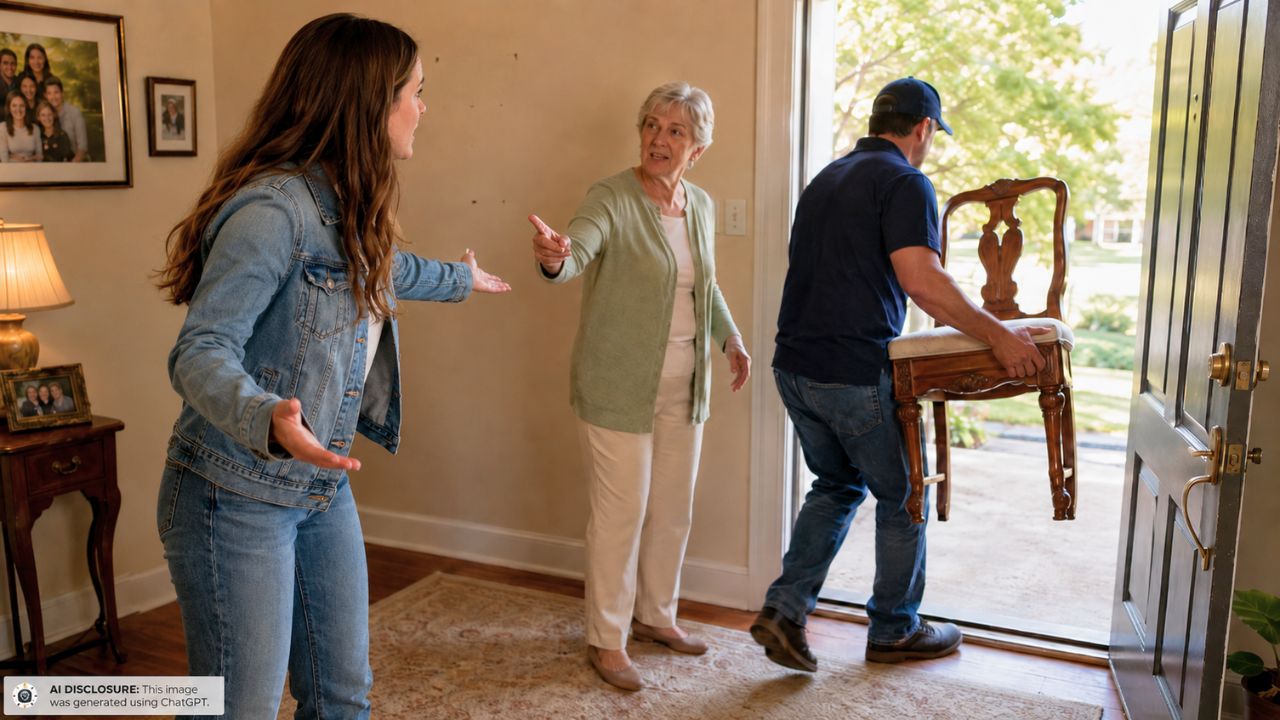
Woman Banned Her Mother-in-Law From Her House After She Gave Away Sentimental Heirloom Furniture While the Family Was on Vacation
Photo credit: AI-generated image created using ChatGPT. Illustrative only.
They came home from their first trip since welcoming twin daughters expecting the usual post-vacation mess: laundry, a fridge to restock, maybe a few surprises from being away. Instead, one room in the house had been wiped clean—two beloved pieces of furniture simply gone.
In the original post, a husband explained that he and his wife, Paula, had left a spare key with Paula’s mother, Hakiko, strictly as a backup “just to check on things if necessary.” While they were away, Hakiko didn’t just check in. She made a sweeping “upgrade” that turned into a family blowup the moment the couple walked through the door.
They handed over a spare key, not permission to redecorate
The trip was supposed to be a milestone for the couple: their first time away since their twins were born. To be safe, they left a spare key with Hakiko so she could access the house if something went wrong.
That kind of arrangement is common—someone to grab mail, deal with an emergency, make sure nothing is leaking or broken. But when the couple returned, it became clear the key had been used for something much bigger than a quick check-in.
The husband said he was still shaking while typing, describing the shock of seeing a familiar room suddenly empty. Not rearranged. Not tidied. Cleared out.
Two heirloom pieces vanished, and the replacement made it worse
Paula wasn’t attached to the missing items in a casual way. The furniture—two hand-carved mahogany pieces, a desk and a vanity—had come from her grandmother after she passed away. The husband described them as Paula’s absolute favorite things, sentimental and irreplaceable.
So when they walked in and saw the room bare, it wasn’t just a design preference issue. It was the disappearance of an inheritance tied to family history.
Hakiko was in the house when they arrived, “all smiles,” and presented it as a surprise. She told them she’d gotten rid of what she called “that oldie dusty junk” to give the home a “modern look,” then replaced the heirloom pieces with cheap flat-pack furniture.
That detail mattered. If the items had been moved for storage or “protected” during a repair, there might have been a path back. But the husband wrote that she literally gave away or donated Paula’s inheritance without asking.
The confrontation was immediate: keys back, locks changed
The husband said he told Hakiko to leave and demanded the keys on the spot. The next day, he changed the locks.
It wasn’t framed as a temporary pause or cooling-off period. It was a hard boundary: she was banned from their house. Paula backed him up, and he emphasized that his wife was on his side.
But the emotional reality inside the home sounded grim. Paula had been in tears, dealing with the loss of the two items and the feeling that someone had violated her space and her memories while she was away.
And outside the home, pressure started building quickly. The rest of the family began calling the husband abusive and controlling, accusing him of isolating Paula from her mother over “some old piece of junkie wood.” They also argued Hakiko’s “heart was in the right place,” and claimed the ban meant a grandmother was being blocked from seeing her grandchild over furniture.
Family backlash turned it into a character trial
The furniture was the trigger, but the fight shifted fast into something bigger: who gets to set boundaries, and who gets to define what counts as “important.” The husband described being guilted repeatedly by relatives who minimized the heirlooms and centered Hakiko’s intentions.
That framing—she meant well, she was helping, don’t be so harsh—put Paula and her husband in a no-win position. If they stood firm, they were accused of being cruel and controlling. If they softened, they would be signaling that taking and donating sentimental property was something that could be excused as a “surprise.”
It also created an ugly dynamic around the twins. The family’s argument wasn’t simply that the ban was too strict; it was that access to the grandkids should override what happened in the home. The husband pushed back by holding the line on the house itself, essentially treating the spare key betrayal as a safety and trust issue—not just a decorating dispute.
The emotional cost showed up in his question: he knew his wife agreed with the ban, but the constant pressure was making him feel like a monster anyway.
What people zeroed in on: recovering the pieces and documenting what happened
In the post, the husband labeled the outcome “Not the A-hole,” reflecting the direction of reactions he was seeing. Even with limited details, the logic is straightforward: a key given for emergencies isn’t permission to remove property, and heirloom items don’t become “junk” because someone else dislikes the style.
Practical-minded reactions to stories like this tend to revolve around the same points: figure out exactly where the items went, and do it quickly. Donations can move fast—picked up, processed, resold—especially if they were dropped at a charity shop or collected by a third party. Identifying the specific location and acting fast can be the difference between recovery and a permanent loss.
Another common focus is documentation. Who took the items, when, what was said, what was replaced, and whether there are texts or messages that show admission. Even without turning it into a full legal escalation, having a clear record can help when speaking to donation centers or any organization that might still have the items.
And then there’s the access issue. Changing locks is a blunt move, but it directly addresses the immediate risk: someone with a key has already shown they will use it in ways the homeowners never agreed to.
A “surprise” that rewrote the rules of trust
The most jarring part of the story isn’t that Hakiko dislikes antique furniture. It’s that she acted on that opinion inside someone else’s home while they were away, and then presented the result as a favor. That’s the kind of boundary-crossing that doesn’t stay contained to one room.
Paula and her husband are now stuck managing two fights at once: the practical scramble to deal with what happened to the heirlooms, and the emotional fight with relatives who want to reframe it as a harmless makeover. For them, it clearly didn’t land as harmless—it landed as theft of something deeply personal, dressed up as help.
With the locks changed and the key revoked, the couple has drawn a bright line. The harder question, and the one the family pressure is trying to force, is whether Hakiko can acknowledge what she did—or whether she’ll keep insisting the real problem is the couple refusing to smile and say thank you.
Check out more from Now Rundown:
- A Party of 12 Came Back a Month Later Demanding Their $80 Tip Refunded — My Restaurant Made Me Pay It
- Her Coworker Kept Filing the Same Complaint About Her After Being Warned — Then She Filed a Counter-Report With Every Email Documented
- Siblings Demanded Half of Their Sister’s $11 Million Inheritance — She Refused Because They Never Visited
- The Kid I Bullied in Middle School Just Interviewed for a Job on My Team — He Bombed It and I Didn’t Hire Him

Abbie Clark is the founder and editor of Now Rundown, covering the stories that hit households first—health, politics, insurance, home costs, scams, and the fine print people often learn too late.