Wife Says Her MIL Threw Away Her Wedding Garland — Then Made Her Feel Like the Third Wheel in Her Own Marriage
Photo credit: Now Rundown
A 31-year-old wife says she entered marriage believing her widowed mother-in-law was sweet, loving, and in need of family support. Nearly two years later, she says the same woman’s emotional dependence on her son has pushed the marriage to the edge.
She explained in a Reddit post that her mother-in-law had lived with her and her husband since the beginning of the marriage. Before the wedding, the MIL seemed kind, and because she was a widow, the poster did not question the living arrangement too much.
Looking back, she said that was probably where she went wrong.
The first painful incident happened only a few days after the wedding reception. The couple had their wedding varmala hanging in their room at her husband’s family home so it could dry. The wife had planned to preserve it in resin as a keepsake.
Before the couple left to visit her parents for two days, her MIL asked if they should throw it away because it was withering. Her husband told her no, because they wanted to do something special with it.
When they came back, the garland was gone.
The MIL had thrown it away anyway.
The wife was crushed. It had been only days since the wedding, and one of the keepsakes she wanted to preserve had been tossed out while she was gone. Her husband yelled at his mother and stood up for his wife, but the MIL acted innocent.
After the wedding, the couple moved back to Bangalore, where they had bought a house. The MIL moved in too.
That was when the wife says the real pattern started.
Her MIL began acting helpless about things she could do herself. The husband had to make henna for her in the middle of his workday. He had to clean and organize her wardrobe because she acted like she did not know how to do it properly. At first, the wife told herself he was simply a loving son taking care of his widowed mother.
But the requests kept increasing.
Then came the passive-aggressive comments toward the wife. The MIL criticized the sofa she brought and the bed she brought with her. The husband again told his mother the comments were not acceptable and would not be tolerated, but the behavior continued.
One comment, though, stuck with the wife more than the others.
Her MIL told her that her son had changed now that he was married and no longer slept with her, so he was “learning new things.”
The wife was shocked and disturbed by the comment. In the comments, she later explained that before marriage, her husband mostly slept beside his mother, which she said is somewhat normal in their culture. Still, hearing her MIL imply that her son had changed because he now slept with his wife felt deeply uncomfortable.
The wife said she began realizing the emotional dependence was not healthy.
Her husband seemed to understand it too. According to the poster, he knew he had been emotionally exploited by his mother and her brothers after his father died. But he struggled to take firmer action because his mother was a widow and he felt responsible for her.
Meanwhile, the marriage was suffering.
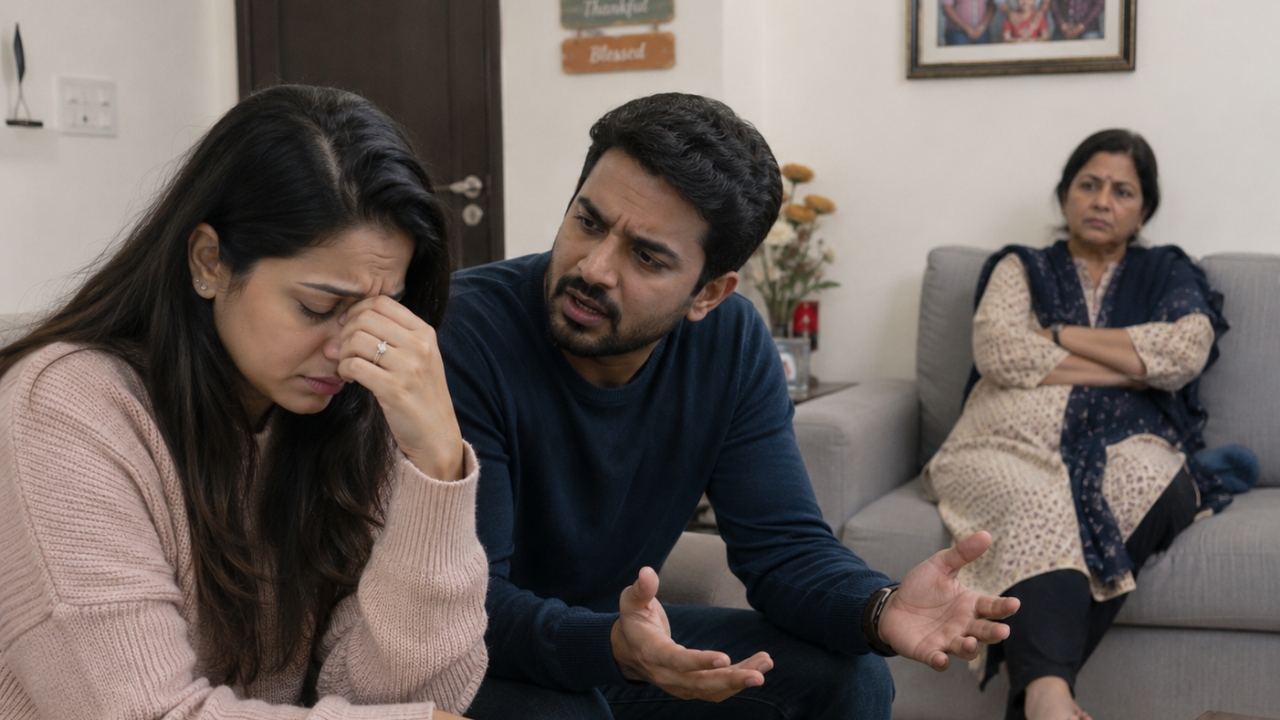
The wife said her MIL could not stand seeing her and her husband enjoy time together. If they went out as a couple, the MIL made faces, guilt-tripped him, and acted pitiful. If all three of them went somewhere together, the MIL was happy and cheerful. But if just the husband and wife went, it became a problem.
The wife said they did include the MIL in outings, but it was never enough.
At home, the MIL also dominated the living room. She would sit there watching TV, sleep there, eat there, and repeat the cycle. The wife said the sofa had been a wedding gift from her father, yet the MIL used it constantly and still complained that it was too small to sleep on.
That left the wife feeling like she was living in a hostel inside her own home. She stayed in her room, agitated and exhausted, while the living room became her MIL’s territory.
The tension spilled into the marriage. She and her husband fought constantly, and both their mental and physical health took a toll.
Then, after a major fight, something shifted.
The next morning, the wife went to the office early. Later, her husband woke up, apologized, and said he understood that he had not been taking enough accountability for the situation. He said he wanted to make it right.
His decision was to send his mother back to her hometown, where she had previously lived with her brothers and family.
The wife felt two things at once: relief and guilt.
On one hand, she was hopeful. Maybe she and her husband would finally have the space they needed to work on their broken marriage and have peace in their home.
On the other hand, she felt guilty that her MIL would be sent away. The woman was widowed, and the wife did not want to feel cruel. But living with her had become unbearable.
She said she had researched the dynamic and felt her MIL had enmeshment issues with her son. She posted because she wanted validation and a place to vent after nearly two years of feeling like her marriage had never truly had room for just the two of them.
The most telling part came in the comments, when the wife said she was scared about what the future would look like if they had a baby while this dynamic continued. After reading other people’s reactions, she said she realized her fear was justified.
At that point, the issue was no longer whether the MIL was lonely. It was whether the couple’s marriage could survive with her sitting in the middle of it every day.
Commenters overwhelmingly told her she was not wrong. Many said the MIL’s learned helplessness and emotional dependence on her son were unhealthy for everyone involved.
Several people said the husband had taken too long to act, but they were glad he finally recognized the damage and decided to create space for the marriage. Commenters said a peaceful home and a functional marriage mattered too.
A lot of people focused on the MIL’s resentment whenever the couple spent time together. They said it was not reasonable for a mother to guilt-trip her adult married son for going out with his own wife.
Others were especially bothered by the comment about him no longer sleeping beside his mother. Commenters saw that as a clear sign the boundaries had been blurred for a long time.
Some people warned that the situation would likely become worse if a baby entered the picture before the boundaries were fixed. The poster agreed that this had become one of her biggest fears.
The strongest advice was simple: the wife did not need to feel guilty for wanting a marriage that belonged to her and her husband. A widowed parent can deserve care and compassion without being allowed to consume an adult child’s marriage.

Abbie Clark is the founder and editor of Now Rundown, covering the stories that hit households first—health, politics, insurance, home costs, scams, and the fine print people often learn too late.