Woman Accepted Her Stepdaughters’ Apology but Refused to Rebuild the Closeness They Once Had — The Family Says She’s Being Too Harsh
Photo credit: AI-generated image created using ChatGPT. Illustrative only.
For years, a 50-year-old woman thought she’d gotten the rarest kind of blended-family win: stepkids who actually liked her. She met her future husband nearly two decades ago, when his daughters were still in elementary school, and by her account, the bond came easily. Then a story about the past took hold, and it changed everything.
In the original post, the woman explains how she’s now facing a new kind of pressure. Her stepdaughters—now 25 and 23—have apologized after learning she wasn’t involved in their parents’ divorce. She accepted the apology. What she won’t do is pretend the last decade didn’t happen, and her husband’s side of the family is treating that boundary like cruelty.
When the relationship was good, it was really good
The woman says she met her husband about six months after his divorce, and she insists she had nothing to do with the marriage ending. At the time she entered the picture, the girls were 5 and 7, and their parents shared 50/50 custody. The adults had their history—jealousy, accusations, and drama—but the kids weren’t living in the middle of an active breakup anymore.
Early on, she and the girls clicked. After she married their father, she says they stayed close for years, the kind of steady step-parent connection people often hope for. It wasn’t forced or tense; it felt normal.
That’s part of what makes the later years so hard to swallow. She isn’t describing a household that never worked. She’s describing something that did—and then slowly got poisoned.
The questions started, and the narrative shifted
She traces the change back to when the older daughter was about 12. That’s when the girls started asking more questions about why their parents split up. According to the woman, their mother eventually told them she was the reason for the divorce—claiming she was the woman their father cheated with.
She says that isn’t true, and that she didn’t even meet her husband until after the marriage was already over. But once the cheating story took root, the tone changed. The girls became more distant, and at times disrespectful. Back then, she says she tried not to take it personally because they were kids repeating what they’d been told.
Still, it wasn’t just a brief teenage phase. It became the new foundation of their relationship, and it followed them into adulthood.
As adults, they didn’t just pull away—they pushed her out
The woman writes that once the stepdaughters were grown, the behavior escalated from coldness to active exclusion. She says they disinvited her from major family events and tried multiple times to convince their father to leave her. The pressure wasn’t subtle, either: she claims they told him they would cut him off if he stayed married.
That kind of ultimatum carries a cost, even if it doesn’t “work.” She describes periods where she “basically wasn’t allowed” at holidays or gatherings if the daughters planned to attend. Instead of one blended family, it became parallel tracks, with her presence treated as the problem to solve.
She also says the stepdaughters didn’t want much to do with their younger siblings—her children with their father—creating another layer of distance in the household. Over time, she and her husband repeatedly tried to explain the timeline and insist there was no cheating. She says the daughters never believed them.
The apology came after their mom’s breakthrough—and it was public
The turning point didn’t come from another conversation between father and daughters. It came from their mother. The woman says the girls’ mom started therapy after entering a new relationship and apparently reexamined long-held beliefs about cheating.
Eventually, the mother apologized to the girls and to the woman’s husband, admitting the stepmom wasn’t involved in the divorce and that he didn’t cheat. The woman says it all came out at the younger daughter’s birthday party—hardly a private setting, and not exactly a controlled environment for a family reset.
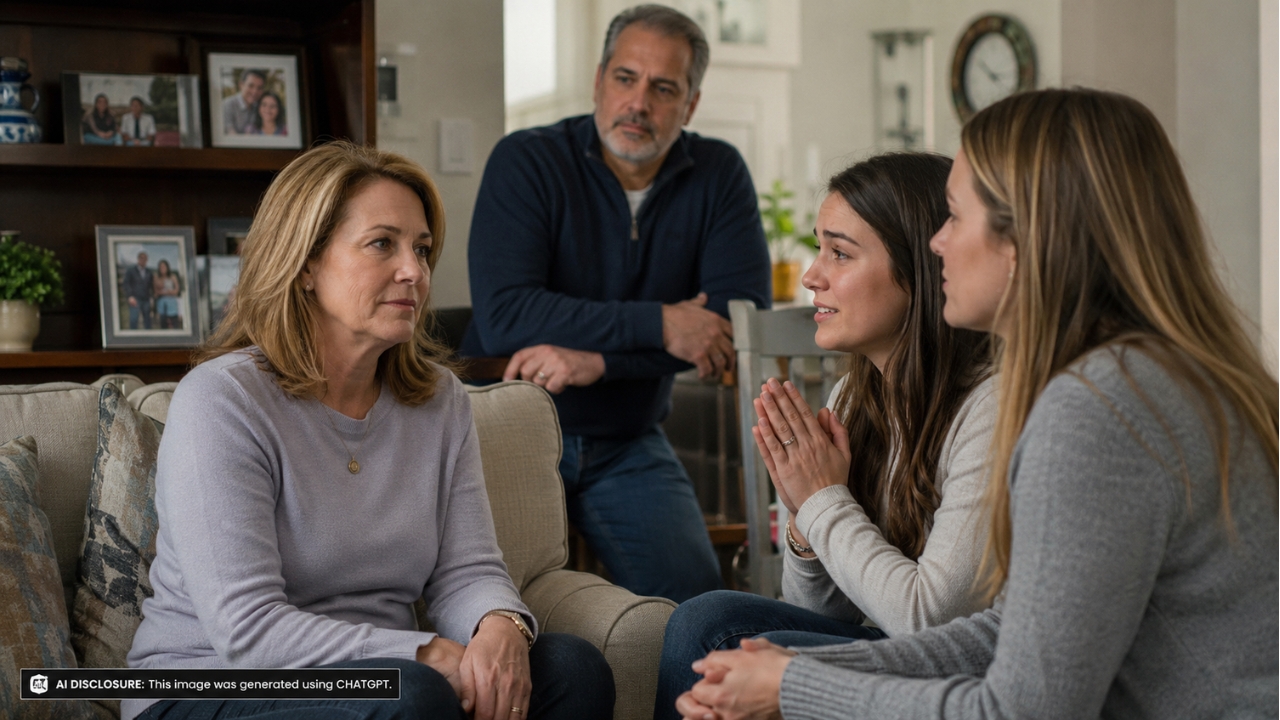
After that, both daughters reached out directly and apologized. They told her they wanted to fix things and return to the closeness they had when they were younger.
She didn’t reject them. She accepted their apology. But she also told them she couldn’t promise a full rewind.
She’s offering civility, not a return to “before”
The woman’s stance is clear: she doesn’t hate them, and she doesn’t want drama. She says she’s willing to be kind, civil, and respectful. She can show up to holidays, interact like family, and coexist without tension. What she doesn’t feel capable of doing is rebuilding the emotional intimacy that existed before she became the villain in their story.
Part of that is the sheer length of time. This wasn’t a single blowup followed by a heartfelt apology. She describes years of being treated as unwelcome in her own extended family, and of watching her marriage become a battleground she didn’t start. Even if the original lie began in childhood, the adult choices—disinviting her, issuing ultimatums, trying to split up the marriage—land differently.
There’s also the reality that the relationship would be different even in the best case. The daughters are 25 and 23 now. The oldest is engaged, and she expects both will build their own families soon. She’s still raising her younger kids and says she wants peace more than anything.
That’s where the family split seems to be happening. The stepdaughters want closeness restored. She’s offering a calmer, more distant version of family—one that doesn’t ask her to reopen herself emotionally to people who spent years trying to erase her.
What people tended to focus on: forgiveness isn’t the same as access
In responses to stories like this, the practical point many people latch onto is that an apology doesn’t automatically rebuild trust. Accepting an apology can be a way to stop the bleeding, not a promise to return to the old relationship. In her case, the boundary is specific: she’s not cutting them off, she’s just not willing to be “super close” again.
Another common focus is accountability across time. The cheating accusation may have started when they were young, but she says the most damaging actions happened after they were adults—excluding her from holidays, making her marriage a hostage negotiation, and distancing themselves from younger siblings. People often view that as the part that needs to be addressed directly, not waved away with “we were told something untrue.”
And then there’s the long-term reality of blended families: future milestones are coming. Weddings, grandchildren, holidays with new spouses—these are pressure points. A polite relationship may actually be the most workable option, at least for now, because it reduces the chance of another cycle of closeness, resentment, and collapse.
For this woman, the tension isn’t whether the stepdaughters can be forgiven. It’s whether anyone gets to demand that forgiveness come with the same level of intimacy it used to. She’s chosen a quieter version of family—civil, present, but guarded—and she’s bracing for the disappointment that comes with it.
Check out more from Now Rundown:
- A Party of 12 Came Back a Month Later Demanding Their $80 Tip Refunded — My Restaurant Made Me Pay It
- Her Coworker Kept Filing the Same Complaint About Her After Being Warned — Then She Filed a Counter-Report With Every Email Documented
- Siblings Demanded Half of Their Sister’s $11 Million Inheritance — She Refused Because They Never Visited
- The Kid I Bullied in Middle School Just Interviewed for a Job on My Team — He Bombed It and I Didn’t Hire Him

Abbie Clark is the founder and editor of Now Rundown, covering the stories that hit households first—health, politics, insurance, home costs, scams, and the fine print people often learn too late.