Neighbor Tried to Enter the Apartment, Tenant Says — Then Police and Apartment Security Became the Question
Photo credit: Now Rundown
A Portland-area renter said a long-running problem with upstairs neighbors turned frightening when one of them allegedly ran down the stairs, banged on the door, and tried to force her way into the family’s apartment.
The renter shared the situation in a post on r/legaladvice, explaining that he lived in the apartment with his wife and baby. According to the post, the upstairs neighbors had been a problem almost from the first week the family moved in. The renter described loud fights, things being thrown, screaming in the middle of the night, and ongoing disturbances that made the apartment feel unstable.
At first, the family tried to speak with them. But the renter said the neighbors would not talk to them. So the family started reporting the incidents to apartment management, police, and apartment security.
Management’s response, according to the renter, was that there was not much they could do beyond involving police and security. That left the family in the same position over and over: hearing the disturbances, reporting them, and waiting for someone else to step in.
Then the situation escalated.
The renter said that about two weeks before the post, there was a large fight outside the complex. He tried to avoid it, but could not get into his own apartment without walking past it. He called police again, and this time, officers reportedly had trouble de-escalating the situation. After that, the male tenant was gone, but the female tenant allegedly continued screaming throughout the day.
Then came the incident that made the renter fear for his family’s safety.
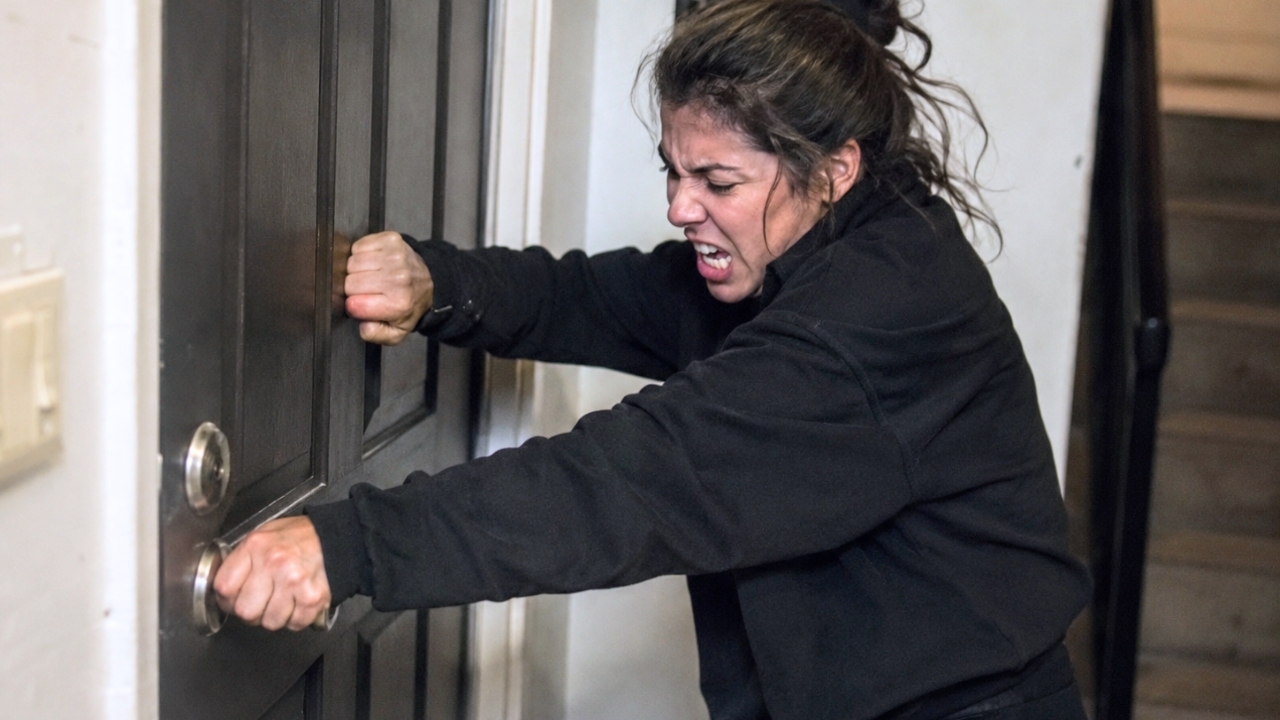
The renter said his wife was home with their baby when the upstairs neighbor began screaming again. Then, according to the post, the neighbor opened her door, ran down the stairs, and tried to force her way into the family’s apartment.
The renter said his wife told him the woman was screaming, banging on the door, yelling, and shaking the lock and door handle while trying to get inside. He said he was grateful the door had been locked.
His wife immediately called police. The renter left work and came home to be with her. After police left, the neighbor allegedly returned to the door and started screaming again. The family called police a second time, and this time, officers reportedly arrived while the neighbor was still screaming.
According to the renter, the neighbor ran away yelling and would not speak with police. Officers then escorted the family out of the apartment, and the family stayed somewhere else for the night. The renter said they were considering staying away longer because he was scared to leave his wife and child there.
That fear made sense in the context of the post. The issue was no longer only noise. It was no longer only a neighbor who yelled or fought upstairs. The neighbor had allegedly tried to enter their home while his wife and baby were inside.
The renter wanted to know what he could do legally and what apartment management could be pushed to do. He did not want to pay a major lease termination fee if the family had to leave because of a neighbor threatening their safety. He wondered whether he needed a lawyer or whether he could handle it himself.
Commenters urged the renter to keep building a record, especially because police had already been called multiple times.
Several people told him to document every incident with dates, times, descriptions, police report numbers, security calls, and written complaints to management. A pattern mattered. One noise complaint might be easy for management to ignore. Multiple police calls, an attempted entry, and a family leaving the apartment for safety were much harder to dismiss.
Others said he should keep all communication with management in writing. If the family wanted to break the lease, move units, or push management to act against the neighbors, they needed a clear paper trail showing the property had been warned and the problem continued.
Some commenters suggested speaking with a tenant lawyer or local tenant-rights group. The renter was in Oregon, and commenters pointed him toward local landlord-tenant resources. The main idea was that a landlord may have obligations when one tenant’s behavior seriously interferes with another tenant’s ability to safely live in the unit.
Several people also said police should be called every time the neighbor returned to the door, screamed at the family, or tried to enter. The renter later said he had requested copies of police records so he would have them available.
Other commenters suggested asking management for a transfer to another unit if they would not release the family from the lease. That would not be ideal, especially because the neighbors would still know where they had lived, but it could be safer than remaining directly beneath them.
The renter later updated that the problem neighbors were being evicted and would be gone by the end of the month. After many phone calls and emails to regional managers, he said management followed up much more seriously. They also offered the family the option to move to another unit at no cost.
That update changed the situation. The family had gone from feeling powerless and unsafe to having management finally take action. Still, the renter was left weighing whether staying in the same unit was wise, since the neighbors already knew where they lived.
The story shows how quickly an apartment safety problem can move from annoying to frightening. Noise complaints and screaming are already stressful, but an attempted entry with a wife and baby inside is a different level.
Commenters did not tell the renter to brush it off or wait quietly. They told him to document every incident, get police records, keep complaints in writing, and push management from the position that the family no longer felt safe in their own home.
Because once a neighbor tries to force their way into an apartment, the question is not only whether they violated a lease. It is whether the people behind that door can safely stay there another night.

Abbie Clark is the founder and editor of Now Rundown, covering the stories that hit households first—health, politics, insurance, home costs, scams, and the fine print people often learn too late.