Sales Employee Was Praised for Her Work, According to a Federal Suit — Then Fired Two Weeks After Her Employer Learned She Was Pregnant
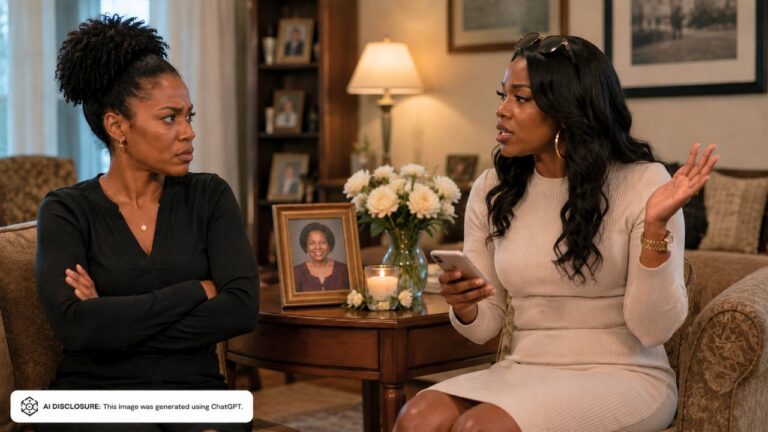
Photo credit: AI-generated image created using ChatGPT. Illustrative only.
A new sales employee in the Oklahoma City area was still getting her footing at a homebuilder when she says the tone around her job changed fast. One moment, she was being told she was doing well. The next, she was out of work less than two weeks after her employer learned she was pregnant.
That’s the timeline laid out in a federal EEOC press release announcing a lawsuit against H.C. Employees, LLC, which does business as Home Creations, a homebuilder operating in Oklahoma and Texas. The agency says the firing wasn’t about performance or policies at all—it was about pregnancy.
Compliments first, then the countdown started
According to the EEOC, the employee was hired as a new sales staffer and was nearing the end of a 90-day “introductory period” in fall 2023 when Home Creations found out she was pregnant. The lawsuit claims that, shortly after learning that news, the company terminated her employment.
The key detail is how close together everything happened. The EEOC says the termination came less than two weeks after the employer learned of the pregnancy. And while the company later pointed to policy violations—including low home sales—the agency says she had previously been told she was doing a good job.
That kind of whiplash is often what makes these cases feel so personal. Early employment can be fragile already, especially when the “probationary” label gives employers wide discretion. The EEOC’s allegation is that discretion was used as a cover for a decision made as soon as pregnancy entered the picture.
The workplace comments the EEOC says set the tone
The lawsuit doesn’t just focus on the firing date. The EEOC also alleges that Home Creations’ sales director and sales manager made repeated comments reflecting bias against pregnant sales staff.
Specifically, the agency says managers cautioned female employees not to “drink the water” because women “get pregnant and leave.” It’s the sort of remark that, in a workplace, can land like a warning: pregnancy is seen as a problem, and the people who get pregnant are seen as temporary.
Those comments matter because they speak to intent. The EEOC’s theory is straightforward: if supervisors are already talking about pregnant sales employees as liabilities, then the quick termination after learning about a pregnancy doesn’t look accidental.
The company cited “policy violations,” but the comparison came up
Home Creations, according to the EEOC, said the termination was due to policy violations, including low home sales. The agency’s lawsuit pushes back on that explanation by pointing to what the employee was told earlier—that she was doing a good job—and by pointing to who else the company kept on staff.
The EEOC says Home Creations retained a male probationary sales employee with similar tenure and performance. That comparison is the kind of detail that tends to show up when a worker is trying to prove they were treated differently than a similarly situated co-worker.
In other words, the lawsuit isn’t just “she was fired after announcing she was pregnant.” It’s “she was fired after announcing she was pregnant, despite positive feedback, and despite a comparable male employee not being fired.” That’s the kind of narrative the agency appears prepared to test in court.
Why the EEOC says this crosses a legal line
The EEOC says the alleged conduct violates Title VII of the Civil Rights Act of 1964, as amended by the Pregnancy Discrimination Act of 1978. The basic rule is that sex discrimination includes discrimination based on pregnancy and childbirth.
Andrea G. Baran, regional attorney for the EEOC’s St. Louis District, framed the issue as one of assumptions: “Firing a worker simply because she is pregnant — or because an employer assumes she will not return after maternity leave — is illegal,” she said. “These assumptions are rooted in stereotypes and they have no place at work.”
David S. Davis, director of the EEOC’s St. Louis District, took the same direct approach, saying federal law protects pregnant employees from adverse actions based on pregnancy or anticipated leave, and that the agency will continue to hold employers accountable when workers are punished for “starting or growing their families.”
The lawsuit was filed after the EEOC says it tried to resolve the matter through its administrative conciliation process, a step the agency typically takes before heading into federal court.
The case is now in federal court, with the clock running differently
The EEOC filed the lawsuit as EEOC v. H.C. Employees, LLC d/b/a Home Creations, Case No. 5:26-cv-01630-J, in the U.S. District Court for the Western District of Oklahoma. Once a dispute reaches this stage, the fight is no longer just between a worker and a manager; it becomes a public legal battle about what happened and why.
For employers, that means scrutiny of internal decision-making: who knew what, when they knew it, and what documentation exists around performance, coaching, and policy enforcement. For employees watching from the outside, it’s a reminder of how quickly “introductory period” status can turn into a trapdoor—especially if a workplace culture already treats pregnancy like a punchline.
The EEOC also notes that its St. Louis District Office has jurisdiction over discrimination charges and agency litigation in Missouri, Kansas, Oklahoma, Nebraska, and part of southern Illinois, and that it is the federal agency authorized to investigate and litigate against private-sector employers for violations of employment discrimination laws.
What people tend to focus on in cases like this
The press release doesn’t include public comments, but cases with this fact pattern usually draw practical, boots-on-the-ground questions: What was said in writing? Were performance concerns documented before the pregnancy disclosure? Did management apply the same rules to everyone, or only to certain people when a life event appeared?
When an agency highlights “repeated comments” like the “drink the water” line, it also signals what many observers latch onto: workplace culture isn’t just background noise. It can be evidence. And when the timeline is “learned she was pregnant” followed by “terminated less than two weeks later,” the instinct is to look for anything that explains that speed—meeting notes, text messages, write-ups, sales reports, and who made the final call.
For anyone employed under an “introductory” label, it’s also a real-world lesson in how important consistency can be. If one probationary employee is kept with similar performance while another is cut loose right after disclosing a pregnancy, that contrast becomes part of the story—and, potentially, part of the proof.
Now the case moves forward in federal court, where the EEOC will try to show the firing was driven by pregnancy bias rather than the reasons the company gave. For the employee at the center of it, it’s about more than one lost job. It’s about whether a workplace can praise a worker’s performance, hear “I’m pregnant,” and then treat that same worker as disposable.
Check out more from Now Rundown:
- A Party of 12 Came Back a Month Later Demanding Their $80 Tip Refunded — My Restaurant Made Me Pay It
- Her Coworker Kept Filing the Same Complaint About Her After Being Warned — Then She Filed a Counter-Report With Every Email Documented
- Siblings Demanded Half of Their Sister’s $11 Million Inheritance — She Refused Because They Never Visited
- The Kid I Bullied in Middle School Just Interviewed for a Job on My Team — He Bombed It and I Didn’t Hire Him

Abbie Clark is the founder and editor of Now Rundown, covering the stories that hit households first—health, politics, insurance, home costs, scams, and the fine print people often learn too late.