Employee Told His Boss to Apologize to His Wife After the Boss Called Her Before Dawn Over a Machine That Wasn’t Even Broken
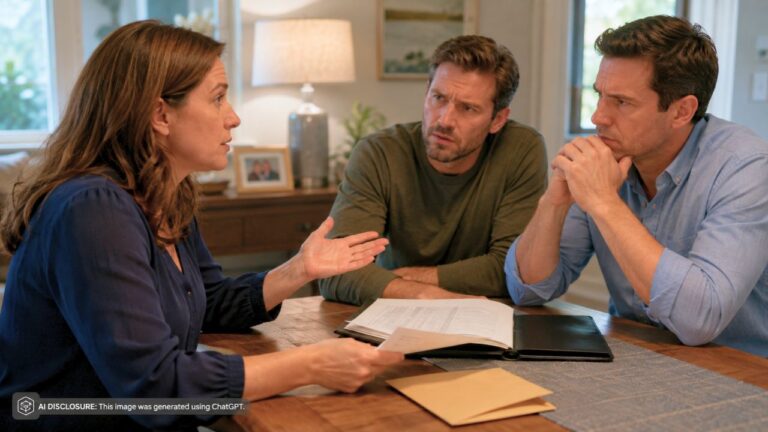
Photo credit: AI-generated image created using ChatGPT. Illustrative only.
It started with a phone ringing in the dark, the kind of early-morning call that instantly makes your stomach drop. One employee says his boss tried him twice at 5:50 a.m., and when he didn’t pick up, the boss dialed his wife five minutes later—waking her up and sending her mind straight to worst-case scenarios.
In the original post, the employee laid out what happened next: the call wasn’t about an emergency at home or a safety issue at work. It was about a customer machine that had been labeled “not working,” even though he’d been programming it the day before.
The call that went past the employee and straight to his family
According to the employee, his boss called him twice at 5:50 a.m. He didn’t answer because he was in the bathroom. That might have been the end of it—leave a voicemail, send a text, wait a bit.
Instead, at 5:55 a.m., the boss called his wife to “get” him. The employee said his wife later explained how the call hit her: she woke up frightened and confused, not even certain in that moment whether her husband was home or where he might be. When your spouse’s boss calls before dawn, most people don’t assume it’s about a routine work issue.
All that panic over a machine that still ran
The reason for the calls was a customer machine reported as down. The employee said it was the same machine he’d been programming the prior day, which is the kind of detail that suggests this wasn’t a random problem—he was already connected to it and likely the go-to person.
He rushed in, and that’s where the story gets even more frustrating for him: the machine was indeed working. The only problem, as he described it, was that the customer had suffered downtime on third shift. So there was a disruption, but not the kind that matched the urgency of waking someone’s household and pulling a spouse into the chain of command.
That mismatch—between the alarm-level phone calls and the reality on the floor—became the point. To the employee, the early-morning escalation looked less like necessity and more like a boss reaching for maximum pressure.
The moment it stopped being a phone call and became a boundary
After seeing the machine was operational, the employee didn’t just let it slide. He said he “called him out in an email,” describing the behavior as unacceptable and demanding the boss apologize to his wife.
That demand is the sharp edge of the story. Plenty of people complain about off-hours calls. Fewer are willing to put in writing that contacting a spouse was out of line, and fewer still insist on an apology to the spouse directly.
The employee framed it as basic common sense: wait until 7 or 8 a.m. unless it’s “literally a matter of life and death.” In other words, he wasn’t arguing that bosses can never call early. He was arguing that when a supervisor jumps past the employee and wakes the employee’s partner, it should be reserved for true emergencies—and this wasn’t one.
What’s really at stake when a boss has your spouse’s number
Underneath the immediate anger is a practical problem: once a supervisor feels comfortable calling a worker’s family, the boundary around work hours can get porous fast. Even if the boss believed he was solving an operational issue, the result was that the employee’s home became part of the company’s contact tree.
And for the wife, the cost was immediate. She was startled awake and, by the employee’s account, genuinely scared. That kind of stress doesn’t just evaporate after someone says, “Oh, it’s about a machine.” It lingers, and it changes how safe your home feels at 5:55 a.m. the next time the phone rings.
There’s also the workplace consequence. If an employee responds to an early call by “rushing in,” it can train management to keep doing it—especially if the underlying issue turns out to be minor. The employee’s email, then, wasn’t just about feelings. It was an attempt to stop a precedent from setting.
Reactions tended to focus on documentation and escalation paths
The post itself didn’t include a full comment thread, but the employee’s own move—putting the objection in an email—signals what many people in similar disputes emphasize: document what happened. A phone call can be minimized later. A written account with times (5:50 a.m., 5:55 a.m.) is harder to hand-wave away.
When a supervisor crosses into family contact, practical-minded observers usually zero in on a few immediate questions. Is there an on-call rotation that actually requires this response time? Was the employee officially on duty? Was the spouse listed as an emergency contact, and if so, is this an abuse of that information? Those distinctions matter because they determine whether this was merely inconsiderate—or a policy violation.
And if there’s a next step beyond an email, it often looks like pushing the issue up the chain: a manager’s manager, HR, or whoever owns policies around emergency contacts and after-hours coverage. The employee didn’t say he took it further than the email, but by demanding an apology, he signaled he wants a clear acknowledgement that it can’t happen again.
The awkward part: fixing it without making work worse
Even when someone feels completely justified, calling out a boss can create its own tension. The employee is now in a position where he has to keep doing his job—possibly on the same kinds of machines, possibly for the same customer—while also trying to enforce a line around his home life.
The boss, meanwhile, has a choice: apologize and adjust, or dig in and treat the complaint like insubordination. The employee’s question—whether he’s “absolutely crazy”—captures that uneasy workplace math people do all the time: you can be right and still pay a price for saying it out loud.
But the early-morning call to a spouse isn’t something you can easily shrug off as a one-time annoyance. If it’s tolerated, it becomes normal. If it’s confronted, it becomes a test of how the workplace handles boundaries. For this employee and his wife, that 5:55 a.m. ring wasn’t just rude—it was a reminder that work can reach into the most private hours of the day unless someone firmly stops it.
Check out more from Now Rundown:
- A Party of 12 Came Back a Month Later Demanding Their $80 Tip Refunded — My Restaurant Made Me Pay It
- Her Coworker Kept Filing the Same Complaint About Her After Being Warned — Then She Filed a Counter-Report With Every Email Documented
- Siblings Demanded Half of Their Sister’s $11 Million Inheritance — She Refused Because They Never Visited
- The Kid I Bullied in Middle School Just Interviewed for a Job on My Team — He Bombed It and I Didn’t Hire Him

Abbie Clark is the founder and editor of Now Rundown, covering the stories that hit households first—health, politics, insurance, home costs, scams, and the fine print people often learn too late.