Roommate Wanted to Kick Out Her Friend After He Brought a Stranger Home and Filled the Apartment With Allergens
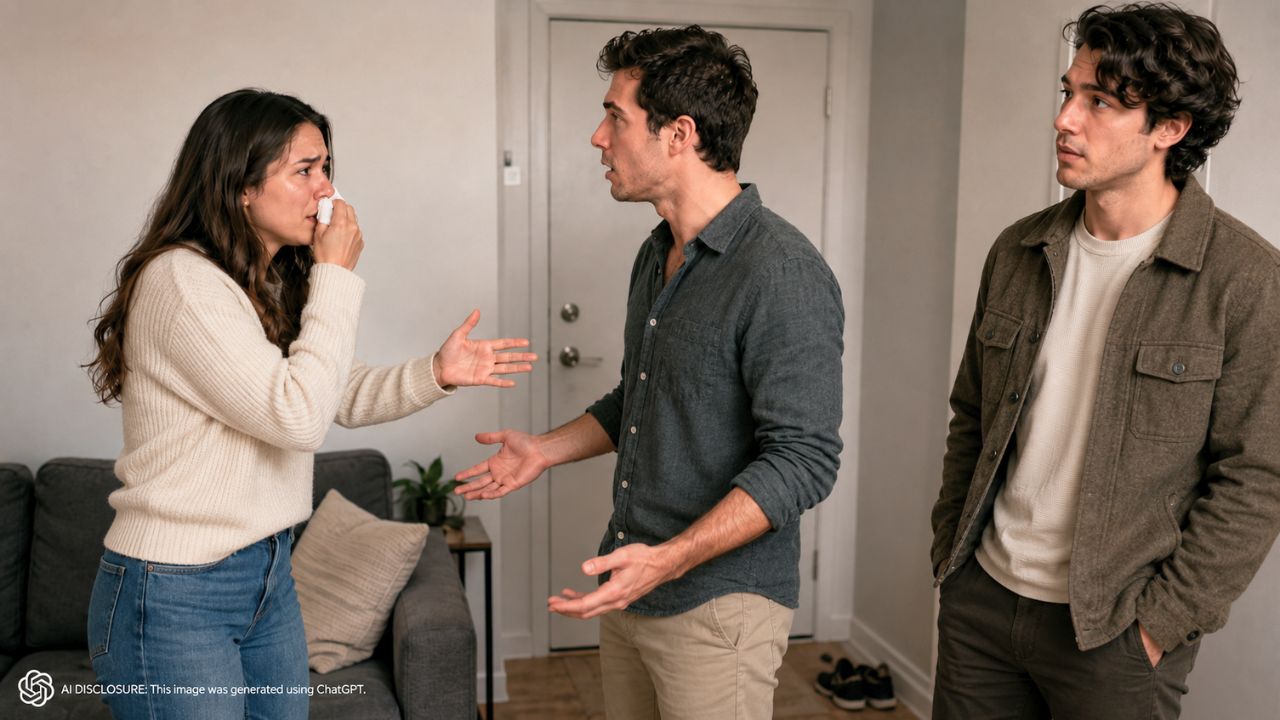
Photo credit: AI-generated image created using ChatGPT. Illustrative only.
It started as a favor between friends: a 19-year-old college student living alone agreed to let a friend stay for a month after he said he was having problems with his previous roommates. She cleared out a room, expected the stay to be temporary, and says he promised to split utilities and pay half the rent.
But in the original post, she describes the arrangement quickly sliding from “helping someone out” into feeling like she’d lost control of her own home—especially because of serious allergies and sensitivities that made the apartment’s day-to-day conditions more than just annoying.
A temporary stay turned into a full-on takeover
The roommate wasn’t moving in as a long-term tenant on paper, at least not the way she framed it. She says he asked to crash for a month, and she agreed with the understanding they’d share costs while he got back on his feet.
That informal setup mattered, because it meant the boundaries were supposed to be clear: it was still her place, her routines, and her living environment—just with someone using the spare room. Instead, she says his behavior made it feel like her apartment had become his.
She describes the living room getting tangled up with his belongings and the kitchen repeatedly left messy. It wasn’t one bad day; it was a pattern that made the space harder to use and harder to keep clean.
Allergens weren’t just a preference—they were a health problem
Housemate disputes often revolve around dishes, noise, and cleanliness. Here, the stakes were higher because she says she has severe allergies, rhinitis, and food intolerances—meaning strong smells, residue, and cross-contamination can have real physical consequences.
According to her account, he used strong-scented products that triggered her allergies. She also says he washed his plants in the shower, leaving mud behind, which added another layer of grime and potential irritants in a place that should have been easy to keep sanitary.
Even food wasn’t safe. She says he ate her specific food—items chosen because of her intolerances—turning the fridge into another flashpoint. In a shared home, “don’t eat my groceries” is basic courtesy; when the food is tied to medical needs, it becomes something else entirely.
The money side started to look ugly, fast
Beyond the physical discomfort, she says the costs of having him there were stacking up. The washing machine was being used constantly, she wrote, and the utility bills shot up.
What made that harder to swallow was that, at the time she wrote the post, she said he still hadn’t helped pay the bills. The agreement had been half the rent and shared utilities, but she was watching the numbers climb while waiting for him to do his part.
That kind of imbalance can turn a temporary favor into a stressful financial risk. Even if someone intends to pay eventually, the person covering the costs is the one exposed if the money never comes—or if the situation implodes before it’s settled.
The breaking point: a stranger in the apartment, no warning
Then came the moment that changed the entire tone of the living arrangement. She says she was working on her PC when her roommate brought a complete stranger into the apartment without asking or even giving her a heads-up.
They reportedly went straight to his room, locked the door, and were extremely “loud” while she was right outside trying to work. For her, it wasn’t just inconsiderate noise. It was the shock of realizing someone she didn’t know had been invited into her home as if it were no big deal.
She described it as a major breach of privacy, and said it made her feel deeply uncomfortable in her own space. In a small apartment, the idea that a stranger can show up at any time—and then disappear behind a locked door—can feel like a safety issue as much as a manners issue.
That’s when she decided she was done. She planned to give him short notice to leave and return his rent money, even though she acknowledged he might struggle to find somewhere else immediately.
What people tended to focus on: boundaries, safety, and paper trails
The judgment she included in the post labeled her “Not the A-hole,” reflecting the idea that this wasn’t a petty roommate squabble. The roommate wasn’t just messy; he was disregarding health limits, shared costs, and basic consent about who enters the home.
In disputes like this, people often zoom in on practical steps: keeping communications in writing, documenting unpaid bills and agreements, and being careful about how notice is handled—especially when someone has stayed long enough to start looking like a tenant in practice.
There’s also the safety angle. Bringing strangers home without checking in can change how secure someone feels overnight, and the locked-door detail tends to make people’s alarms go off. Even if nothing “happened” beyond noise and discomfort, the sense of not being in control of who has access to your home is hard to undo.
And for anyone living near a college campus, where leases, sublets, and informal crash situations are common, the story lands as a warning: a month-long favor can turn into a complicated exit if expectations aren’t respected from day one.
Now she’s weighing the fastest way to get her home back
At the center of her decision is a trade-off: acting quickly to protect her space versus the reality that pushing someone out on short notice can escalate tension. Returning the rent money sounds like her attempt to avoid a drawn-out argument over who owes what, and to remove any claim that he paid to stay and should be allowed to remain.
But the deeper issue seems to be trust. She tried to help a friend, and in return she says she got higher bills, triggering scents, missing food, a dirty shower, and a stranger brought into her apartment without permission.
Whether he leaves quietly or fights it, she’s already reached the point where living together doesn’t feel sustainable. She’s not just trying to end an awkward roommate arrangement—she’s trying to feel safe, healthy, and in control of her own front door again.
Check out more from Now Rundown:
- A Party of 12 Came Back a Month Later Demanding Their $80 Tip Refunded — My Restaurant Made Me Pay It
- Her Coworker Kept Filing the Same Complaint About Her After Being Warned — Then She Filed a Counter-Report With Every Email Documented
- Siblings Demanded Half of Their Sister’s $11 Million Inheritance — She Refused Because They Never Visited
- The Kid I Bullied in Middle School Just Interviewed for a Job on My Team — He Bombed It and I Didn’t Hire Him

Abbie Clark is the founder and editor of Now Rundown, covering the stories that hit households first—health, politics, insurance, home costs, scams, and the fine print people often learn too late.