Tenant Refused to Loan His Landlord Money a Third Time After He Failed to Repay Him Twice Before — Despite Owning the Home He Rents
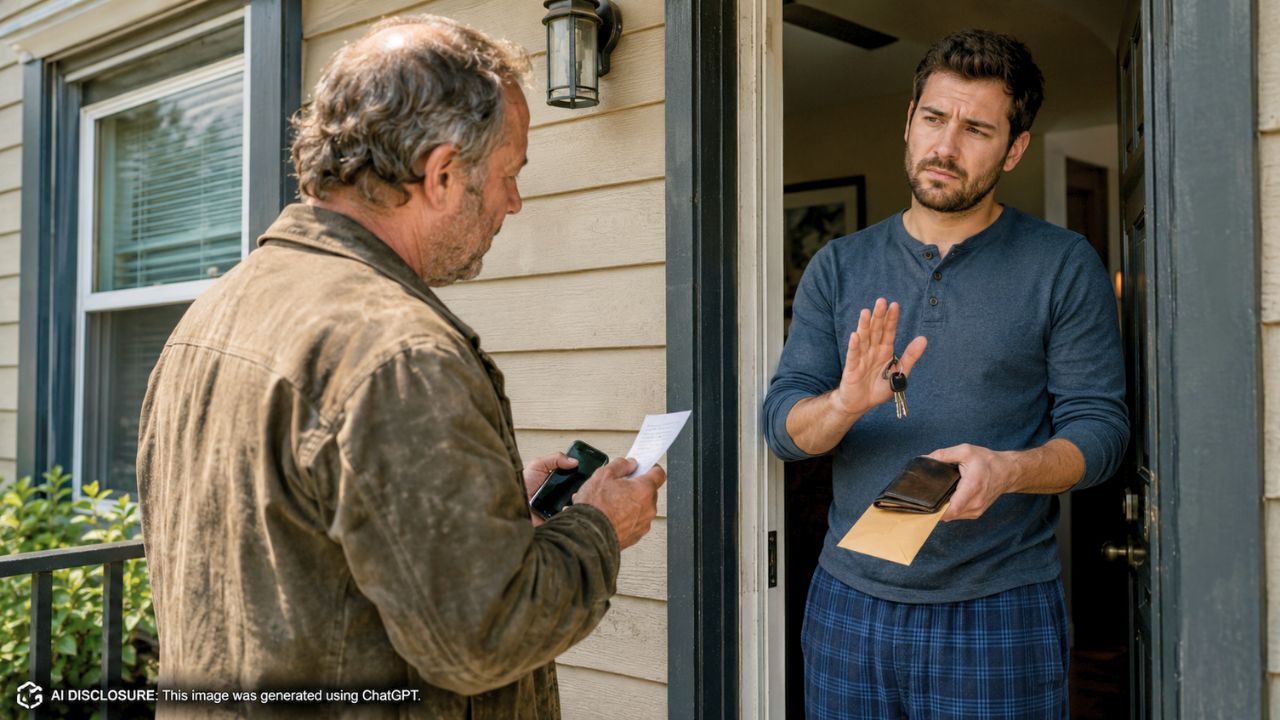
Photo credit: AI-generated image created using ChatGPT. Illustrative only.
A 30-year-old renter thought he had a simple, friendly relationship with the man who owned the house he lived in—until the landlord started treating him like a backup bank. What began as a one-time favor turned into a repeating request, and then into a tense standoff when the tenant finally said no.
In the original post, the tenant lays out a yearlong pattern: the landlord asked for money, promised quick repayment, didn’t follow through, and then came back again. This time, the renter refused to hand over another dollar while still waiting on money he’d already lent.
A friendly rental turned into a financial vent session
The tenant, 30, said he rents a house from a 52-year-old landlord and that they’d always gotten along. Over the past year, the landlord occasionally brought up personal financial problems, which set the stage for what came next.
That context mattered, because the first request didn’t come out of nowhere. It was framed as a short-term crunch—an “unexpected expense”—and the landlord assured him it would be a quick two-week loan.
The tenant admitted he trusted him partly because of the obvious: the landlord owned the property. In his mind, someone with a house to rent out felt like a safe bet to repay a relatively short-term favor.
The first loan was late, but it still got paid
He agreed to help, expecting to be made whole in 14 days. Instead, two weeks passed with no repayment, and the renter had to start reminding him. The money didn’t come back on schedule—it came back months later.
Even though the landlord eventually repaid that first loan, the delay changed the dynamic. When you loan money to a friend, late repayment can be awkward. When you loan money to your landlord, awkward can quickly start to feel risky.
Still, once the money finally came through, it was easy to tell himself it was a one-off. Bad timing. A fluke. Something that wouldn’t repeat.
The second loan never came back, and the asks kept coming
A few months later, the landlord asked again. This time he said he was waiting on another payment to come through. The tenant said he went along with it “against my better judgment,” a phrase that usually means someone already knows how this ends.
According to the post, the second loan went worse than the first. The landlord missed every repayment date he promised, and despite repeated requests from the tenant, the balance still hadn’t been repaid.
Then came the third request. The landlord reached out again, describing a difficult situation and promising he’d repay quickly “this time.” But by then, the tenant wasn’t hearing “quickly.” He was hearing “eventually,” if at all.
So he refused. He told the landlord he wasn’t comfortable lending more money while there was still an unpaid loan hanging over them.
When he finally said no, the landlord made it personal
The landlord didn’t take the refusal as a neutral boundary. The tenant wrote that his landlord got upset and called him selfish, adding that “good tenants should help when they can.”
That line landed like a pressure tactic: not just asking for money, but tying it to whether the renter was being “good” in the relationship. It also subtly flipped the power dynamic—suggesting the tenant owed a personal favor because the landlord had been decent in his role.
After that conversation, the tone shifted. The tenant said the landlord has been distant whenever they interact. In a normal friendship, distance is uncomfortable. In a housing arrangement, distance can feel like the beginning of consequences, even if none have been explicitly threatened.
To make it messier, a few mutual acquaintances weighed in and suggested the tenant should have helped because the landlord had “always been a decent landlord otherwise.” The tenant’s view was simpler: trust has to be earned, and repayment promises had already been broken twice.
People focused on the leverage a landlord has—even without saying it out loud
The post itself was tagged “Not the A-hole,” capturing the basic reaction to someone refusing to lend money to a person who already owes them. The core logic is hard to argue with: if a borrower hasn’t repaid loan #2, loan #3 isn’t generosity—it’s gambling.
But the bigger undercurrent here isn’t just etiquette. It’s leverage. A landlord doesn’t need to say “I’ll raise your rent” or “I’ll end your lease” for a tenant to feel nervous about friction. Housing is the kind of necessity that makes people second-guess perfectly reasonable boundaries.
That’s why so many readers tend to treat landlord-tenant “loans” as a bright red line. A rental relationship already includes monthly payments in one direction. Once money starts flowing back the other way, the roles blur, and the tenant can end up feeling trapped—still paying rent while also acting as an unpaid creditor.
The renter is left balancing money owed and a roof over his head
At the center of the story is an unresolved debt and a relationship that now has an edge to it. The tenant is still out the money from the second loan, and the landlord is acting colder after being told no on the third.
The renter’s reasoning hasn’t changed: it doesn’t matter that the landlord owns the home. If anything, that makes the repeated borrowing harder to understand, and the nonpayment harder to excuse.
For now, he’s drawn a line—no more loans until the old one is repaid. It’s a practical boundary, but it doesn’t erase the uncomfortable reality that he still has to share a business relationship with someone who already proved, twice, that “two weeks” can turn into months—or never.
Check out more from Now Rundown:
- A Party of 12 Came Back a Month Later Demanding Their $80 Tip Refunded — My Restaurant Made Me Pay It
- Her Coworker Kept Filing the Same Complaint About Her After Being Warned — Then She Filed a Counter-Report With Every Email Documented
- Siblings Demanded Half of Their Sister’s $11 Million Inheritance — She Refused Because They Never Visited
- The Kid I Bullied in Middle School Just Interviewed for a Job on My Team — He Bombed It and I Didn’t Hire Him

Abbie Clark is the founder and editor of Now Rundown, covering the stories that hit households first—health, politics, insurance, home costs, scams, and the fine print people often learn too late.