
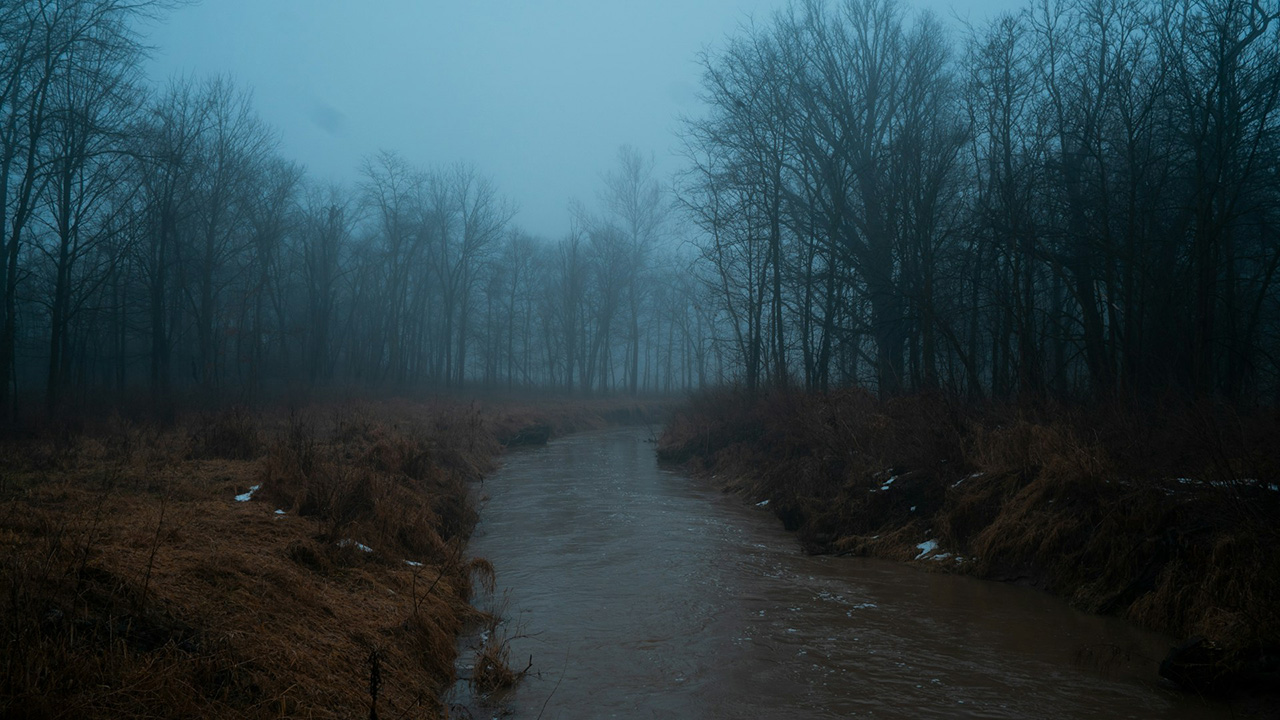
River levels rise and emergency crews warn against ‘just driving through’ water
Photo credit: TopSphere Media/Unsplash.com
Rivers across the West are swelling after days of relentless rain, and the most dangerous place you can be is behind the wheel on a flooded road. As emergency crews pull people from rising water, they are repeating a simple message that can save your life: do not assume you can “just drive through” even a shallow looking flow. The physics of fast water, the weight of your vehicle, and the speed at which conditions change all stack the odds against you.
Flood risk is no longer confined to hurricane states or spring snowmelt; from the Pacific Northwest to Southern California, communities are seeing streets, creeks, and major rivers rise in a matter of hours. That reality demands a shift in how you plan everyday trips, how you read weather alerts, and how quickly you are willing to turn around when water covers the road ahead.
When rivers rise faster than you can evacuate
When a river jumps its banks, the timeline for escape can shrink from hours to minutes, especially if you are already on the road. In parts of Washington and Oregon, 25,000 Americans were told to “Move now” as water rose faster than evacuation buses could reach them, a stark reminder that official help may not arrive before the next surge. When you are driving in that kind of environment, a familiar route can turn into a trap if a culvert clogs or a small creek suddenly overtops a low bridge.
Earlier this month, the Pacific Northwest saw how quickly a regional pattern can turn into a chain of local emergencies. Beginning in early December, a series of severe floods hit rivers and lowlands in the Pacific Northwest, with multiple river systems cresting within a week-long period. As those waters spread across Western Washington, drivers who tried to outrun the rising levels often found themselves boxed in by closures, detours, and water that was deeper and faster than it looked from the driver’s seat.
Why “Turn Around, Don’t Drown” is not optional advice
Flood safety campaigns are not slogans dreamed up for posters; they are written in the aftermath of fatal mistakes. The National Weather Service’s Turn Around, Don’t Drown guidance is blunt: most flood deaths happen in vehicles, and it takes surprisingly little water to sweep a car off the road. As water rises, your tires lose contact with the pavement, your brakes become useless, and the current can push you sideways into deeper channels or hidden debris.
If floodwaters rise around your car, the same federal guidance is equally clear that you should not sit and wait for a miracle. The instruction is that if water is climbing around your vehicle, You and the vehicle can be swept away, so you must abandon it and move to higher ground if you can do so safely. That means unbuckling quickly, checking for a safe exit path, and getting out before the doors are pinned by water pressure, not after the engine stalls and the cabin starts to fill.
Pacific Northwest floods show how quickly conditions flip
In the Pacific Northwest, the recent flooding was not a single crest but a sequence of storms that kept rivers elevated for days. Beginning in early December, severe flooding affected rivers and lowlands across the Pacific Northwest, particularly Western Washington, from the Columbia near the Fraser River northward. For drivers, that meant a moving target: a road that was passable in the morning could be under a foot of water by afternoon, while detours funneled traffic onto unfamiliar back routes that were even more vulnerable to washouts.
Local responders had to improvise as infrastructure strained under the water. In the Snohomish area, officials described how they scrambled for equipment, noting that Once the tractor was acquired, the department called for members of the public to help fill sandbags. That kind of ad hoc defense buys time for neighborhoods, but it also means you may encounter heavy machinery, volunteers, and temporary levees in places that are usually clear, another reason to slow down and avoid any water that is crossing the road.
California’s flash flood warnings and the lure of “just a little water”
Farther south, California’s recent storms have turned holiday travel into a high stakes calculation. In Ventura County, the National Weather Service office in Los Angeles and Oxnard issued a flash flood warning that explicitly called out the risk of rock slides and mud slides along canyon roads. Those hazards often arrive mixed with water, so what looks like a shallow sheet across the asphalt can hide boulders, tree limbs, or a missing chunk of pavement that will stop your car cold.
In the Greater Lake Tahoe area, emergency crews recently pulled a family from rising water after they were caught by a surge that turned a familiar route into a channel. Local reporting described how Emergency crews saved the family from rising waters while a Flood watch remained in effect for the region. If you are tempted to follow their tire tracks the next time water covers the road, remember that they survived only because trained rescuers were close by and conditions allowed a safe intervention, not because the decision to drive through was sound.
Southern California’s Christmas storms and rescues from above
Southern California’s Christmas Eve storm offered a dramatic illustration of how quickly urban and mountain roads can become impassable. The town of Wrightwood, located about 80 miles northeast of LA, was hit hard as heavy rain and runoff tore through slopes and streets. According to CNN, emergency crews were forced to rescue residents from their roofs via helicopter after water and debris cut off ground access, a reminder that once you are surrounded by floodwater, even a four wheel drive truck cannot guarantee a way out.
Closer to the coast, a flash flood warning for Los Angeles County underscored how urban drainage systems can be overwhelmed. A Southern California Weather Report noted that neighborhoods from Bel Air to Sherman Oaks were under an alert as excessive rainfall triggered rapid runoff. In that kind of setting, underpasses, freeway on ramps, and dips in major boulevards can fill like bathtubs, leaving drivers who tried to “beat the water” stranded in the middle of a multi lane floodway.
Why your vehicle is no match for moving water
Even if you drive a heavy SUV or pickup, the physics of water are not on your side. Safety guidance stresses that Water may be deeper than it appears and can hide many hazards, from open manholes to washed out shoulders. Once the water reaches the bottom of your doors, buoyancy starts to lift the vehicle, reducing traction, and a surprisingly small current can push even a large truck sideways into a ditch or guardrail.
Federal flood safety campaigns also warn you not to park or camp where water can trap you before you ever start the engine. The same Turn Around, Don’t Drown materials advise that you should not camp or park your vehicle along streams and washes during threatening conditions, and that you must Move to higher ground if water begins to rise. That advice applies whether you are in a compact sedan or a lifted 4×4, because once the current reaches the undercarriage, the difference in vehicle type matters far less than the depth and speed of the flow.
How to react if your car is already in trouble
Sometimes you will misjudge a puddle or turn a corner to find water already across the lane. If you are not yet in the deepest part, your first priority is to back out slowly while you still have traction, rather than accelerating forward into unknown depth. Flood safety tips for Texas drivers recovering from Hurricane Harvey emphasize that you should Follow directions from the National Weather Servic and avoid driving through standing water unless you have no other choice, and even then only with extreme caution.
If the engine stalls or water starts to climb around the doors, you need to shift from driving to self rescue. According to the National Weather Service, you should never try to walk, swim or drive through swift moving water, advice that was highlighted in a recent piece that began, “According to the National Weather Service, you should ‘never try to walk, swim or drive’ through swift-moving water.” If you can safely exit onto a higher shoulder or embankment, do it quickly, then call 911 and wait where rescuers can see you rather than climbing back into the vehicle to retrieve belongings.
Reading alerts and knowing when to leave early
The most effective way to avoid a flooded road is to stay off it before the water arrives, which means paying attention to watches and warnings. In Central California, residents were urged to Protect themselves during a flood with tips from the NWS that specifically called out low lying, flood prone areas and the danger to cars. When a flash flood warning is issued for your county, it is not a suggestion to drive more carefully; it is a signal that you should cancel nonessential trips and be ready to leave early if you live near a creek, wash, or drainage channel.
Behind those alerts is a network of agencies that track rainfall, river levels, and burn scars that can shed debris. The National Weather Service has responsibility for flood warning, while The Federal Emergency Management Agency, or FEMA, manages the flood insurance program and the United States Geological Survey (USGS) does debris flow modeling. When those experts tell you that a particular canyon or river corridor is at risk, they are drawing on data that you cannot see from your windshield, and the safest response is to adjust your plans before the first barricade goes up.
Finding help and information when the water keeps rising
Once flooding begins, you need reliable channels for updates and assistance that do not depend on a single cell tower or social feed. In Washington state, the Red Cross has described how it mobilized after a combination of flood, landslide, and wind storm, with a report By Meteorologist Ted Buehner noting that the winter season started on Sunday and that shelters and service centers were opened with posted operational hours. Knowing where those shelters are before you set out can keep you from driving into a flooded zone in search of help that has already moved.
State and local officials are also urging residents to bookmark official emergency pages and apps. In Florida, for example, a briefing ahead of Hurricane Milton reminded residents that “Now you can find your county’s emergency management page” for information on evacuations and sheltering. The How to Find Help We guidance from the Red Cross and American Red Cross for Hurricane Helene response in the Tampa area similarly urges you to use the Emergency app, social media, or local news when connectivity allows. Having those tools ready before the rain starts means you can get road closure maps, shelter locations, and river level updates without relying on guesswork or rumors.


