New Homeowner Removed a Tree His Neighbors Had an Unwritten Agreement to Keep — He Says No One Told Him
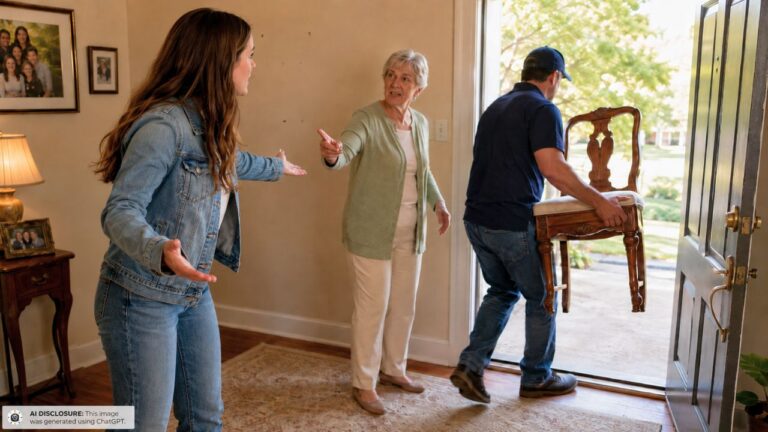
Photo credit: AI-generated image created using ChatGPT. Illustrative only.
When a new homeowner bought an estate property with lake access, he expected the usual move-in headaches: overgrowth, renovations, and getting settled with his dog. Instead, he says he walked into a neighborhood tradition no one bothered to mention—one that effectively treated his driveway like a public boat ramp, and his backyard like a shortcut to the water.
In the original post, the homeowner describes slowly realizing that what looked like friendly neighbor curiosity at first was actually the start of a sustained pressure campaign to keep a decades-long “open access” routine alive, even after the property changed hands.
He bought a quiet, overgrown lot—then the foot traffic started
The house had belonged to owners who hadn’t lived there for nearly a decade before they passed away. By the time the new buyer took over, the wooded lot was overgrown, and the place needed real cleanup and renovation.
Because the lots were spaced out and the area was wooded, he assumed he wouldn’t see much of the neighbors. Early on, he did meet people—stopping by to tell him it was great he was fixing the place up. Working from home, he saw it as a positive: a chance to put faces to nearby houses and start off on decent terms.
That goodwill didn’t last. The breaking point came during the final stretch of projects: pouring a concrete pad for his van, finishing the fencing, and preparing to fully move in.
A damaged van turned a vague worry into a hard boundary
Before he even lived there full-time, he parked his van on the new pad. When he returned for the final move, he found a “massive gouge” running down the length of it—damage that, in his view, looked like someone had tried to squeeze a vehicle past it or dragged something large along the side.
He didn’t claim to know exactly who did it, but the message landed anyway: people were coming through, and not carefully. With a dog moving in and a property line finally being defined, he closed his gates.
That one action—closing the gates—didn’t just secure his yard. It cut off what the neighborhood apparently considered a normal route to the lake.
Neighbors treated his driveway like the way to the water
As soon as the gates were closed, he says he “learned immediately” that neighbors had been using his driveway to get to the lake for a long time. The explanation was simple: the previous owners either weren’t around or didn’t care, so people got used to crossing the property whenever they wanted.
The pushback wasn’t occasional. He describes it as nonstop, with “three to four groups a day” showing up. Some were polite, but others were not, and they weren’t just walking through. He says people asked him to move his van and other vehicles so they could back boats down the driveway—something that made him suspect the van damage may have happened during one of those attempts.
He tried explaining his reasons: he has a dog, he wants the fence for safety, and he’s not comfortable with constant uninvited traffic. The response he got, he says, wasn’t understanding—it was criticism that he was changing how things “have always worked around here.”
It escalated further when people began opening the gate themselves. Then, when his dog was out, they complained the dog was “loose,” even though they were the ones entering the fenced area.
Locks, cameras, and an intercom—because the knocks didn’t stop
After the repeated gate-opening and constant door visits, he moved from explaining to documenting and restricting. He put up no trespassing signs, signs warning a dog was on the property, cameras, and locks.
He also installed an intercom by the door. Working from home, he didn’t want to keep dropping what he was doing to respond to whoever decided to knock next, especially when the conversations were increasingly tense.
Even when summer ended, the messages didn’t. He continued to get notes and voicemails insisting lake access through his property was “grandfathered in” because the previous owners allowed it and it had been going on “forever.”
Two nearby households became the main sources of pressure: a woman in her 50s and a couple around the same age, who claimed they represented a homeowners association. The homeowner says that when he purchased the property, there was nothing about covenants or an organized HOA—nothing formal that would have warned him this lake route was considered a shared amenity.
Sometimes, he says the communications sounded official. Other times, they were personal and insulting, framing him as someone “ruining the neighborhood.”
Commenters sided with boundaries—and pushed documentation over debate
The homeowner says he already consulted an attorney and wasn’t looking for legal advice. But the through-line of outside reactions was clear: people focused on the basics of protecting property, avoiding direct confrontation, and keeping records of every interaction.
From the homeowner’s own description, he’s already moved in that direction—cameras, locks, and posted signage. The emphasis from readers was less about winning an argument with neighbors and more about preventing the next problem: someone getting hurt on the property, the dog being blamed for an encounter that starts with trespassing, or the homeowner being pressured into “allowing” something that becomes even harder to stop later.
Another practical point people honed in on was the pattern of entitlement. In his account, neighbors weren’t asking for a one-time favor; they were demanding routine access, multiple times a day, with the expectation that he should rearrange his vehicles to accommodate boat traffic.
The underlying worry was that if someone already gouged a van trying to squeeze by, the next mishap could be bigger—and the homeowner would be the one dealing with the fallout on his own land.
The real problem: living next to people who think your land is still theirs
What makes the dispute sticky isn’t just the lake access—it’s the social dynamic of being the newcomer who enforces a rule nobody had to follow before. The homeowner says he wants to be cordial, because these are people he’ll likely live near for a long time. But he also doesn’t want “cordial” to mean accepting constant intrusions and damage risk.
He’s also dealing with a specific kind of neighborhood pressure: the insistence that longstanding habits equal rights. In his telling, the neighbors aren’t arguing that he promised access; they’re arguing that history itself should bind him, even though he bought the property with no disclosure of a formal easement or association rules.
For now, his approach is straightforward: keep the gates closed, keep communication limited, and keep proof of what’s happening. That may not win him friends on the street, but it does draw a clean line—one that’s hard to miss the next time someone thinks about unlatching a gate and walking through like they still live there.

Abbie Clark is the founder and editor of Now Rundown, covering the stories that hit households first—health, politics, insurance, home costs, scams, and the fine print people often learn too late.