Woman Says Her Upstairs Neighbor Was Tracking Her Every Move — Then the Pattern Got Too Weird to Ignore
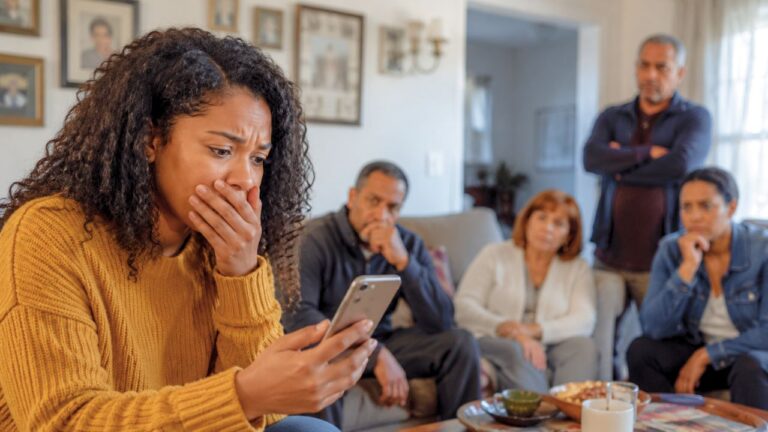
Photo credit: cottonbro studio/Pexels.com
A woman said she moved into her apartment expecting the usual noise that comes with shared walls and upstairs neighbors. Footsteps, showers, doors, maybe the occasional loud night. That kind of thing comes with apartment living.
But a few weeks after moving in, she started feeling like something was wrong.
According to the Reddit post, the woman moved into the apartment on Sept. 1, 2020. She said the uneasiness came on slowly at first. Her therapist noticed she seemed unsettled and asked whether she felt safe at home. At the time, she had not fully connected the feeling to anything specific. Then she started paying closer attention.
That was when she said she noticed a pattern with the person living above her.
If she was in her bedroom, she said the upstairs neighbor seemed to be in the room above it. If she got up and walked to the kitchen, the neighbor would follow seconds later. If she went back to her room, the footsteps would move back too. Sometimes there would be stomping. Sometimes it seemed to happen during private moments too, like showering or using the bathroom.
She described the upstairs neighbor as feeling like her “shadow.”
At first, she wondered if this was normal apartment noise and she was only noticing it because she was already stressed. So she asked friends if they could hear downstairs neighbors that clearly in their own buildings. She said she could not hear the people below her and barely heard people beside her, which made the upstairs sounds feel more targeted.
She started keeping notes. Then those notes turned into a massive log of incidents. She said she had more than 90 pages of time-stamped entries, a working carbon monoxide detector, and a psychological evaluation because she wanted to rule out a mental health issue. She also said she had a video compilation, though the story remained difficult for outsiders to verify.
The woman eventually became convinced there might be hidden cameras in the apartment.
That was the part where Reddit pushed back hard. She said there were too many moments where the upstairs neighbor seemed to react to something that would not be obvious through sound alone. She wondered if the neighbor could somehow see where she was moving or what she was doing. She asked people for advice on finding hidden cameras, checking outlets, vents, light fixtures, smoke alarms, holes in walls, and other hiding spots.
She said the fear had changed how she lived.
She kept lights low. She said she sometimes showered in the dark. She spent significant time staying with friends because she felt afraid in her own apartment. She believed the upstairs neighbor rarely left the unit and might be fixated on her nearly all day.
At one point, she took the neighbor to court to try to get an order to make the alleged stalking stop. The judge denied it. According to her, the judge said she could not prove a motive, and the neighbor claimed a roommate might be responsible for some of the noise. The woman disputed that because she believed the roommate had secretly moved out months earlier.
That detail became one of the biggest points of debate.
To the woman, the roommate moving out mattered because it made the upstairs neighbor’s explanation less believable. To many commenters, the way she talked about the roommate, the neighbor’s schedule, and other tenants moving out sounded like she might be reading too much into ordinary building activity. The post itself was marked inconclusive, and even the Reddit community that often helps investigate strange situations did not fully agree on what was happening.
Still, the woman kept looking for proof.
A friend came over and worked from the apartment while the woman stayed mostly in another room. They listened for patterns. The friend reportedly heard some upstairs movement and stomping, including while the woman showered. They then searched the apartment for hidden cameras. They removed light fixtures, checked outlets, looked into small wall holes and crevices, inspected vents and alarms, turned off lights, and used phones to look for infrared lights.
They did not find anything conclusive.
A Reddit user also helped her check whether unknown devices were connected to her Wi-Fi. Nothing suspicious turned up there either. The woman admitted that gave her some peace of mind, but it did not fully answer what she believed she had been experiencing for months.
The whole situation stayed stuck in that uncomfortable middle ground. She felt watched. She felt followed. She had logs, clips, a court attempt, and a deep fear that the neighbor above her was somehow tracking her movements. But no camera was found, no clear method was proven, and many readers thought the evidence pointed more toward stress, apartment noise, or a possible mental health crisis than a new form of stalking.
That is what made the story unsettling in a different way from the usual neighbor dispute. There was no clean ending where police found a device, a landlord admitted something, or the upstairs neighbor confessed. The woman was left with her fear, and readers were left unsure what to make of it.
For her, the pattern felt too specific to ignore.
For many commenters, the lack of hard proof made the story feel like a warning from the other direction: sometimes a person can be genuinely terrified and still not have the facts nailed down.
What Commenters Said
Commenters were deeply split. Some told her to trust her gut, keep documenting, check for cameras, and take her safety seriously. They understood why repeated footsteps and stomping above her could start to feel personal after months of living under it.
But many others were skeptical. They pointed out that apartment buildings can carry sound in weird ways, and it can be hard to tell exactly where footsteps are coming from. Several said the claim that the neighbor followed her room to room nearly every time was difficult to square with the lack of physical evidence.
A lot of commenters were also concerned about the woman’s mental state. They noted how much she believed she knew about the upstairs neighbor’s schedule, roommate situation, and movements, while also claiming the neighbor was the one fixated on her. Some felt the story showed someone in crisis who needed more support, not more encouragement to chase hidden-camera theories.
The most careful commenters landed somewhere in the middle. They did not want to dismiss her fear outright, but they also did not want to feed a theory that had not been proven. Their advice was practical: keep records, involve the landlord when there are clear noise violations, check safety basics, and stay connected with mental health support while looking for a safer place to live.

Abbie Clark is the founder and editor of Now Rundown, covering the stories that hit households first—health, politics, insurance, home costs, scams, and the fine print people often learn too late.