Bridesmaid Refused to Wear the Dress the Bride Chose and Offered to Buy Her Own — Bride Said No
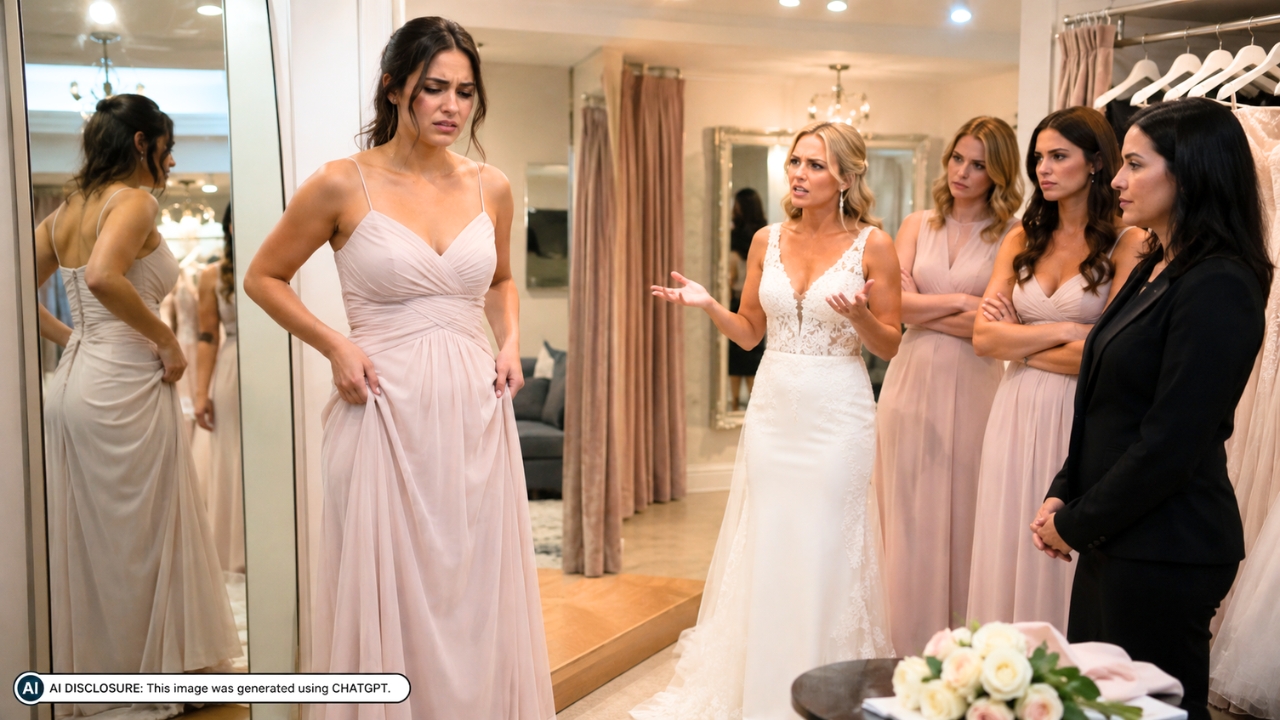
Photo credit: AI-generated image created using ChatGPT. Illustrative only.
Dress shopping was supposed to be a quick win in the early wedding-planning stretch: pick a color, pick a style, get six bridesmaids on the same page, and move on. Instead, one bridesmaid walked out of the boutique upset and humiliated, and she and the bride stopped speaking altogether.
The bridesmaid, Jane, is 25 and the bride is her older sister, Lisa, 27. Lisa has a clear vision for her wedding and wants every detail locked in—especially the bridal party look. Jane said she understood the assignment going into the appointment: all six bridesmaids in the exact same dress and the exact same color.
The “everyone matches” plan hit a wall at the boutique
The problem, Jane explained, was that she’s the only one in the group who isn’t “much smaller” than the others. That gap turned what should have been a simple try-on into a sizing and fit issue that didn’t really affect the other five bridesmaids in the same way.
Lisa saved her favorite option for last. Jane could hear the excitement building as the other bridesmaids stepped out of their fitting rooms, one after another, to cheers and approval. Lisa was “squealing with happiness,” and Jane heard her saying, “This is the one!” while friends hyped the choice up.
Jane’s experience in the same dress wasn’t just less fun. It sounded physically difficult.
When the dress finally went on, it didn’t just look bad—it felt unwearable
Jane said it took her a long time to get the dress on at all. Once she did, she felt like it highlighted everything she didn’t want on display in a formal, heavily photographed event. She described the color as a pale shade that made her look “sick,” and the fit as unflattering enough that she had “massive rolls” in the back and looked “pregnant” in the front.
She tried shapewear to smooth things out, but that made it worse. Instead of helping, it “just bulges everything out across my hips and pinches the fabric up the sides,” she wrote, turning the dress into something that looked strained and uncomfortable.
Then there was the mobility issue. Jane said she couldn’t move well in the dress and couldn’t raise her arms more than halfway. That’s not a minor annoyance at a wedding, where bridesmaids are expected to help, pose for photos, and generally stay composed through hours of standing, walking, and dancing.
Jane asked for a compromise, and the answer was a hard no
After seeing how the dress looked and felt on her, Jane tried to talk to Lisa about another option: a similar dress that would keep the overall look while working better for her body type. She wasn’t asking to change the whole palette or put everyone in a different silhouette—just to avoid a dress that she felt was actively working against her.
Lisa and the other bridesmaids didn’t budge. Jane said they insisted it was the perfect color and dress, and Lisa was “dead set” on everyone matching exactly. In that moment, the priority wasn’t whether the dress was wearable for one person—it was whether the lineup looked uniform.
In the store, that difference in priorities turned into a quiet argument, right there in front of their mom and a sales associate who came over to check on them.
The most awkward moment came when the sales associate couldn’t reassure her
Jane said the people around them tried to smooth it over. Her mom and the sales associate attempted to calm things down by saying the dress looked fine and that everyone matched nicely. But Jane felt it was obvious they were trying to keep the peace rather than actually agreeing.
So she asked the question directly: “Does this dress looks fine on me?”
According to Jane, the sales associate’s face turned red, and instead of answering yes or no, she pivoted to a different point entirely—how it was important to honor Lisa’s wishes on her special day. For Jane, that non-answer was its own answer. She hurried back to change and left.
In an edit, Jane added a detail that made the disagreement harder to solve: she was already wearing the highest size available, and alterations weren’t an option for that particular dress. In other words, there wasn’t an easy tailoring fix that would turn the dress into something she could move in or feel confident wearing.
After the appointment, the wedding pressure moved into the family
Once the boutique trip ended the way it did, the conflict didn’t cool off. Jane said she and Lisa haven’t talked since. Instead, communication has been filtered through their parents, who have urged Jane to “suck it up” and do what Lisa wants for the wedding.
At the same time, Jane said her parents have been relaying that Lisa is really upset about the dress issue. Jane’s point was that she’s upset too—and she’s the one who would have to wear something that she believes makes her look and feel terrible for an entire day.
Weddings can turn small style decisions into bigger loyalty tests, especially when family members are involved. Here, the stakes aren’t just one dress. It’s a sister relationship, a bridal party role, and the question of whether a “perfect” aesthetic outweighs one person’s comfort and dignity in front of a crowd.
What readers zeroed in on: comfort, fit limits, and whether matching is worth it
In Jane’s write-up, the post was tagged “No A-holes here,” which signals a recognition that both sides have something real at stake. Lisa wants a uniform look she’s likely been picturing for months, maybe years. Jane doesn’t want to spend the wedding day feeling trapped in a dress she can’t move in, in a color that makes her feel washed out, and in a fit she described as deeply unflattering.
A key detail is that Jane said she was already in the highest available size and couldn’t alter it. That makes this less about preference and more about practicality: if the dress literally isn’t workable for her body in the sizes offered, the “just get it tailored” solution isn’t there.
People also tend to focus on the physical limitation she described—being unable to raise her arms more than halfway. That’s the sort of problem that can become a long day of constant adjustments, discomfort, and visible frustration in photos. Even if someone believes wedding parties should fall in line with a bride’s choices, asking someone to wear a dress that restricts basic movement can start to sound unreasonable.
Jane’s full account, including the boutique argument and her note about sizing, appears in the original post.
For now, the dress remains the symbol of a bigger standoff: Lisa holding the line on identical matching, and Jane resisting what she sees as being forced into an outfit that doesn’t fit, doesn’t flatter, and doesn’t function. With the wedding still ahead and family members already choosing sides, the next conversation between the sisters may matter more than any fabric or color swatch.

Abbie Clark is the founder and editor of Now Rundown, covering the stories that hit households first—health, politics, insurance, home costs, scams, and the fine print people often learn too late.