Homeowner Reported a Neighbor’s Dog to the HOA Over Fetch Games and Waste Left in Their Shared, Fenceless Yards
Photo credit: AI-generated image created using ChatGPT. Illustrative only.
In a neighborhood where people pay about $2,000 a year in HOA dues, one homeowner thought the basics would be simple: respect property lines, clean up after your pets, and don’t turn someone else’s backyard into your dog park. Instead, they say they’ve been picking up after a neighbor’s dog for months.
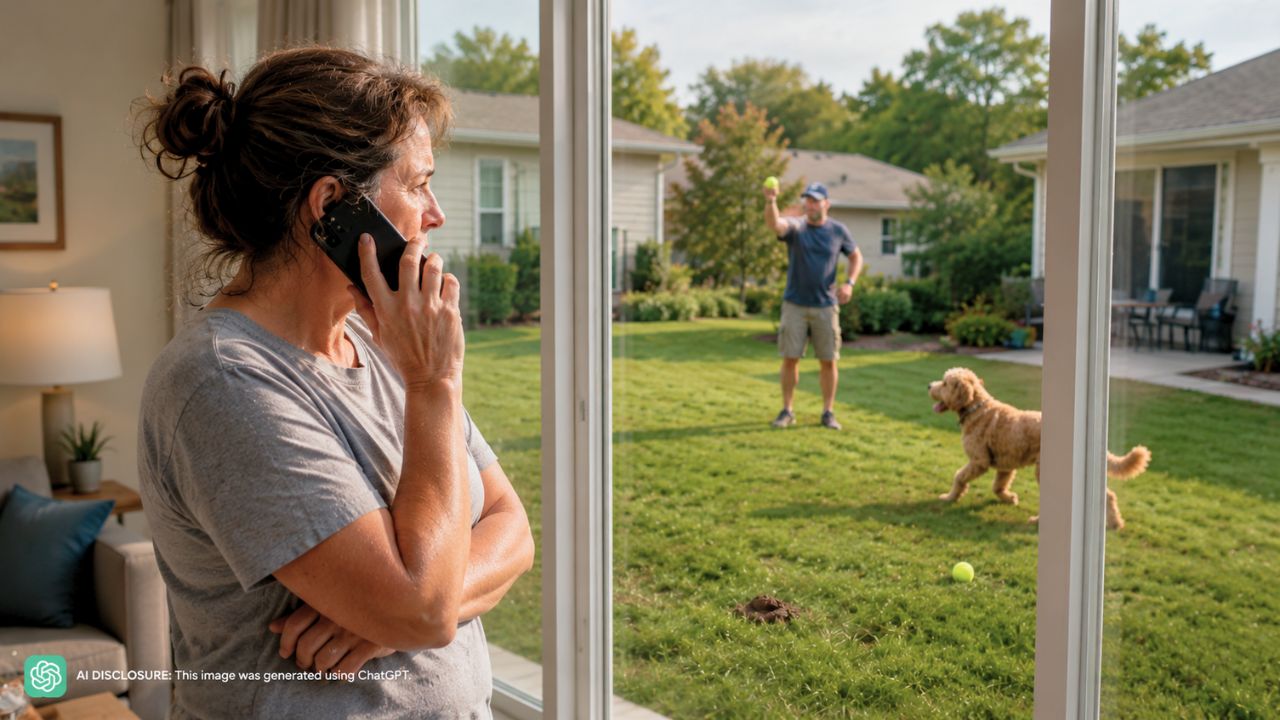
In the original post, the homeowner described a layout that makes small problems feel unavoidable. Their backyard backs up to three others, and none of the homes have fences—meaning a running dog can cut across multiple yards without any barrier or clear boundary.
No fence, no buffer, and a dog that treats every yard like its own
The homeowner said the neighbor “consistently and constantly plays fetch” in yards that aren’t theirs, including the poster’s. With no fence, the game doesn’t stay contained. The dog ends up in other people’s grass, and the playtime becomes a shared experience whether the rest of the neighbors want it or not.
The bigger issue, they said, is what gets left behind. The dog “poops in our yard,” and the neighbor allegedly doesn’t pick it up. That turns someone else’s routine play session into the homeowner’s ongoing chore—one they didn’t agree to.
It also changes how the yard can be used. A backyard is supposed to be where kids run around, families grill, and people let their guard down. But when you’re scanning for waste every time you step outside, it stops feeling like your own space.
It turned from annoyance to a family problem fast
This wasn’t framed as a one-off mess. The homeowner said their daughter has stepped in the dog’s poop “several times,” and one time “accidentally even rolled in it.” That’s the moment where the story stops being about etiquette and starts being about daily life—dirty shoes, ruined clothes, and a kid who can’t safely play in the grass.
For the homeowner, that repeated experience seems to be what hardened their view. They stressed they don’t dislike dogs. What they can’t stand, they said, is irresponsible ownership—especially when it spills over onto other people’s property.
And because the dog is being encouraged to chase a ball across multiple yards, the waste isn’t predictable or contained to one spot. It can show up anywhere, including places a child might tumble without looking.
Reporting to the HOA instead of knocking on the door
Rather than confronting the neighbor directly, the homeowner reported the issue to the HOA. They said they don’t have a good relationship with these neighbors and are “afraid of confrontation,” so going through the HOA felt like the safer route.
That choice comes with tradeoffs. HOAs can enforce community rules, but HOA involvement can also escalate neighbor tension quickly—especially when the complaint is traceable, or when neighbors can guess who filed it because the problem is concentrated between a few houses.
The homeowner’s framing suggests they saw the HOA as the only realistic lever they had. If someone won’t pick up after their dog and won’t keep it in their own yard, a formal complaint may feel like the only way to force a change without a face-to-face argument.
The blowback: dirty looks, and the dog still in the yard
The HOA report didn’t bring immediate peace. The homeowner said the neighbors are now giving them “a stank eye” and are “STILL sending their dog to our yard.” In other words, the social temperature dropped, but the actual behavior didn’t stop.
That’s an especially frustrating outcome in a community that pays for rule enforcement. Whether the HOA hasn’t acted yet, hasn’t communicated consequences, or the neighbors simply don’t care, the poster is still stuck with the original problem—plus a new layer of hostility.
It’s also the kind of stalemate that can make a person feel trapped in their own home. If you avoid confrontation and the formal route doesn’t work, you’re left watching the same thing happen, wondering what step is left that won’t make things worse.
People zeroed in on boundaries, proof, and stopping the pattern
The post itself was labeled “Not the A-hole,” signaling that many readers saw the complaint as reasonable given the repeated waste and the ongoing use of someone else’s property for fetch. The underlying sentiment was simple: if you’re going to have a dog, you control where it goes, and you clean up what it leaves behind.
When stories like this circulate, the most practical reactions tend to focus on two things: establishing a clear record and making boundaries physical when social boundaries fail. In neighborhoods without fences, disputes can drag on because it’s hard to prove frequency and responsibility unless you document it.
And when an HOA is involved, documentation matters even more. Complaints can turn into a he-said, she-said unless there’s something concrete—times, dates, photos, or video—showing the dog in the yard and the waste being left behind. The post doesn’t say what evidence was provided, but the lack of results so far suggests the homeowner may need more leverage than a single report.
A yard that doesn’t feel like yours anymore
What makes this story linger is how ordinary it is. There’s no dramatic explosion in the description—just a daily grind: a dog running through the grass, waste that doesn’t get picked up, a kid stepping in it again, and a homeowner who doesn’t feel safe knocking on the neighbor’s door.
The no-fence setup turns a single neighbor’s choices into everyone else’s problem. And once resentment takes root, even a basic request—please keep your dog in your own yard and clean up after it—can start to feel like a personal feud instead of a normal expectation.
For now, the homeowner is left with an uncomfortable mix of outcomes: they tried the official route, they’re getting iced out socially, and the dog is still showing up. Until either the HOA enforces something meaningful or the neighbors change their habits, the backyard remains shared in the worst way—by someone who never asked to share it.
Check out more from Now Rundown:
- A Party of 12 Came Back a Month Later Demanding Their $80 Tip Refunded — My Restaurant Made Me Pay It
- Her Coworker Kept Filing the Same Complaint About Her After Being Warned — Then She Filed a Counter-Report With Every Email Documented
- Siblings Demanded Half of Their Sister’s $11 Million Inheritance — She Refused Because They Never Visited
- The Kid I Bullied in Middle School Just Interviewed for a Job on My Team — He Bombed It and I Didn’t Hire Him

Abbie Clark is the founder and editor of Now Rundown, covering the stories that hit households first—health, politics, insurance, home costs, scams, and the fine print people often learn too late.