Contractor Charged $8,000 More Than the Written Quote
Photo credit: Nowrundown.com
Mara thought she was doing everything the grown-up, responsible way: get three estimates, pick the middle one, insist on a written quote, and keep every text thread. The bathroom remodel was supposed to be a quick refresh before her sister’s wedding, when half the family would be staying at her place. New tile, a vanity swap, updated fixtures. Nothing dramatic.
The dramatic part didn’t show up until the invoice did.
The quote felt like a relief after a rough year
Mara and her husband, Jonah, had finally crawled out from under a year of medical bills and childcare juggling. Their daughter was in preschool, their older son had just stopped waking up at night, and for the first time in forever, they had a little savings that wasn’t already assigned to emergencies.
So when their upstairs bathroom started leaking into the kitchen light fixture, Mara didn’t want a patch job. She wanted it fixed right, and she wanted it done before family arrived for wedding week. Her mom had already offered “help” in the way that meant criticism with a side of control.
The contractor came recommended by Jonah’s coworker. He showed up in clean work boots, talked fast, and printed a quote on letterhead at the kitchen counter. The number wasn’t cheap, but it was doable. Mara asked twice if it included labor, materials, and disposal, and he nodded like that was an adorable question.
They signed, put down the deposit, and told themselves they’d made the smart choice.
The job started smoothly, then the little extras appeared
The first week looked promising. Demo happened quickly, the mess stayed mostly contained, and Mara felt that rare, fragile feeling of being ahead of life for once. Jonah even joked that maybe grown-ups really could plan things and have them go right.
Then came the “small” add-ons. The subfloor had soft spots, so that was an extra. The plumbing was “older than expected,” another extra. Mara didn’t love it, but she also didn’t want to be the difficult client who slowed everything down. She told herself old houses always surprise you.
She asked for updated totals in writing, and the contractor would send quick texts that sounded reassuring without being specific. He’d say he’d “square it up at the end,” or that it was “within the range.”
Meanwhile, Mara’s mom started dropping by unannounced to “check progress.” She’d stand in the hallway and make little humming sounds, then casually mention a cousin whose contractor “finished early and under budget.” Every visit made Mara’s skin tighten.
The invoice landed like a punch
By the time the vanity went in, Mara was exhausted. She’d been washing dishes in the bathtub for days, ferrying kids around construction noise, and trying to keep her job from noticing she was taking calls from the laundry room.
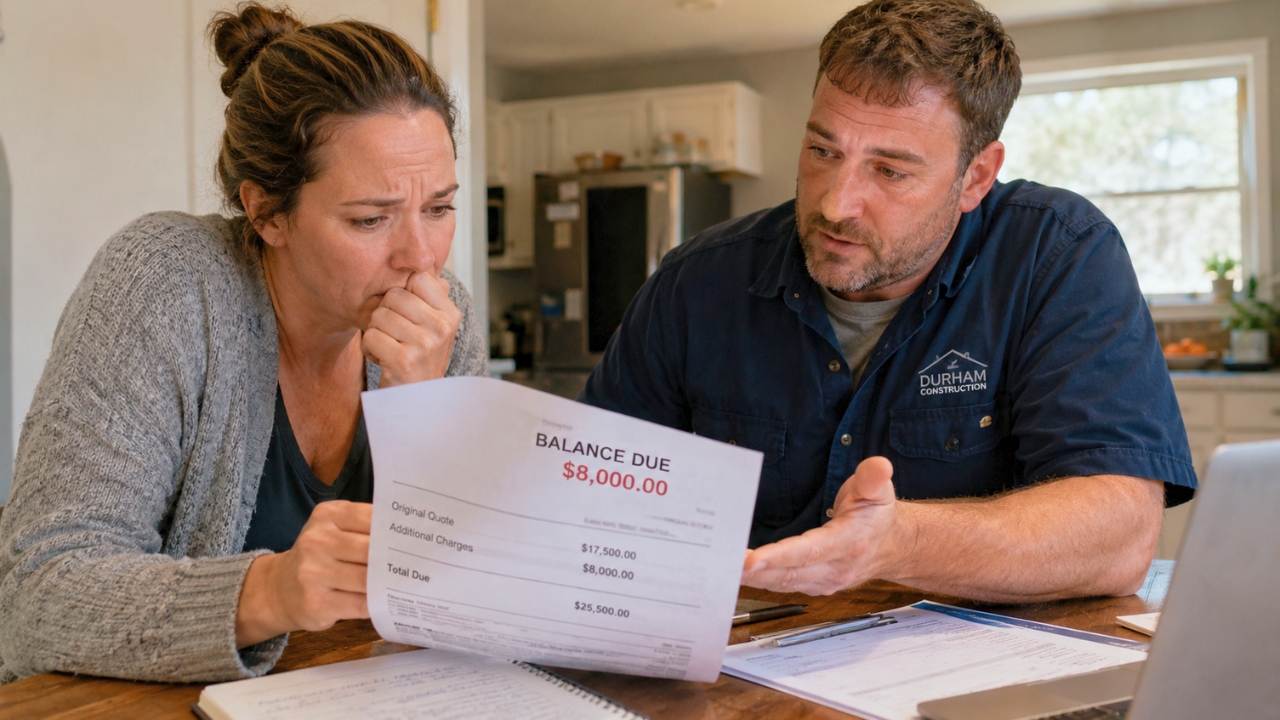
The day the contractor declared the bathroom “done,” he didn’t hand over a final walk-through list. He handed over a total. It was thousands above what they’d agreed to. Not a couple hundred for unexpected plywood. Not “hey, we ran into something.” A huge jump that made Mara’s stomach drop.
Jonah read it twice, then asked Mara if she was sure they hadn’t approved something bigger. Mara pulled out the folder where she’d kept the signed quote, the deposit receipt, the paint swatches, and every text. There was no addendum. No new contract. Just a pile of vague messages and a final demand.
When Jonah called the contractor, the tone shifted instantly. The contractor got sharp and impatient, like Jonah was a child asking why water is wet. He said the “real” costs were always going to be higher and acted like the written quote was more of a suggestion than an agreement.
And then came the pressure: pay now or he’d put a lien on the house. Pay now or he’d “have to take it further.” Pay now because he had other jobs waiting and couldn’t spend time arguing.
Mara sat at the kitchen table and felt that familiar humiliation of being cornered—like she’d done everything right and still somehow ended up the fool.
Family made it messier than it needed to be
Jonah wanted to fight it immediately. Mara wanted to breathe for five minutes without someone demanding something from her. While they debated, Mara’s mom called, because of course she did, asking if the bathroom was ready for her to use when she came over later.
Mara told her what happened, expecting sympathy. Instead, her mom went quiet, then asked why Mara “didn’t keep a closer eye on things.” She suggested paying the full amount to avoid embarrassment right before the wedding. She also reminded Mara that relatives would be staying with them, as if that meant Mara should swallow any cost to keep the peace.
Jonah heard that and snapped. He said they weren’t taking financial advice from someone who had never respected a budget boundary in her life. Mara’s mom took it personally, which was her favorite hobby. Within an hour, Mara had a text from her aunt saying the bathroom drama was “not what the family needs right now.”
It wasn’t just a bill anymore. It was suddenly a loyalty test.
The contractor doubled down, and so did Mara
Mara did what she always did when she felt powerless: she organized. She built a timeline. She printed every message. She photographed the work, including the parts that looked rushed now that she wasn’t in survival mode. She highlighted where she’d asked for updated totals and where he’d dodged the question.
Jonah contacted the coworker who’d recommended him and learned they’d had “some surprises” too, but they’d paid because they didn’t want trouble. That piece of information flipped something in Mara. It wasn’t just them. It was a pattern.
When Mara emailed the contractor asking for an itemized breakdown and a copy of any signed change orders, he didn’t provide either. He sent a shorter message with another demand for payment and a warning about “legal action.”
This time, Mara didn’t respond emotionally. She responded concretely. She sent back the signed quote, asked again for documentation supporting the increase, and informed him they’d be disputing any amount not backed by written authorization. Jonah, meanwhile, called their bank to freeze any automatic payments and contacted a local consumer protection office for guidance.
The contractor showed up unannounced two days later, supposedly to “check something.” Mara didn’t open the door. She spoke through it, steady-voiced, and told him communication needed to be in writing from now on.
It was the first time Mara felt her hands stop shaking.
Everyone had an opinion, and none of them paid the bill
Word spread because it always does. Jonah’s coworker felt guilty and offered to talk to the contractor directly, like this was a playground dispute that could be solved with a stern dad voice. Mara didn’t want that. She wanted a paper trail and accountability.
Mara’s sister, already stressed about the wedding, begged her to “just make it go away” so their mom wouldn’t spiral. Mara told her she couldn’t buy peace at that price. Her sister cried anyway, because weddings turn every problem into a catastrophe.
Neighbors weighed in too. One said contractors always go over, so Mara should’ve expected it. Another said a quote is a quote and this sounded shady. Mara learned quickly who believed in rules and who believed in avoiding awkwardness at any cost.
The most exhausting part was how many people treated it like a personality issue instead of a numbers issue. Like Mara was being “stubborn” for expecting the signed agreement to matter.
In the end, Mara and Jonah paid the amount they could clearly tie to the original quote and documented extras they’d agreed to, and they refused to pay the rest. The contractor kept threatening, but his messages got less confident when he was asked, over and over, for the same missing paperwork.
The bathroom existed, technically finished, but every time Mara walked into it, she saw the price tag floating above the tile.
Wedding week came anyway. Family slept on air mattresses. Mara’s mom used the new bathroom and said it was “nice,” like she was granting a review. Mara smiled back with her tightest polite face and didn’t mention the bill.
Later, when the house was quiet again, Jonah asked if she regretted doing the remodel. Mara looked at the clean grout lines, the shiny faucet, the spot where the leak had once dripped into their kitchen, and she said she regretted only one thing: assuming a piece of paper would protect her from someone who never planned to play fair.
Check out more from Now Rundown:
- A Party of 12 Came Back a Month Later Demanding Their $80 Tip Refunded — My Restaurant Made Me Pay It
- Her Coworker Kept Filing the Same Complaint About Her After Being Warned — Then She Filed a Counter-Report With Every Email Documented
- Siblings Demanded Half of Their Sister’s $11 Million Inheritance — She Refused Because They Never Visited
- The Kid I Bullied in Middle School Just Interviewed for a Job on My Team — He Bombed It and I Didn’t Hire Him

Abbie Clark is the founder and editor of Now Rundown, covering the stories that hit households first—health, politics, insurance, home costs, scams, and the fine print people often learn too late.