College Student Wanted Her Notoriously Messy Roommate Gone After the Landlord Warned Her the Woman Had Nearly Been Evicted Before She Moved In
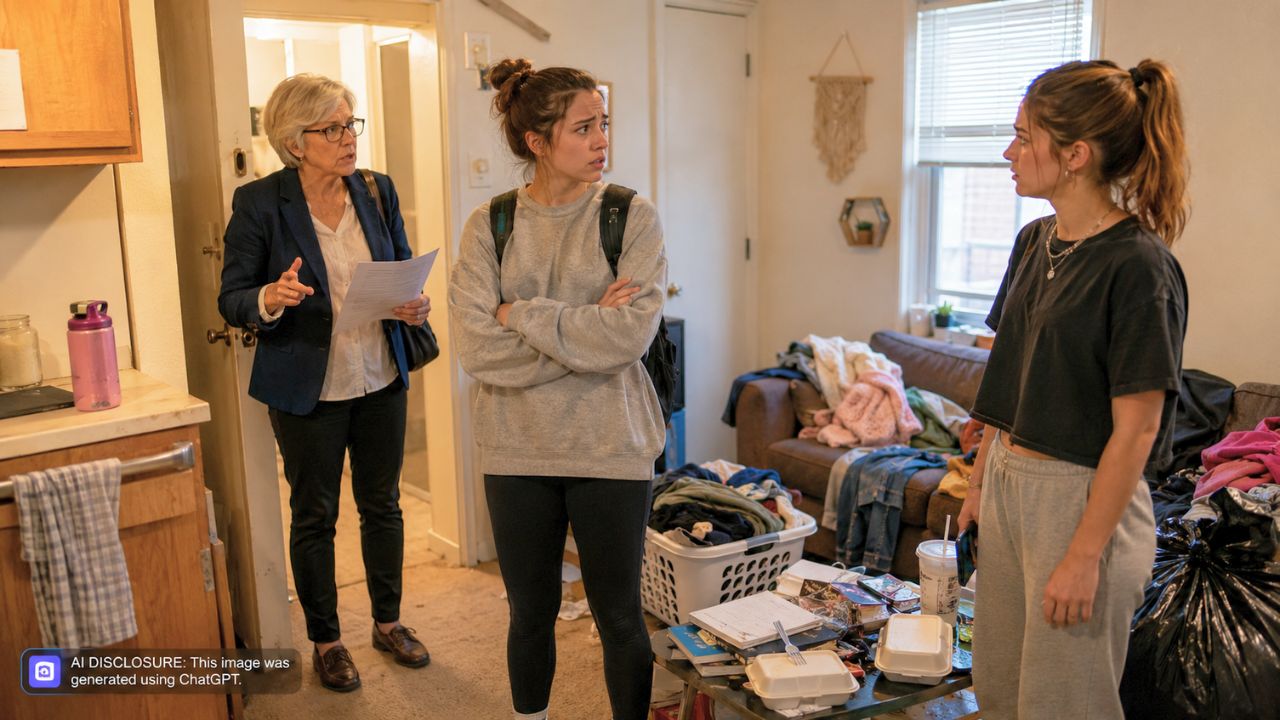
Photo credit: AI-generated image created using ChatGPT. Illustrative only.
An 18-year-old college student thought she’d found the perfect setup: a four-bedroom apartment near campus with cheap rent, space to settle in, and a chance to start fresh. Instead, she says she walked into a home already on the edge—one where the landlord had warned that her only roommate at the time was so messy she’d nearly been evicted.
In the original post, the student describes how she agreed to move in anyway, partly because the landlord offered to pay her to help restore the apartment. He also allegedly floated a deal: if she could bring in three new roommates, he’d evict the 23-year-old tenant. The student found two new roommates and hoped they could all coexist. Then the mess returned, and she says the behavior shifted from unpleasant to genuinely unsettling.
The landlord’s warning wasn’t subtle
Before the student even signed her lease, she says the landlord—someone she knew through college—gave her a blunt heads-up. The existing tenant was “disgustingly messy,” she wrote, describing moldy food, bugs, trash, and a sink packed so tight it couldn’t be used. It was bad enough that the landlord had “nearly evicted her already.”
Still, the student took the apartment. The rent was “dirt cheap,” and she believed she could handle the cleanup. She also says she felt empathy for the older roommate, who was struggling financially and trying to figure out life after dropping out of college.
At first, her plan sounded practical. She’d clean, set boundaries, and keep shared spaces usable while she helped bring in new roommates to fill the empty rooms. The landlord’s offer to pay her for restoration work made it feel less like she was rescuing a stranger and more like a tough-but-manageable arrangement.
Cleaning turned into containment
When she moved in, she says her fiancé came with her to clean and help move things into her bedroom. That’s when they found items left out in the living room that made it clear the apartment had no real “common space” standards yet. She described “witchcraft paraphernalia and sex dice” in the shared area.
She wasn’t offended by the items themselves, she emphasized. But she did ask that anything personal be kept out of common spaces. Trying to create a workable living situation, she scrubbed the apartment and even set up “dump zones” so the roommate’s belongings wouldn’t spill across the kitchen and living room.
For a while, she says, it worked. The arrangement wasn’t comfortable, but it was stable. The house wasn’t pristine, but it was livable, and there was at least an uneasy understanding that shared spaces had to stay usable for everyone.
Then the apartment slid back into chaos
Over the last month, the student says the mess “exploded” again. Moldy dishes reportedly covered surfaces. Counters were “crusted with food.” The sink stayed full, over and over, making daily routines like cooking and cleaning feel like an obstacle course.
The roommates tried to approach it carefully. The student says they wondered if the older roommate was depressed, and they attempted to help. Instead of accepting support, the roommate shut them out, leaving them stuck with the same problem—only now there were more people moving into the unit and fewer ways to avoid the common areas.
This wasn’t just about cleanliness anymore. The student’s tone shifts at this point from frustration to alarm, because she says the apartment’s tension started showing up in the roommate’s comments and behavior, not just in the kitchen sink.
The comments turned the mess into a safety issue
The student describes a series of remarks that she and the others found chilling. The roommate allegedly made offhand statements like, “I wouldn’t mind killing a stranger, just not someone I know,” then followed with reassurance: “don’t worry, I wouldn’t hurt YOU guys. I know you now.”
Then came a warning that landed differently in a shared home. The roommate told them to let her know if anyone was coming over, because if she thought a visitor was an intruder, she “has knives and knows how to use them.” According to the post, she didn’t leave it at that—she gave examples and techniques.
The student notes that she understands why a woman might learn self-defense. What rattled them was the framing, the intensity, and the way the talk about violence blended into the everyday life of the apartment. As the student put it, it felt like “another level.”
After that, she says knives began appearing in shared spaces—specifically hunting and woodworking knives left in the living room. One of the incoming roommates was already scared, and the student says everyone in the home was on edge.
Alongside the weapons, she describes behavior that seemed designed to unnerve the rest of the household: sitting silently in a dark corner with hair over her face, making strange noises, and running in and out of rooms at night in dark clothing “just to be scary.” The most recent moment pushed it into a new category for the student: she says the roommate “straight-up hissed” at her fiancé.
Eviction talk made everything feel more volatile
By the time the student posted, she says the landlord had been trying to contact the roommate about eviction. But the roommate was dodging his calls, leaving everyone in limbo—unable to count on a formal move-out date, and unsure how the roommate would react if she finally received an official notice.
That uncertainty shaped the day-to-day. The student says she started locking her bedroom door at night or having her fiancé stay over for peace of mind. Even though she describes the roommate as “small in stature” and believes the housemates could fend off an attack, she doesn’t present the fear as purely physical. It’s about unpredictability: the sense that tension is rising, boundaries are slipping, and the home environment is no longer stable.
In that context, the student’s core question is simple. Would she be wrong for telling the landlord she wants the roommate gone immediately—before the threats, knives, and fear escalate into something worse?
Reactions centered on documentation and not playing hero
While the post itself focuses on the student’s account, the practical pressure points are clear: safety concerns, property conditions, and the logistics of removing someone who won’t communicate with management. In stories like this, people tend to focus less on whether a tenant is “weird” and more on what can be proved and acted on.
The student already has a few concrete elements that typically matter in housing disputes: the landlord’s prior warning about near-eviction, ongoing unsanitary conditions in shared spaces, and repeated statements about knives and harming people. The fear factor may feel subjective, but a pattern of leaving blades in common areas and describing how they’d be used can become a documented safety issue, especially with multiple witnesses in the unit.
The post also hints at the tightrope the household is walking. Confronting someone who seems unstable can backfire, but staying quiet can normalize behavior that keeps escalating. With new roommates arriving, the stakes aren’t just the student’s comfort—they’re the group’s ability to live there without feeling like they need to barricade their doors at night.
The student’s final move, at least for now, seems to be pushing for a faster eviction timeline while trying to keep herself and the others protected in the meantime. Her question isn’t whether the roommate is messy anymore. It’s whether it’s reasonable to treat this as urgent—because in her home, it already feels that way.
Check out more from Now Rundown:
- A Party of 12 Came Back a Month Later Demanding Their $80 Tip Refunded — My Restaurant Made Me Pay It
- Her Coworker Kept Filing the Same Complaint About Her After Being Warned — Then She Filed a Counter-Report With Every Email Documented
- Siblings Demanded Half of Their Sister’s $11 Million Inheritance — She Refused Because They Never Visited
- The Kid I Bullied in Middle School Just Interviewed for a Job on My Team — He Bombed It and I Didn’t Hire Him

Abbie Clark is the founder and editor of Now Rundown, covering the stories that hit households first—health, politics, insurance, home costs, scams, and the fine print people often learn too late.