Bride Expected All 6 Bridesmaids to Buy $350 Dresses They’d Never Wear Again — One Said No
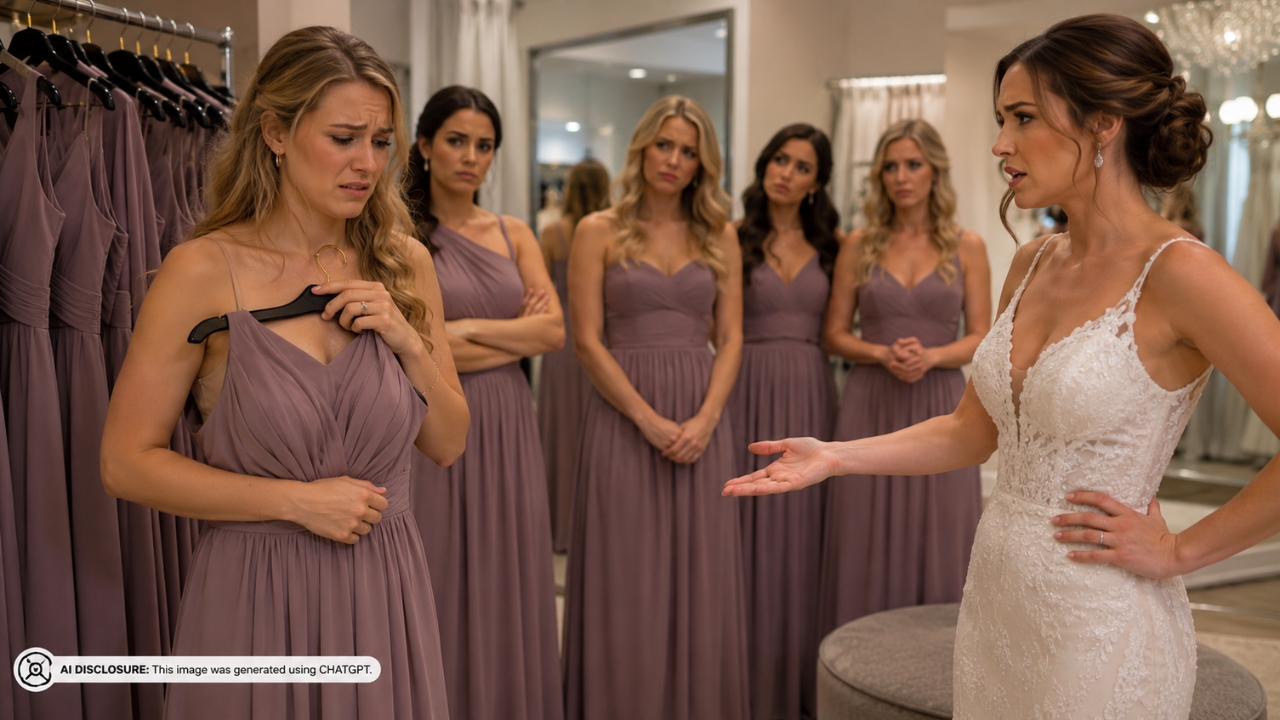
Photo credit: AI-generated image created using ChatGPT. Illustrative only.
When a 28-year-old woman agreed to stand up in her sister’s wedding, she thought the hard part would be showing up and smiling for photos. Instead, it quickly turned into a fight over a pricey bridesmaid dress and something much more personal: her ongoing weight loss.
Her sister “Bri,” 29, is getting married about a year from now. The woman said she and Bri aren’t especially close, so the bridesmaid invite caught her off guard—but she still felt happy to be included and wanted to support the day.
A bridesmaid ask that came with a deadline
The tension started when Bri sent the bridal party a link to the dress she wanted them to wear. The woman said she’d never been a bridesmaid before, but she understood it’s common for bridesmaids to buy their own dresses. What she didn’t expect was the cost: around $300 (framed in the headline as $350), which she described as pricey.
On top of that, Bri wanted everyone to order within a couple of weeks. The reason, she said, was practical: the dress was popular and she worried it could sell out if they waited.
For Bri, it sounded like a straightforward task—click, buy, done. For her sister, it collided head-on with a year-long plan she’s been carefully sticking to.
She’d already lost 75 pounds—and didn’t want to gamble on the size
The bridesmaid explained that she used to be extremely overweight and decided last year to take control of her health. She’s already lost 75 pounds, feels better than she has in a long time, and still hopes to lose about 60 more before the wedding.
Because of that, she said she isn’t buying new clothes right now unless they’re very cheap—“Goodwill or Walmart or something.” A formal dress costing hundreds of dollars didn’t just feel expensive. It felt like money spent on something that likely wouldn’t fit when the wedding arrives.
So she called Bri and said she wasn’t willing to buy the dress yet. Her plan was to wait until she’s closer to her goal weight and can buy something that actually fits.
“Just buy it now” turned into “slow down your weight loss”
Bri didn’t take the delay well. According to the woman, Bri pushed back by suggesting she buy the dress in her current size and wear it loose at the wedding.
But the bridesmaid said this wouldn’t be a minor tailoring issue. If she hits her target, she expects to be nearly 60 pounds lighter by the wedding date. In her view, the dress wouldn’t look slightly roomy—it would “literally fall off.”
That’s when the conversation took a sharper turn. Bri asked if she could slow down her weight loss until after the wedding so the dress would fit. The bridesmaid said no, flatly. She described her progress as slow and steady already, and said she feels amazing and doesn’t want to put her health goals on hold for anyone’s event.
From there, what began as a shopping question became a dispute about priorities: one sister focused on uniform wedding-party photos and planning certainty, the other focused on not paying hundreds for a dress that won’t fit and not being told to pause a major health change.
Three options, and none of them landed
Trying to keep it from spiraling, the bridesmaid said she offered Bri three solutions. First: let her wait to buy the dress until closer to the wedding. Second: if Bri insisted on ordering immediately, Bri could buy the dress herself. Third: if neither worked, she could drop out of the bridal party—especially since Bri has people she’s closer with anyway.
But she said Bri didn’t seem satisfied with any of those choices. Even the option of replacing her in the bridal party didn’t appeal to Bri, which left the bridesmaid feeling cornered: she was expected to spend the money now and accept whatever the fit looked like later.
Bri told her she was ruining the wedding and framed it as a question of loyalty—saying the day was about the bride, not the bridesmaid, and asking why it mattered if the dress was “a little loose.” The bridesmaid hung up to give Bri time to cool off, but the blowback didn’t end there.
Soon after, their mother called. Instead of mediating, she sided with Bri, telling the bridesmaid she was being a horrible sister and selfish for not just ordering the dress.
The message was consistent from both: it’s the bride’s day, and the bridesmaids should just comply. The bridesmaid’s response, though, wasn’t really about refusing to participate—it was about refusing to buy a specific dress at a specific moment, under pressure, while her body is still changing.
It wasn’t only about money—it was about the photos
The woman was candid about why this hit such a nerve. Before losing weight, she said she wouldn’t have cared if she wore a too-loose dress because she thought of herself as “fat and ugly” anyway. Now she’s finally starting to feel confident, and she puts more intention into buying clothes that flatter her shape, even if they’re inexpensive.
She also sees this wedding as a milestone. It may be the first formal event she attends after her weight loss, and she expects there will be plenty of pictures. She wants to look her best in those photos—something she connects directly to the effort she’s made and the progress she hopes to continue making.
That’s where the dress stops being a simple uniform and becomes symbolic. Bri is picturing cohesive wedding aesthetics and checking items off a timeline. Her sister is picturing a dress that either doesn’t fit at all or makes her feel like she’s wearing a sagging reminder of an older version of herself.
In the middle sits a practical problem: ordering too early can create expensive alterations or wasted money, but ordering too late can mean limited stock or rushed tailoring. The full details are laid out in the original post, where the bridesmaid asked if she was wrong to hold the line.
The real fallout is family pressure, not just a dress order
At this point, the wedding is still a year away, but the fight has already expanded beyond the bridal party. The mother’s call effectively turned it into a family loyalty test, with the bridesmaid painted as the one disrupting the plan.
And even though she offered to step aside entirely, Bri didn’t embrace that off-ramp. That leaves the bridesmaid stuck between two unpleasant outcomes: spend hundreds now on something likely to be unwearable later, or absorb the family backlash that comes with refusing.
In the near term, the most immediate consequence is relational. A disagreement over a dress has become a referendum on whether her health goals and personal confidence are allowed to take up space in someone else’s wedding year.
For the bridesmaid, the question isn’t whether she’ll show up for her sister—it’s whether showing up requires her to pay for a dress on a deadline that doesn’t match her life, and to accept demands that would slow down the progress she’s fought hard to make.

Abbie Clark is the founder and editor of Now Rundown, covering the stories that hit households first—health, politics, insurance, home costs, scams, and the fine print people often learn too late.