Applebee’s Operator Paid $270,000 After Managers, Coworkers, and Customers Harassed at Least Six Female Employees, Some of Them Minors
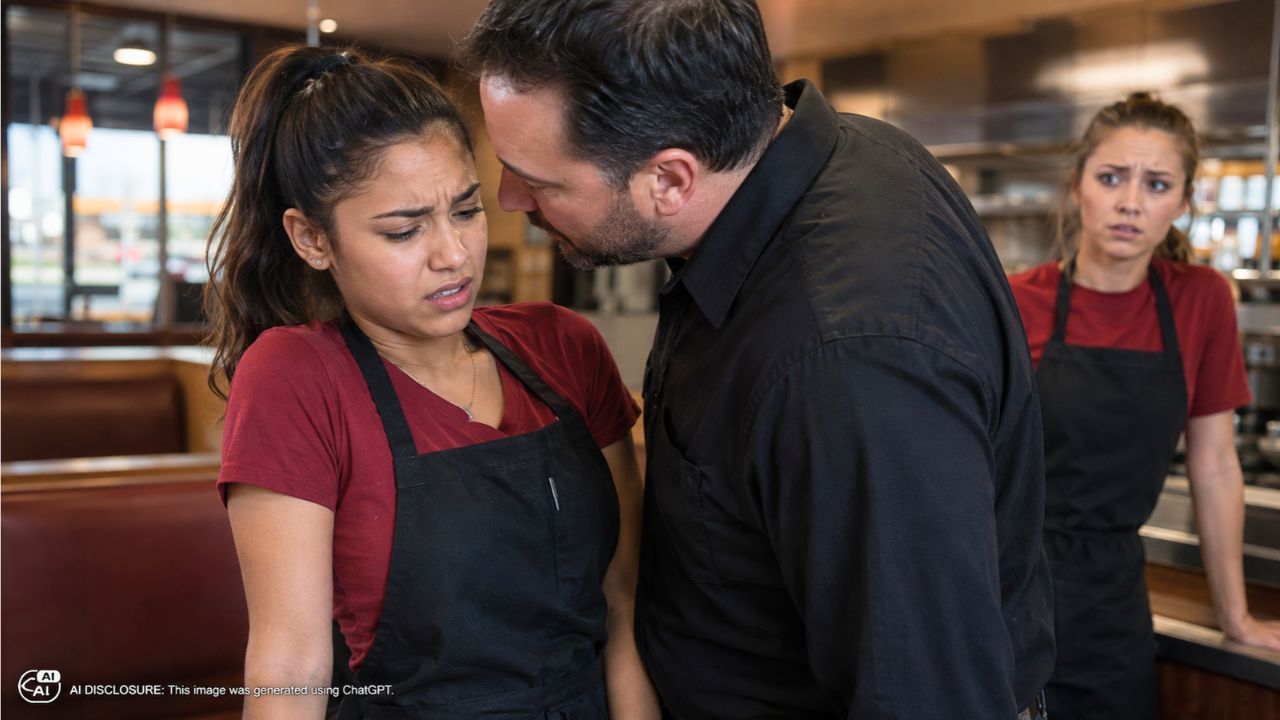
Photo credit: AI-generated image created using ChatGPT. Illustrative only.
In a busy chain restaurant, it’s easy for a crude comment to get shrugged off as “just how it is.” But in one Alabama Applebee’s, federal officials say it didn’t stop at one comment—or one person—and young female employees paid the price until several felt they had no real choice but to quit.
This week, the U.S. Equal Employment Opportunity Commission announced a settlement with Quality Restaurant Concepts, LLC (QRC), an operator of roughly 60 Applebee’s-branded locations across the Southeast. In the EEOC’s release, the agency said QRC will pay $270,000 and agree to other changes to resolve a lawsuit alleging sexual harassment, constructive discharge, and retaliation tied to a hostile work environment that affected at least six female employees, including minors.
How it looked on the floor: comments, advances, and physical contact
The EEOC’s case centers on QRC’s Applebee’s restaurant in Chelsea, Alabama, where the agency says harassment began around April 2023 and spread into the daily rhythm of work. The allegations include unwelcome sexual comments, sexual advances, offensive conduct, and physical contact by the location’s general manager.
What made it harder, according to the agency, was that the general manager wasn’t the only problem. The EEOC said other male employees and even customers were also engaging in similar conduct—and management did not stop it.
In restaurants, the line between “the customer is always right” and “employees deserve to feel safe” can get tested fast. The lawsuit’s picture is one where that test failed repeatedly, and young workers were left navigating harassment while trying to do basic front-of-house and bar duties.
Complaints were made, but the alleged behavior kept going
The part that tends to turn workplace harassment into a major legal problem is what happens after someone complains. Here, the EEOC says the company received complaints and still failed to take appropriate action.
One detail stands out in the agency’s description: the general manager allegedly had a prior history of sexually harassing a minor female employee at another QRC restaurant. Despite that, the EEOC says QRC allowed him to continue working closely with young female employees.
The lawsuit also describes another flashpoint: when a minor female employee complained about sexual harassment by a much older adult bartender, the company allegedly again failed to take appropriate action. In the EEOC’s view, that wasn’t a one-off mistake—it was a pattern of letting the workplace stay unsafe even after warnings.
When quitting becomes the only way out
The EEOC says multiple female workers eventually felt compelled to leave their jobs. That’s the heart of the “constructive discharge” claim: not just that the environment was hostile, but that it was hostile enough that employees reasonably believed they couldn’t stay.
In practical terms, quitting a restaurant job is rarely clean. It can mean lost income, scrambling for a new schedule, and explaining to family why you walked away from a paycheck. For minors and younger employees, it can also mean losing an early work reference, dealing with parents or guardians getting involved, and feeling like you’re the one taking the hit for someone else’s behavior.
The EEOC also included retaliation as part of the lawsuit it filed, signaling the agency believed there were consequences tied to reporting. The release does not lay out the specific retaliatory acts, but it places retaliation alongside harassment and constructive discharge as part of the same alleged breakdown in how complaints were handled.
The settlement: money, but also training and policy changes
QRC agreed to pay $270,000 to settle the case and provide additional relief. The EEOC framed the non-monetary terms as “injunctive relief”—the practical, day-to-day requirements meant to keep the same thing from happening again.
Those terms include mandatory training requirements, policy changes, and reporting obligations. The agency emphasized manager accountability, signaling that the settlement isn’t just aimed at curbing bad behavior from a single employee, but at forcing the operator to respond faster—and more seriously—when complaints come in.
Marsha Rucker, the EEOC’s regional attorney for the Birmingham District Office, highlighted the vulnerability of teens and young workers in restaurants and pointed to “strong policies and procedures” so complaints are taken seriously and investigated. Acting district director Linda Sales-Long said the decree’s training, policy changes, and reporting requirements are designed to ensure complaints are properly handled and managers are accountable for protecting vulnerable workers.
Why the EEOC leaned in on young workers
Even in a short press release, the agency repeatedly comes back to age and power imbalance. The allegations involve minors, a general manager with authority over scheduling and day-to-day working conditions, and a much older adult bartender accused of harassing a minor employee.
That’s a combination that can trap younger employees. They may not know what crosses the line legally, may fear being labeled “dramatic,” and may not trust that complaining will help—especially if the person they’re complaining about is the one holding the keys to their shifts.
The EEOC plugged its Youth@Work resources for teens and young workers, along with its general sexual harassment information. That’s not just PR; it’s a signal that this case is being used as a reminder: if you’re underage or in your first job, you still have rights at work, and employers still have obligations.
What people tend to focus on in cases like this
When workplace harassment cases hit the public, the same practical questions come up fast: Who did they tell? Was it documented? Did management respond? Did the company already know something about the accused person?
Based on the EEOC’s description, those pressure points were right at the center of the lawsuit. The agency didn’t just allege harassment occurred; it said complaints were made, that there was a prior history involving a minor at another location, and that the company still kept the general manager in close working contact with young female employees. That kind of timeline is often what people look for when deciding whether a company acted responsibly or gambled that employees would simply endure it or leave.
For workers watching from the outside—especially young servers and hosts—this case is also a reminder that harassment doesn’t have to come only from coworkers to be a workplace problem. The EEOC’s account includes customers, and it blames management for failing to stop that behavior, too.
The lawsuit, filed as EEOC v. Quality Restaurant Concepts, LLC d/b/a Applebee’s in federal court in Northern Alabama, ended in a settlement that puts real money on the table and forces operational changes. It won’t give those employees their time back, and it won’t erase why they left. But it does lock in new requirements meant to keep the next teenager who picks up a shift from walking into the same kind of environment.
Check out more from Now Rundown:
- A Party of 12 Came Back a Month Later Demanding Their $80 Tip Refunded — My Restaurant Made Me Pay It
- Her Coworker Kept Filing the Same Complaint About Her After Being Warned — Then She Filed a Counter-Report With Every Email Documented
- Siblings Demanded Half of Their Sister’s $11 Million Inheritance — She Refused Because They Never Visited
- The Kid I Bullied in Middle School Just Interviewed for a Job on My Team — He Bombed It and I Didn’t Hire Him

Abbie Clark is the founder and editor of Now Rundown, covering the stories that hit households first—health, politics, insurance, home costs, scams, and the fine print people often learn too late.