Divorced Man Refused to Let His Ex-Wife Host Her Family at the House He Won in Their Divorce — Even for Her Grandmother’s Funeral
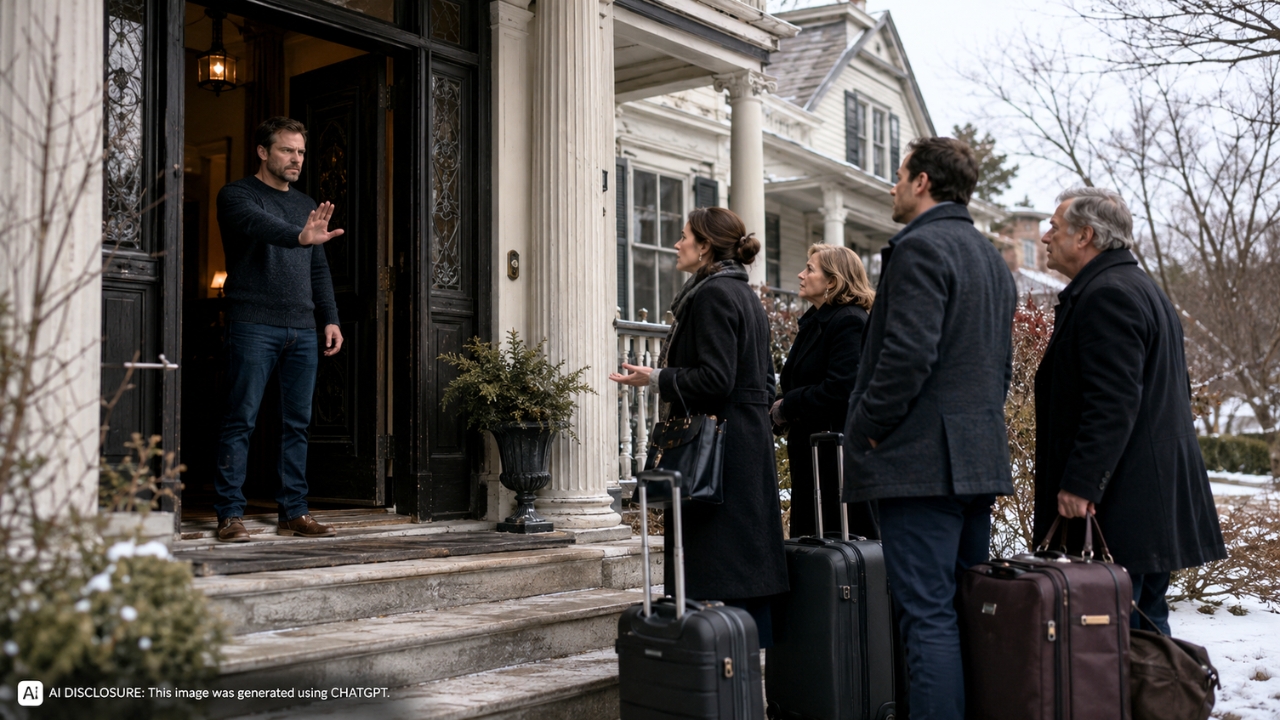
Photo credit: AI-generated image created using ChatGPT. Illustrative only.
A man who recently finalized his divorce thought the hardest part was over—until family members of his ex-wife started showing up at his front door with luggage, expecting to stay the week for a funeral.
In the original post, he explains that the home in question is the large, early-1900s house that had belonged to his ex-wife’s family for generations. But after their split, a court awarded him the vast majority of ownership, and he ultimately bought her out. Now he lives there alone, and he says he’s done being treated like the house is still a family hotel.
A family home that came with strings attached
The house wasn’t just a piece of property—it was a tradition. Built in the 1910s and long used as the default place for visiting relatives to crash, it remained the go-to “everyone stays here” spot even after the couple bought it during their marriage.
According to the man, that expectation wasn’t a small annoyance. He says hosting her relatives for “anything” continued routinely, and it even factored into his decision to divorce. The home was big enough to accommodate guests, but he describes the pattern as something he never agreed to long-term.
When they purchased the property, he says it was funded primarily with his pre-marital savings and inheritance. He also added that the house wasn’t a sweetheart deal from the family—he claims it had been on the market for a year, had seen price cuts, and they ultimately paid the original listed price that matched the appraisal.
The divorce settled the house—at least on paper
When the marriage ended earlier this year, the house became the central fight. The court, he says, determined that about 90% of the home belonged to him under a postnup agreement.
His ex-wife reportedly tried multiple options to keep it tied to her family name. He says she floated scenarios where she would keep the house or place it into a trust for their child so it would remain “in the family.”
He refused anything that blocked his control of the asset. He says he would only agree to one of three outcomes: sell the home, have her buy him out, or buy her out. They chose the buyout because she didn’t have the money to purchase his share.
He adds a detail that complicates the emotional side: his preference would’ve been for her to buy him out. When she couldn’t, he wanted to sell. Instead, he says she begged him to keep the house, and he agreed—just not under conditions that would prevent him from selling later.
Then the funeral brought the old expectations rushing back
The day after Christmas, his ex-wife’s grandmother died after years of illness. He says the couple originally bought the home because the grandmother could no longer live alone and needed money for end-of-life care, which makes the loss feel closely tied to the house itself.
But grief didn’t change the logistics of who owns the property now. The real collision came when his ex-wife’s cousin arrived at the house with his family ahead of the funeral, expecting to stay there.
The cousin and his sister had apparently texted the ex-wife saying they’d be staying at “the house”—the family’s longtime shorthand for the property. The ex-wife, he says, told them it was fine.
To him, that meant she volunteered a home she no longer owned. He called her and asked why she had offered up his place to host people. She apologized, saying she’d been overwhelmed handling funeral planning, but then asked if he’d agree anyway because the family didn’t have space without using the house.
He drew a hard line, and it got tense fast
He told her no. In his telling, his answer wasn’t vague or negotiable: he said they needed to get hotels or make other arrangements.
His ex-wife pushed back, saying relatives didn’t have money for hotels and were struggling financially. She also argued it would be easy because the house has “plenty of extra room,” including a finished basement with its own bathroom, kitchen, and separate entry and exit—essentially a self-contained setup.
He still refused. He says she became upset and hung up. With the relatives already at the door, he took the next step and told the cousin and his family they could not stay.
That’s where the real-world consequences snap into focus. This wasn’t a theoretical disagreement about boundaries; it was a moment where tired travelers were suddenly displaced, and the grieving side of the family was forced to scramble days before a funeral.
What people zeroed in on: ownership, boundaries, and practical risks
Much of the reaction centered on a basic point: the house isn’t her property anymore, and she can’t promise it to anyone—especially without asking. Even with a funeral involved, commenters tended to treat it like a consent issue as much as a family one.
Others focused on why the man was so firm. He emphasized that the house being treated as open lodging was part of what drove the divorce, so agreeing “just this once” could reopen a door he spent years trying to close. A finished basement might sound separate, but once guests are inside, the boundary is no longer theoretical.
There were also practical concerns that come up whenever someone’s home becomes a default crash pad: liability if someone gets hurt, the risk of damage, and the possibility that “just a few nights” turns into extended stays because someone can’t afford to leave. Even when guests are well-intentioned, the host takes on the stress.
And then there’s the co-parenting dynamic. The post makes it clear they share a child, and people noted that fights like this don’t stay isolated. A blowup over lodging can bleed into custody schedules, communication, and future family events where someone assumes the same access again.
The house is settled, but the expectation isn’t
The man says he has no current plans to sell the home, and he also says he has a trust in place for his young son to inherit his assets when he dies. But he refused the ex-wife’s earlier trust proposal that would effectively lock the house into the family line and restrict his ability to sell later if he needed to.
That detail explains why this funeral request didn’t feel like a one-off to him. From his perspective, his ex-wife is still trying to treat the property as an extension of her family’s infrastructure, even after a court decision and a buyout changed the legal reality.
For now, the immediate outcome is simple: the relatives who arrived expecting to stay were told to find somewhere else. The bigger outcome is messier. A death in the family tends to bring people together—but in this case, it also exposed how quickly old habits can clash with a new life, especially when the “family house” no longer belongs to the family.
Check out more from Now Rundown:
- A Party of 12 Came Back a Month Later Demanding Their $80 Tip Refunded — My Restaurant Made Me Pay It
- Her Coworker Kept Filing the Same Complaint About Her After Being Warned — Then She Filed a Counter-Report With Every Email Documented
- Siblings Demanded Half of Their Sister’s $11 Million Inheritance — She Refused Because They Never Visited
- The Kid I Bullied in Middle School Just Interviewed for a Job on My Team — He Bombed It and I Didn’t Hire Him

Abbie Clark is the founder and editor of Now Rundown, covering the stories that hit households first—health, politics, insurance, home costs, scams, and the fine print people often learn too late.