Neighbor Replaced the Shared Fence Without Any Agreement — Then Sent a Bill for $1,800
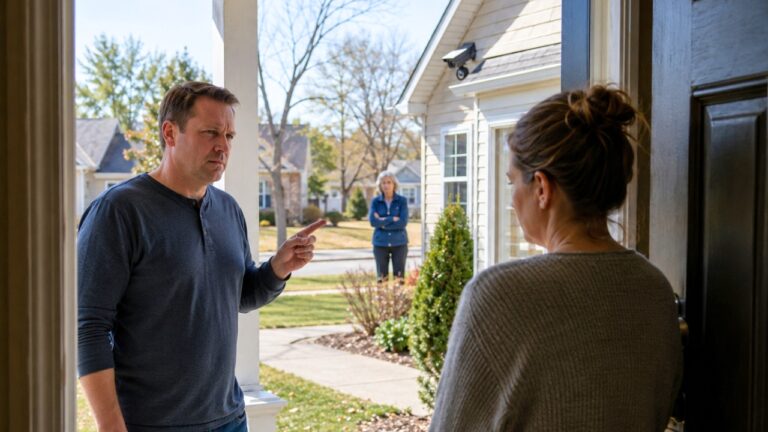
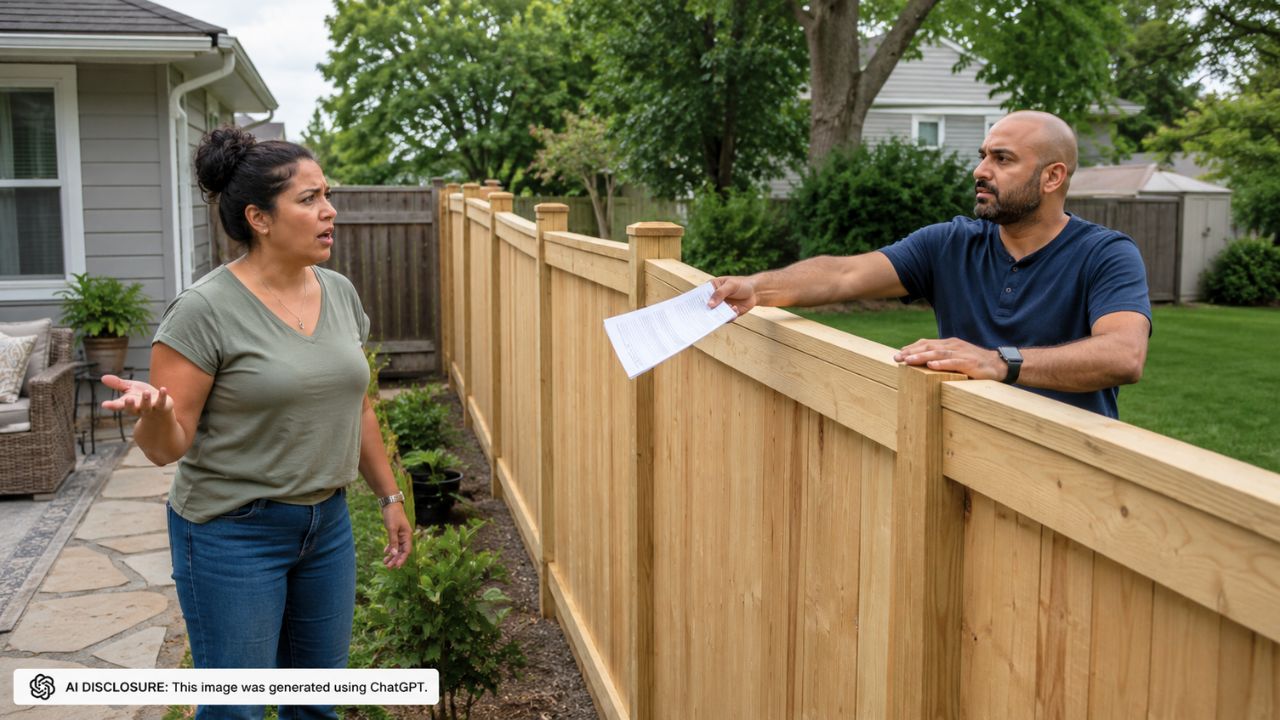
Photo credit: AI-generated image created using ChatGPT. Illustrative only.
A crumbling garage, a missing fence line, and two neighbors who thought they were being reasonable—until an invoice showed up. That’s the mess described in the original post, where a homeowner says their neighbor replaced a shared boundary fence without a clear agreement and then demanded hundreds of dollars afterward.
The homeowner lives in a city neighborhood with no HOA, in a property setup that already sounds like a headache: a small, deteriorating brick garage built in 1922 sits right on the property line along the north side. Their yard isn’t fenced, and they don’t care to fence it. Their neighbors, though, do have a fenced-in property—and for years, the existing fence plus the garage created a “divider” between the two backyards.
A fence upgrade that felt simple—until it didn’t
About a year earlier, the neighbors decided to replace all of their fencing. The homeowner says they told them they planned to demolish the old garage and rebuild something new in the near future, so the boundary area wasn’t exactly a permanent structure.
When the neighbors replaced the section bordering the homeowner’s property, they didn’t build fencing along the side of the garage. Instead, they treated the garage wall itself as part of the barrier, essentially using it like a fence panel.
Even though they didn’t need a fence, the homeowner says they tried to be neighborly and paid for half of that stretch anyway—about $800 for roughly 35 feet of wood fencing. They also say the neighbors declined to split the cost of a survey, so nobody pinned down the exact property line in writing.
The hidden detail: one-sided finishing and a fuzzy property line
Only later did the homeowner realize what they’d actually helped pay for: a wood fence finished with paneling on the neighbors’ side only, while their side showed exposed framing. They didn’t raise the issue at the time, but it became part of the bigger frustration once money came up again.
The property line question also lingered in the background. The homeowner believes the existing fence is probably on the neighbors’ property, but admits they don’t know for sure. That uncertainty matters, because paying “half” can feel like a friendly gesture when a fence is truly shared—but feels very different if it’s someone else’s structure on someone else’s land.
At the same time, the garage itself was turning into a ticking clock. The homeowner describes it as decrepit enough that a stiff breeze could bring it down. That estimate turned out to be close to the truth.
The garage collapses, and the “fence” disappears overnight
A couple of weeks before the bill fight, the garage partially collapsed. With snow potentially coming and the structure already unstable, the homeowner says the demolition had to happen quickly for safety reasons.
They told the neighbors they were lining up demolition. A couple of days later, they said demolition would start that day. The next day, the garage wall that had functioned as the neighbors’ “fence” came down.
From the neighbors’ perspective, the loss was immediate and practical: a gap opened up where they were used to having a barrier. The homeowner says they explained the urgency—the garage was a hazard and could collapse into the neighbors’ patio space, where there’s a 14-month-old baby and a dog.
The neighbors were still upset. They complained they weren’t given enough notice, and that their property was no longer secure because of the gap. They also described it as an unexpected inconvenience and expense, and told the homeowner they were “lucky” to be able to handle the issue.
A new fence goes up—and then comes the request for money
About two weeks after the demolition, the neighbors installed a new fence in the gap: a framed corrugated metal fence spanning about 18 feet. Shortly after, they asked the homeowner to pay half the cost—$850.
The homeowner balked at both the process and the price. By their math, that’s nearly $100 per foot, far more than the earlier section they helped pay for. More importantly, they say they never agreed to split this new fence, didn’t need it for their own use, and wouldn’t have approved that cost if asked ahead of time.
They also point out a zoning detail: city rules allow them to build right up to the property line. So even if they wanted to fence their own property in the future, they claim they wouldn’t necessarily need a fence in that location—because a structure could go there instead.
In their view, the neighbors chose a fence for their own security and convenience, on what is believed to be their own property, without presenting an estimate or getting any approval. The neighbors, on the other hand, argue it’s only “fair” for the homeowner to pay because the garage demolition created the gap and forced their hand.
Where people landed: pay nothing, pay something, or get the line surveyed
The post was ultimately labeled “Not the A-hole,” signaling that many readers sided with the homeowner’s refusal to pay the $850. The logic is straightforward: you can’t unilaterally buy something and then send someone else a bill for it, especially when there was no agreement in advance.
A big thread running through reactions was the importance of documentation and boundaries—literally. With a fence that may or may not be on one party’s property, readers focused on the value of getting a survey before money changes hands, not after. The neighbors had declined to split a survey earlier, which made the later demand for shared payment feel even more lopsided.
Others zeroed in on communication and timing. The homeowner did give notice, but it was rapid notice—days, not weeks—and the neighbors experienced the consequences immediately when the wall came down. Even so, many felt the safety hazard explanation mattered: if a structure is actively collapsing, delaying demolition for convenience could create bigger risks for everyone nearby.
There was also a practical fairness point: the homeowner already paid $800 toward the neighbors’ fencing despite not needing a fence at all. To some, that earlier payment was evidence they weren’t trying to stiff anyone—they just didn’t want to be treated like an automatic co-signer for every future upgrade.
For now, the tension sits in that uncomfortable neighborhood limbo: a new metal fence stands where the garage wall used to be, and two households disagree over who should pay for it. One side sees a shared boundary problem created by demolition. The other sees a private improvement ordered without consent—and a bill that arrived after the work was already done.
Check out more from Now Rundown:
- A Party of 12 Came Back a Month Later Demanding Their $80 Tip Refunded — My Restaurant Made Me Pay It
- Her Coworker Kept Filing the Same Complaint About Her After Being Warned — Then She Filed a Counter-Report With Every Email Documented
- Siblings Demanded Half of Their Sister’s $11 Million Inheritance — She Refused Because They Never Visited
- The Kid I Bullied in Middle School Just Interviewed for a Job on My Team — He Bombed It and I Didn’t Hire Him

Abbie Clark is the founder and editor of Now Rundown, covering the stories that hit households first—health, politics, insurance, home costs, scams, and the fine print people often learn too late.