Woman Refused to Raise Her Sister’s Three Kids While She Chooses Addiction Over Them — After Years of the Family Enabling Her
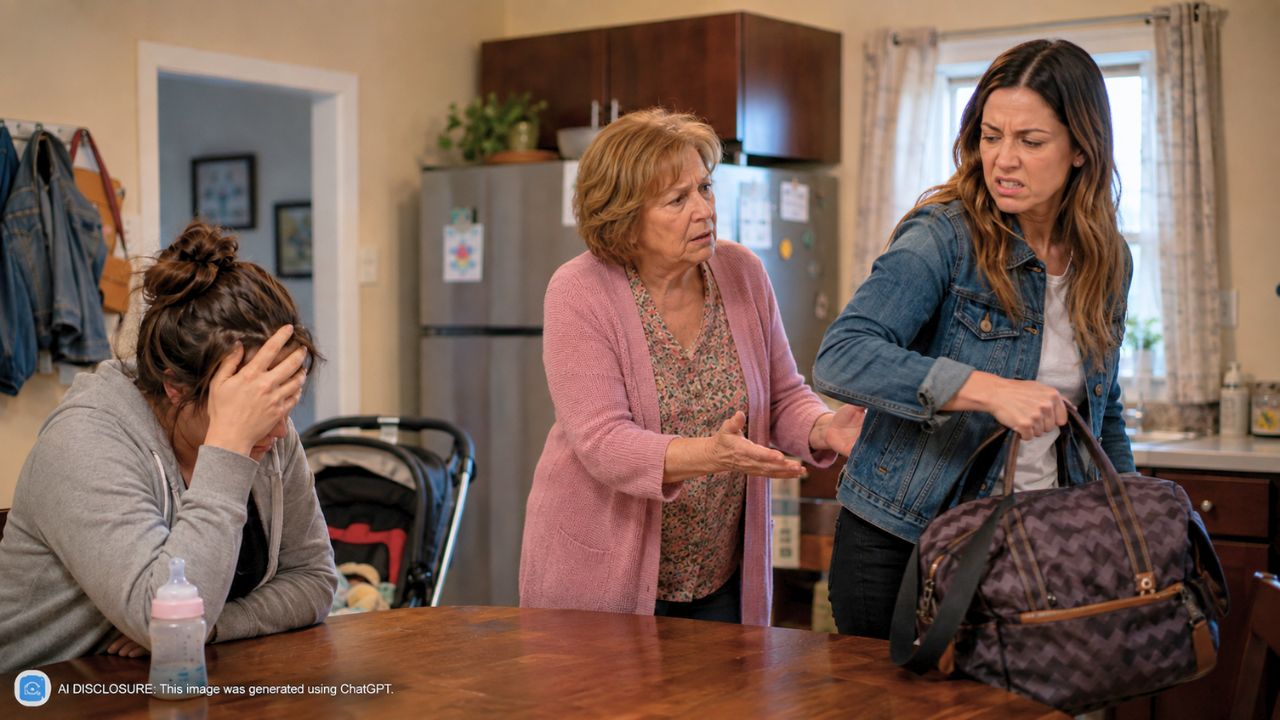
Photo credit: AI-generated image created using ChatGPT. Illustrative only.
A 35-year-old woman says she’s reached the point where love for her nieces and nephews isn’t enough to make her their full-time safety net. After more than a decade of watching her younger sister spiral in addiction—and after years of relatives stepping in to cover the damage—she’s now being pressured to take in her sister’s three kids permanently. Her account, shared in the original post, reads like a slow-moving emergency that finally stopped feeling survivable.
She’s single and doesn’t have children of her own. She also says she doesn’t have built-in childcare, extra money, or family support lined up. What she does have is a family that, in her view, has made addiction easier to keep choosing—by always cleaning up the mess.
The pattern was set years ago, and everyone played a role
According to her, her 33-year-old sister has been addicted for more than 10 years. The family’s response became predictable: when the sister disappeared, someone else would step in for the kids. When consequences hit, someone else would pay. When promises were made, everyone hoped it would finally be different.
The behavior she describes wasn’t subtle. She says her sister has had DUIs, wrecked cars, and even gone missing for weeks at a time, including while pregnant. Each new crisis was another blow to their parents, and another reason the family would scramble to keep the children afloat.
She admits they enabled her sister for years through money, vehicles, and childcare. But she also says that the enabling didn’t bring stability—it just bought time until the next disappearance.
When the chaos hit her own home, she cut the cord
This year, she stopped participating. Not because she stopped caring, but because she says the cost became personal and unsafe. She describes her sister stealing from her, sneaking drugs into her house, and bringing “unsafe people” around.
That was the line. She took her car back, cut her sister off, and tried to enforce boundaries that weren’t negotiable. Instead of support, she says she got backlash—especially from family members who were angry that she wouldn’t keep absorbing risk.
For her, the anger was telling. It suggested the family had grown used to having a designated “fixer,” and when she stepped away, the pressure didn’t shift toward accountability—it shifted toward finding someone else to carry it.
The three-week disappearance changed the custody conversation overnight
The most recent escalation came when her sister vanished again—this time for three weeks—with no word to anyone, including her children. When she returned, the woman says her sister acted as if nothing had happened.
Her father took the kids temporarily. But the temporary arrangement quickly started to sound permanent, and her parents turned to her with a specific argument: because she’s “in the same generation” as her sister, she should be the one to take the children full-time.
What stung more is that she has two other siblings, but says her parents aren’t pressuring them in the same way. In her edits, she adds that those siblings are men, which may be influencing the family’s expectations about who becomes the default caregiver.
She says she loves the kids and doesn’t want them to feel rejected. But she also doesn’t want to become the person who sacrifices her life while the children’s mother continues choosing addiction without acknowledging the harm. In her words, she didn’t choose to have kids—and she’s being asked to reorganize everything anyway.
Guilt, fear, and the quiet threat of being blamed later
The hardest part, she says, is the guilt. She worries that if she says no, the children might grow up resenting her, believing she didn’t want them. She also describes a painful dynamic with her mother: reminders to the kids that their grandmother doesn’t want to care for them daily, said without shame.
That detail reframes the pressure campaign. It’s not just about logistics; it’s also about family narrative—who will be labeled selfish, who will be labeled “the one who stepped up,” and who will be blamed for what happens next.
She says her therapist has told her it’s okay to say no. But therapy doesn’t stop the nonstop guilt-tripping, and it doesn’t solve the core problem: three children need stability, and the adults around them are stuck choosing between bad options.
Documentation, CPS calls, and the limits of what outsiders can “prove”
Trying to protect the kids without taking them on full-time, she says she contacted CPS three times this year to report neglect and to document the addiction, hoping it would lead to mandated help and add a layer of protection when the kids are in their mother’s care.
She also makes it clear that the children’s father isn’t a safe backup plan. She describes him as an addict as well, involved in distributing, and without stable housing.
Then came a frustrating twist: she later learned the father’s girlfriend also called CPS, prompting an investigation. According to her update, CPS found nothing wrong with the living situation and her sister passed a drug test.
For the woman, that outcome didn’t bring relief—it raised alarms about how easily the system can miss what families see firsthand, and how quickly a manipulative person can present well enough to clear a hurdle. She says her sister still refuses to acknowledge substance abuse and won’t get help.
Reactions focused on boundaries, safety, and not becoming the next “enabler”
While she didn’t paste comments directly, the responses she thanked and referenced clearly pushed her toward practical steps: keep boundaries, keep documenting, and don’t let family pressure turn her into the next long-term solution for her sister’s choices.
People also urged her to think in terms of safety and sustainability. Taking in three kids “out of guilt” can collapse fast if there’s no childcare plan, no financial support, and no unified family agreement—especially when the addicted parent continues to pull strings from the sidelines.
Another theme she echoes herself is that saying no doesn’t equal not caring. In families shaped by addiction, refusing to be used can be the only way to stop the cycle from recruiting new victims.
In her final update, she says she still loves her sister and wants her to succeed, but she’s done bargaining with reality. She plans to keep her boundaries, stay in therapy, and hold firm even as her family tries to hand her a role she never agreed to play—raising three children because everyone else is exhausted from the years they spent making addiction easier to survive.
Check out more from Now Rundown:
- A Party of 12 Came Back a Month Later Demanding Their $80 Tip Refunded — My Restaurant Made Me Pay It
- Her Coworker Kept Filing the Same Complaint About Her After Being Warned — Then She Filed a Counter-Report With Every Email Documented
- Siblings Demanded Half of Their Sister’s $11 Million Inheritance — She Refused Because They Never Visited
- The Kid I Bullied in Middle School Just Interviewed for a Job on My Team — He Bombed It and I Didn’t Hire Him

Abbie Clark is the founder and editor of Now Rundown, covering the stories that hit households first—health, politics, insurance, home costs, scams, and the fine print people often learn too late.