“I handed Trump the strongest economy in the world,” Biden says as he also claims border crossings were lower when he left
Photo credit: miss.cabul/Shutterstock.com
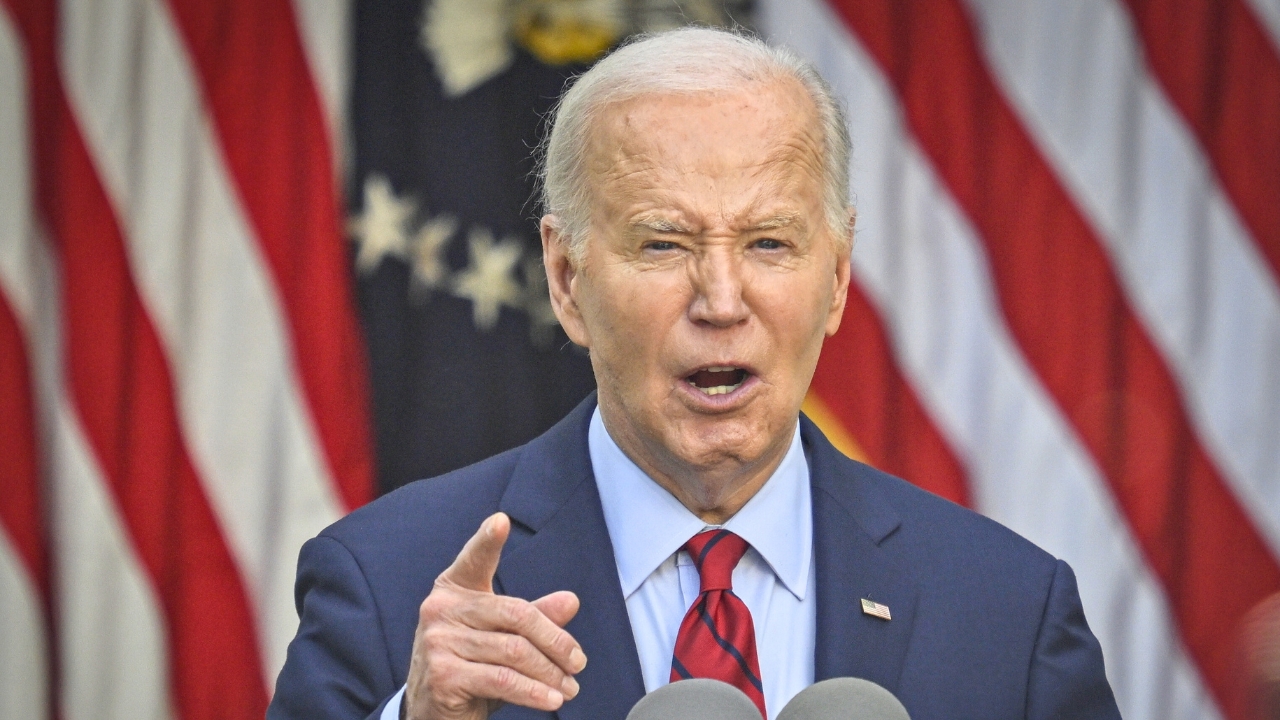
Former President Joe Biden pushed back against President Donald Trump’s border and economy messaging in remarks highlighted by Fox News, saying illegal crossings were lower when he left office than when he entered and insisting he handed Trump “the strongest economy in the world.”
“The day I left office, border crossings in the United States were lower than the day that I entered an office inherited from Trump,” Biden said, according to the clip posted by Fox News. “On the day I left office, I handed Trump the strongest economy in the world. In the world, that’s not hyperbole. That’s a fact!”
Border crossings claim hinges on what “the day” is measuring
Public border statistics are typically reported as daily averages and monthly totals rather than a single nationwide “border crossings” number for a specific calendar day. But the available federal reporting does provide context for Biden’s broader comparison.
When Biden entered office in January 2021, Customs and Border Protection reported nearly 78,000 enforcement encounters that month, reflecting a rising trend at the end of Trump’s first term.
Near the end of Biden’s term, the Department of Homeland Security said the 7-day daily average of encounters was about 1,150 (as of Jan. 17, 2025), after a period of reduced flows tied to stepped-up enforcement.
Separately, a Washington Office on Latin America update, citing CBP data shared with Fox News, said there were 20,086 encounters in the seven days before Trump’s January 2025 inauguration (Jan. 13–19), a figure often used in public comparisons around the transition.
The bottom line: Biden’s “lower when I left than when I entered” framing is plausible depending on the measure used (monthly totals or daily averages), but “the day I left” vs. “the day I entered” is not a standard CBP comparison, and readers should treat it as a shorthand for broader period-to-period trends rather than a single-day statistic.
“Strongest economy in the world” is partly definitional, partly debatable
On the economy, Biden’s claim has two different meanings:
By size, the U.S. economy is the world’s largest in nominal terms, and international forecasters have repeatedly projected the U.S. to outperform many other advanced economies on growth. The IMF’s January 2025 update noted the United States was stronger than previously projected, while other major economies were weaker. The OECD similarly projected stronger U.S. growth than the euro area and other peers.
By “strength” as lived experience, the picture is mixed. Supporters point to growth and job-market resilience; critics point to elevated prices after the post-pandemic inflation surge and continued affordability pressures. That debate has become a central political argument as Trump claims he inherited a troubled economy and Biden allies argue the opposite.
Why it’s resurfacing now
Biden’s comments are landing as Trump makes border security and economic performance signature themes of his second term, including in his recent State of the Union address.
For readers trying to sort it: Biden’s border line is best understood as a trend comparison (early 2021 vs. late 2024/early 2025), not a single-day statistic, and his economy line is strongest by some top-line global indicators (size, relative growth) while remaining politically contested on costs and affordability.