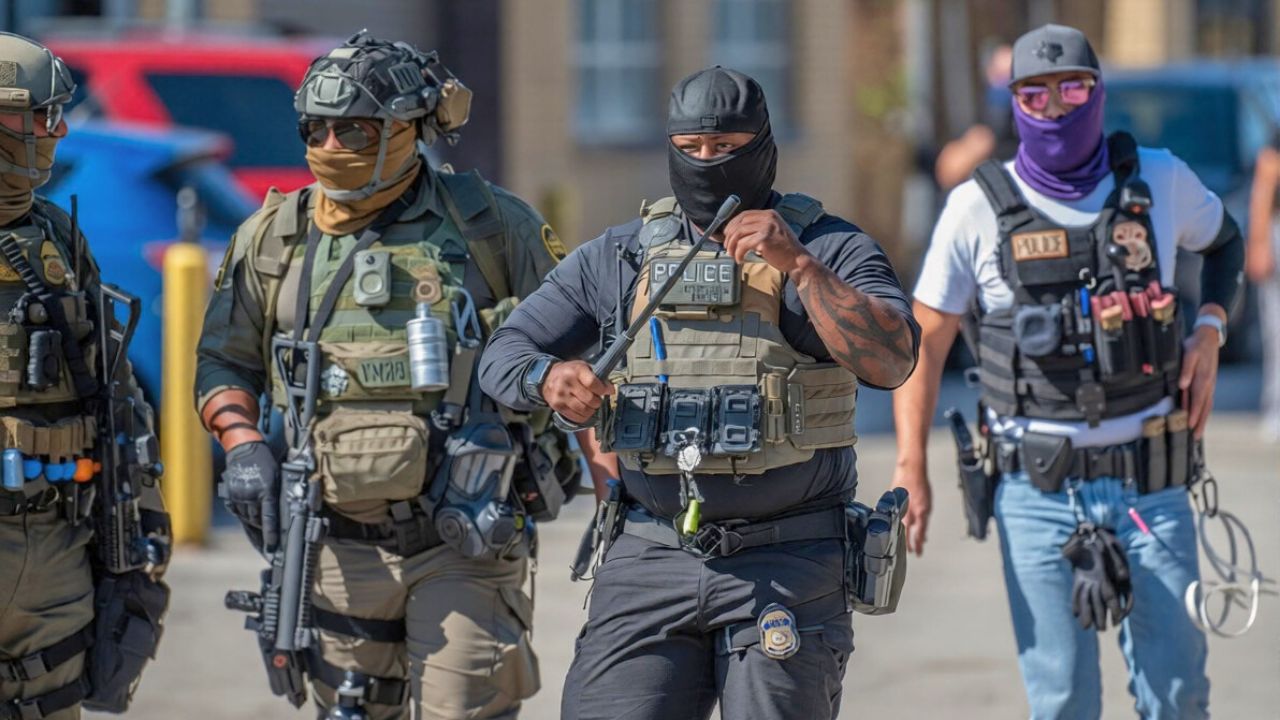
The mask-and-body-cam ICE fight is now the leverage point—and it’s driving DHS talks off the rails
Photo credit: Peter Serocki/Shutterstock.com
The fight over how Immigration and Customs Enforcement officers cover their faces and record their encounters has become the fulcrum of a much larger clash over the Department of Homeland Security’s budget. What began as a debate over dollars has turned into a test of whether Congress will force basic transparency rules on a powerful enforcement agency. That leverage point is now threatening to derail talks and push the government back toward another shutdown.
At stake is not only whether ICE agents will keep wearing masks and operating without cameras, but also whether Democrats can extract structural changes from a Republican Congress that has little appetite for new restraints. The outcome will shape how immigration enforcement looks on American streets, and whether the public ever sees what happens when federal officers knock on a door.
The Minneapolis shootings that turned procedure into a red line
The current standoff traces directly to a pair of deadly encounters in Minneapolis that jolted immigration policy into the center of the funding fight. In the wake of the Jan. 7 shooting of 37-year-old Renee Good by federal immigration officer Jonathan Ross, Democrats and Republica lawmakers began demanding that ICE agents be easier to identify and easier to review after the fact. Those calls intensified after the death of another 37-year-old, Alex, in a separate encounter that critics say exposed how little the public knows about what happens during ICE operations.
Those incidents unfolded against a backdrop of long running tension in Minneapolis, where earlier violence involving an immigrant named Pretti had already turned the city into a symbol of the broader DHS fight. Lawmakers who might once have settled for after action reviews now argue that the pattern of shootings shows the need for real time safeguards, not just internal investigations that arrive long after families have buried their dead.
Democrats’ three-part bet: no masks, cameras on, patrols reined in
In response, Democrats have converted their outrage into a concrete list of demands that now sit at the center of the Department of Homeland Security and ICE negotiations. Their proposal would end roving patrols that sweep up people far from the border, require agents to wear visible identification, and bar them from concealing their faces during operations. One summary of the talks notes that the proposal offered by Democrats will likely include language on all three fronts, with support from the White House.
At the heart of that package is a demand to “Prohibit ICE and immigration enforcement agents from wearing face coverings,” a phrase Democratic leaders have circulated as part of a broader list of ten reforms. In the same document, they press for limits on local jails that Prohibit ICE and immigration agents from using local facilities as staging grounds, a sign that the fight is as much about where and how enforcement happens as it is about what officers wear.
The mask-and-camera clash that is stalling DHS funding
Those demands have collided with a Republican Party that controls both chambers of Congress and has little interest in rewriting the rules for immigration enforcement. Republicans in Congress have already ruled out many of the ideas Democrats have suggested, warning that unmasking agents could expose them and their families to retaliation and fuel what they describe as a climate of fear on American streets. That resistance has turned the mask and body camera package into the central flashpoint in the talks.
After a brief shutdown, Congress funded DHS only through next week, essentially buying time for another round of brinkmanship. In that short term deal, lawmakers left unresolved the core dispute over whether Democrats can force ICE to change how it operates in neighborhoods far from the border. The result is a funding clock that keeps ticking while the two parties argue over whether basic transparency is a bargaining chip or a non negotiable condition for keeping the lights on at DHS.
Inside the “no masks” demand and the emerging body camera consensus
On the surface, the mask fight looks simple: Democrats argue that removing face coverings would increase accountability, while Republicans warn it could expose agents to danger. The Disagreement on masking has become a proxy for deeper questions about whether ICE should be treated like a traditional police force, where officers are typically identifiable, or like an intelligence service, where anonymity is the norm. Immigrant advocates argue that masked agents conducting raids in residential neighborhoods erode trust and make it nearly impossible for victims or witnesses to later identify who did what.
Body cameras, by contrast, are emerging as a rare point of potential agreement. One area that could be a potential point of agreement in the talks is the One Democrats proposal that immigration agents be required to wear cameras that stay on during encounters. President Trump’s DHS secretary, Kristi Noem, has already moved in that direction, with Kristi Noem saying all federal agents will begin wearing body cameras on patrols and Senator Ron Johnson indicating he does not have a problem with cameras for ICE.
How Democrats turned DHS money into leverage over ICE
To force those changes, Democrats have tied their demands directly to the flow of money that keeps the Department of Homeland Security and its immigration agencies running. Democrats say they will not support a spending bill to keep the Homeland Security Department running without new restrictions on federal immigration officers, even if that means holding up the rest of the spending package. Their insistence for additional guardrails follows the deaths in Minneapolis and is aimed at an ICE budget that totals $18.3 billion.
That strategy has already reshaped the broader budget process. A full year appropriations bill for DHS was stripped from a larger funding package by Senate Democrats after two U.S. citizens were killed by ICE agents from Minnesota, meaning Democrats will be required to negotiate a separate deal on DHS. The dispute helps explain why reaching any deal to continue funding for the Department of Homeland enact new limits on ICE has become so fraught, even as other parts of the budget move ahead.