The Mercosur deal is back on the table—and Europe’s farmers are done being polite about it
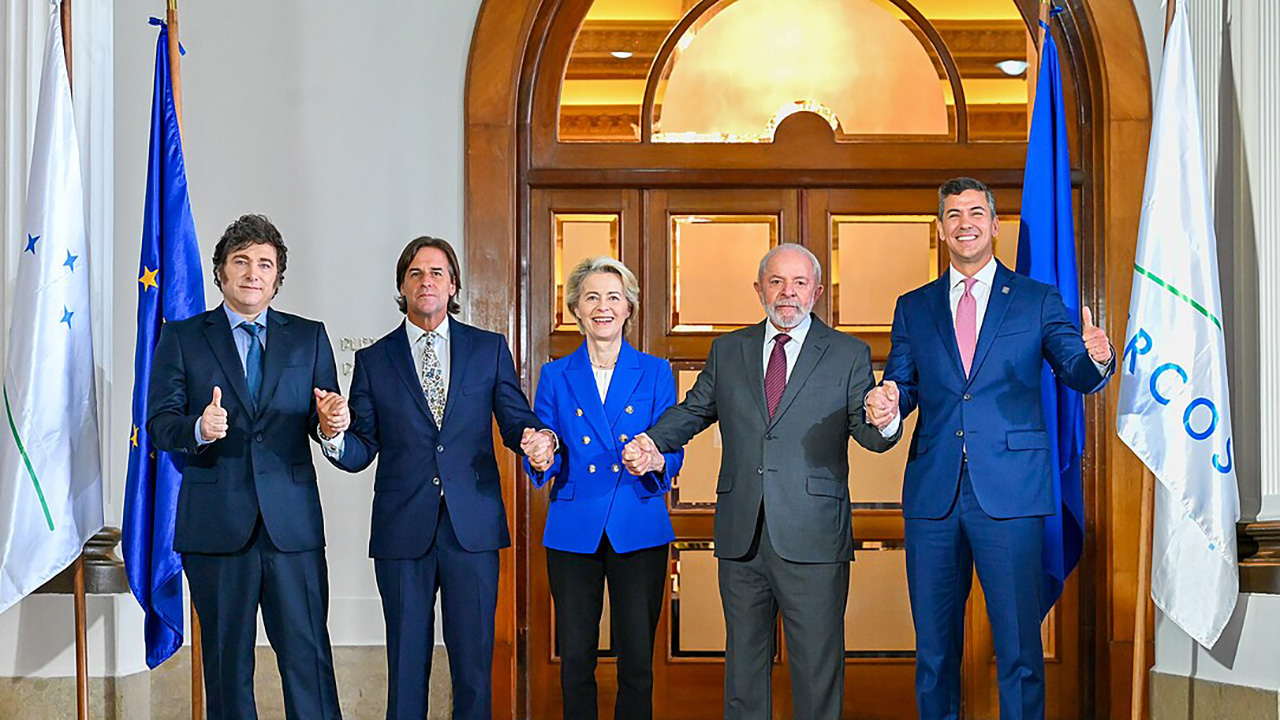
Photo credit: European Union, CC BY 4.0/Wiki Commons
In Brussels, the tractors are back and the patience is gone. As the long delayed trade pact between the European Union and the South American bloc Mercosur edges toward a signature, you are watching a collision between grand trade strategy and the raw politics of food, climate and rural survival.
For Europe’s farmers, this is no longer a technical negotiation in distant rooms, it is an existential fight over prices, standards and who gets sacrificed in the name of global competitiveness. The Mercosur deal is back in play, and the people who grow your food are making it clear they will not quietly absorb the cost.
The deal that refuses to die
You are dealing with an agreement that has haunted European politics for a generation. The EU–Mercosur Association Agreement was politically concluded years ago, yet its trade and political chapters have still not entered into force, leaving the pact in a kind of diplomatic limbo that keeps returning to the agenda whenever leaders sense an opening. The text would bind the EU to Argentina, Brazil, Paraguay and Uruguay in a vast free trade zone, and although agreement has been reached on the core package, the institutional steps needed to ratify it remain incomplete, which is why the accord continues to resurface as a live issue rather than settled law, as detailed in the background on the EU–Mercosur Association Agreement.
Top EU leaders had hoped to finally close that chapter by flying to Brazil for a ceremonial signing, presenting the deal as proof that Europe can still shape global trade rules instead of merely reacting to others. Instead, the plan has been derailed again, with the signature now pushed into January after a fresh wave of farmer anger and political hesitation forced negotiators to pause. The delay underscores how a pact that once looked like a technocratic triumph has become a lightning rod for anxieties about climate policy, food imports and the future of rural Europe, a tension that has been visible in the way the EU has repeatedly put off the signing until January.
Brussels streets as bargaining table
To understand why the timetable slipped again, you have to look at what happened on the streets of Brussels. Thousands of French and Belgian farmers converged on the EU quarter, turning the capital of Europe into a pressure cooker of diesel fumes, blaring horns and burning hay bales as they protested both the Mercosur pact and a wider web of EU rules. The images of Thousands of French and Belgian farmers surrounding EU buildings were not just a spectacle, they were a calculated show of force aimed at leaders who were preparing to sign off on a deal that many in the countryside see as a direct threat to their livelihoods.
Police responded with water cannons and tear gas as tractors blocked key arteries and farmers dumped produce in symbolic acts of defiance, a scene that has become familiar in European capitals but took on new intensity with Mercosur back on the agenda. In Brussels, the protests highlighted how agricultural anger is no longer confined to national politics but is now aimed squarely at EU institutions, with farmers insisting that they will not accept a trade agreement that, in their view, imports unfair competition and undermines the environmental and animal welfare standards they are required to meet at home, a confrontation captured in accounts of European farmers’ protests where Tractors and riot police faced off in the EU quarter.
What is really at stake for your plate
For you as a consumer, the Mercosur deal is often framed as a promise of cheaper beef, sugar, rice, honey and ethanol, along with better access for European cars, machinery and services in South American markets. The EU side argues that opening up to Mercosur would give European exporters a valuable foothold and help diversify supply chains, while South American producers would gain tariff cuts on agricultural goods that are central to their economies. Yet farmers in Europe warn that this is not a neutral bargain, because the agreement would facilitate the entry into Europe of large volumes of farm products that compete directly with what they produce, a concern spelled out in analyses of how the EU–Mercosur deal would open Europe of beef, sugar, rice and honey to South American competition.
Behind the tariff schedules lies a deeper argument about standards and enforcement. European producers point out that they must comply with strict rules on pesticides, animal welfare and deforestation, while they see Mercosur countries as operating under looser regimes that lower costs but, in their view, undermine environmental and social protections. Critics argue that the EU would be importing products from regions where deforestation and weaker labor protections remain serious concerns, and that once those goods enter the single market, it will be in practice hard to detect whether they meet EU norms, a fear voiced by Belgian dairy farmer Maxime Mabille who told AFP that Mercosur imports could slip through despite formal safeguards.
Farmers’ fury moves from fields to power corridors
What is striking this time is how directly farmers are targeting the political architects of the deal. In Brussels, protesters accused European Commission President Ursula von der Leyen of trying to force the agreement through over their objections, turning her into a symbol of what they see as an urban elite willing to trade away rural livelihoods. Belgian farmers like Maxime Mabille have framed their presence in the capital as a clear message that they are there to say no to Mercosur, not to negotiate minor tweaks, and that they will keep escalating until leaders change course, a sentiment that has been echoed in coverage of how Ursula von der Leyen was accused of trying to “force the deal through” despite rural opposition.
At the same time, the protests have sharpened long running divisions inside the EU itself. France has positioned itself as the leading skeptic, with its government arguing that the standards that are practically not applying in Mercosur countries create an uneven playing field that French farmers cannot be expected to endure. In a widely shared intervention, French officials stressed that you cannot address the standards gap simply by adding side letters or promises, a stance that has been reinforced by public remarks in which French representatives, speaking in Dec, warned that the difference in rules is enormous, a critique captured in footage of European Union divided over Mercosur where the French side underlined the scale of the standards gap.
Capitals split: Paris digs in, Madrid leans in
For you watching from the outside, the Mercosur saga is also a map of Europe’s internal fractures. On one side stand countries like France and Italy, which have pressed for more time and stronger guarantees before any signature, arguing that the numbers do not add up for their farmers. Italian Prime Minister Giorgia Meloni explicitly requested a postponement of the signing to reassure agricultural constituencies, and French leaders have insisted that their long standing worries about the impact on domestic producers have not been resolved, a position reflected in reports that France resists even as other member states push to close the Mercosur file.
On the other side are governments that see Mercosur as a strategic opportunity rather than a threat. Spain, which has deep historical and commercial ties to Latin America, has been one of the most vocal supporters, arguing that the deal would boost its exports of wine and olive oil and strengthen its broader economic links with the region. Agriculture Minister Luis Pl has framed the agreement as a chance for Spanish producers to expand their reach, not just a risk to be managed, a view that underpins Madrid’s insistence that the EU should not let the moment slip, as highlighted in explanations of why Spain supports the Mercosur deal and expects concrete gains for its agri food exports.
South America’s patience and Europe’s credibility
While you focus on the tractors in Brussels, the view from South America is very different. Brazil’s President Luiz Inacio Lula da Silva has invested political capital in getting the deal over the line, presenting it as a way to anchor Mercosur more firmly in global trade and to reward his government’s efforts on climate and deforestation. When the latest delay emerged, the last mile upset drew what was described as a now or never ultimatum from Lula, who signaled that Brazil was open to a short delay but not to endless renegotiation, a stance that underscores how Mercosur capitals are losing patience with European hesitation, as reported in accounts of how Brazil and President Luiz Inacio Lula da Silva reacted to the latest postponement.
For the EU, repeated delays carry a cost in credibility at a time when it is trying to position itself as a reliable partner in a world of shifting alliances. European Commission officials have acknowledged that they are “not there yet” and that more work is needed to win over holdouts, but they also argue that the window for sealing the deal is narrowing. The signature has now been pushed into January while leaders search for a new signing date, after Italian Prime Minister Giorgia Meloni requested a pause and Ursula von der Leyen told EU leaders that the agreement would be delayed for a short period of time, a sequence that illustrates how domestic politics in member states can derail carefully choreographed diplomacy, as described in reports that Mercosur signing was delayed until January after last minute objections.
Food sovereignty, climate promises and your political choices
At the heart of the fight is a question that goes beyond tariffs: who controls Europe’s food system. Yu Xiaohua, professor of agricultural economics at the University of Gottingen in Germany, has argued that the main objective of the protests is to defend food sovereignty and farm incomes, not simply to block trade for its own sake. From this perspective, the Mercosur deal is a test of whether the EU is willing to prioritize local production and rural communities when it negotiates with global partners, or whether it will treat agriculture as a bargaining chip to secure gains for other sectors, a tension that Yu Xiaohua highlighted when explaining how farmers fear for food sovereignty and farm incomes in Germany and beyond.
Climate policy is woven through the debate as well. Supporters of the deal argue that binding Mercosur countries into a rules based framework could give the EU leverage to push for stronger environmental protections, while opponents counter that increased imports from regions with ongoing deforestation would undermine Europe’s own climate commitments. As you weigh these arguments, you are also watching how EU leaders respond to the immediate pressure of protests, from the farmers who brought potatoes and other produce to Brussels and faced tear gas and water cannon, to the Commission spokeswoman who insisted that the agreement is still a priority even as it is put off to January, a contradiction laid bare in reports on how farmers brought potatoes and faced police while EU officials tried to keep the Mercosur project alive.
What happens when the tractors go home
Once the smoke clears in Brussels, you will still be left with the same unresolved choices. The EU can try to tweak the deal with additional environmental and safeguard clauses, hoping to reassure skeptical capitals and farm unions without losing Mercosur’s interest. It can delay again, betting that tempers will cool and that leaders like Ursula von der Leyen will find a way to win over the holdouts, a strategy hinted at in accounts of how the signing of a trade deal between the EU and the South American bloc Mercosur was postponed to January while officials sought more time to win over reluctant member states, as described when the signing was postponed to January to win over the holdouts.
Or it can walk away, accepting that the political cost of pushing Mercosur through is too high in a Europe where rural anger is already feeding populist movements. For now, the official line is that the EU is simply “not there yet” and needs a short period of time, but every delay makes it harder to claim that the bloc is a decisive actor on trade. As you watch the next round of negotiations, remember that behind every line in the agreement are farmers who have already driven their tractors to Brussels to say no, and leaders who must decide whether to side with them or with a vision of Europe as a global trade power, a dilemma that was laid bare when von der Leyen had hoped to win final approval in time to fly to Brazil for a signing ceremony but had to accept that, as officials put it, they were “Not there yet” and that the tractors had, once again, reset the timetable.